Kali and Krishna: Are They the Same? Insights from Hindu Texts
A question that often arises among devotees and scholars is whether Kali and Krishna are the same or interconnected in essence. To explore this, we must turn to Hindu texts, including the Vedas, Puranas, and Tantric scriptures, to understand their identities, roles, and philosophical implications.
Facets of Kali and Krishna
Kali: The Fierce Goddess
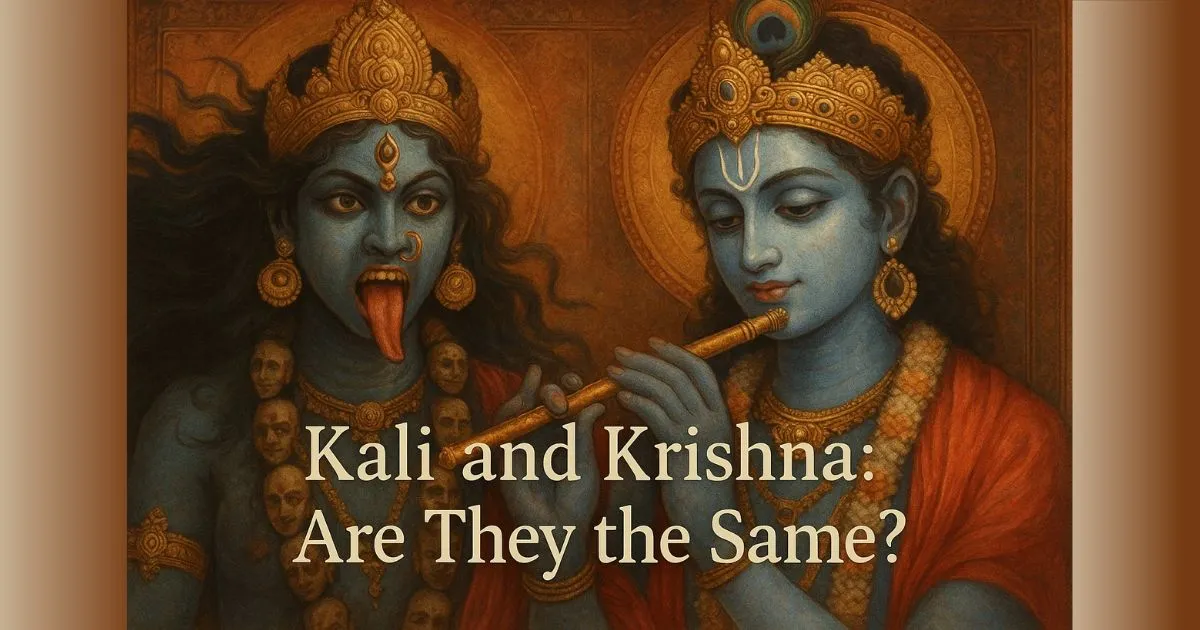
Kali, often depicted as a fierce, dark-skinned goddess adorned with a garland of skulls, is the embodiment of divine feminine energy (Shakti) and the destroyer of evil forces. She is a central figure in Shakta traditions and Tantric worship, symbolizing time, change, and liberation from the ego. Her iconography—wild hair, protruding tongue, and weapons—evokes awe and fear, representing her role in annihilating ignorance and protecting devotees.
Krishna: The Divine Cowherd
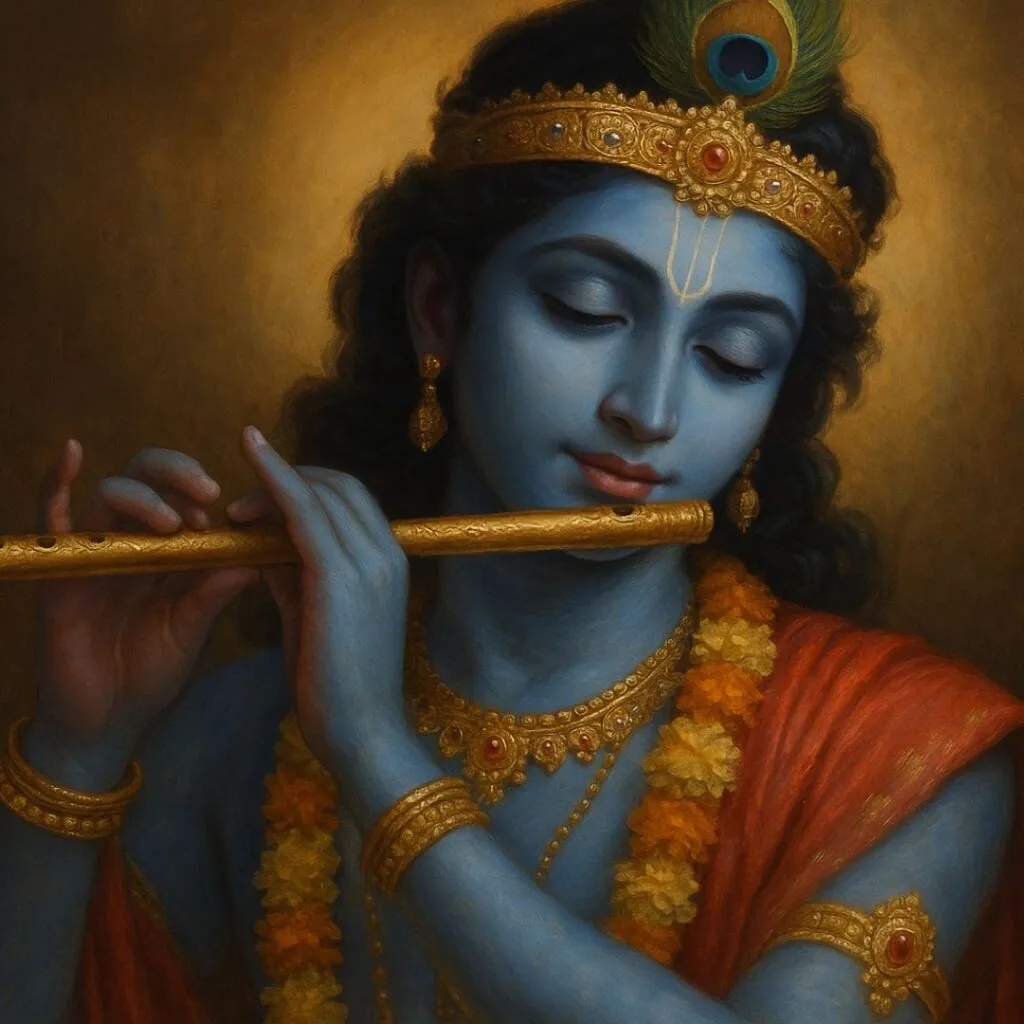
Krishna, the eighth avatar of Vishnu, is celebrated as the playful, compassionate, and all-attractive deity in Vaishnava traditions. Known for his role in the Bhagavad Gita and his divine love with Radha, Krishna embodies divine love (bhakti), wisdom, and cosmic play (lila). His image as a flute-playing, blue-skinned youth contrasts sharply with Kali’s ferocious form.
At first glance, Kali and Krishna appear as polar opposites—one fierce and destructive, the other loving and protective. Yet, Hindu philosophy often transcends dualities, suggesting a deeper unity between seemingly opposing forces.
Featured Spiritual Collection
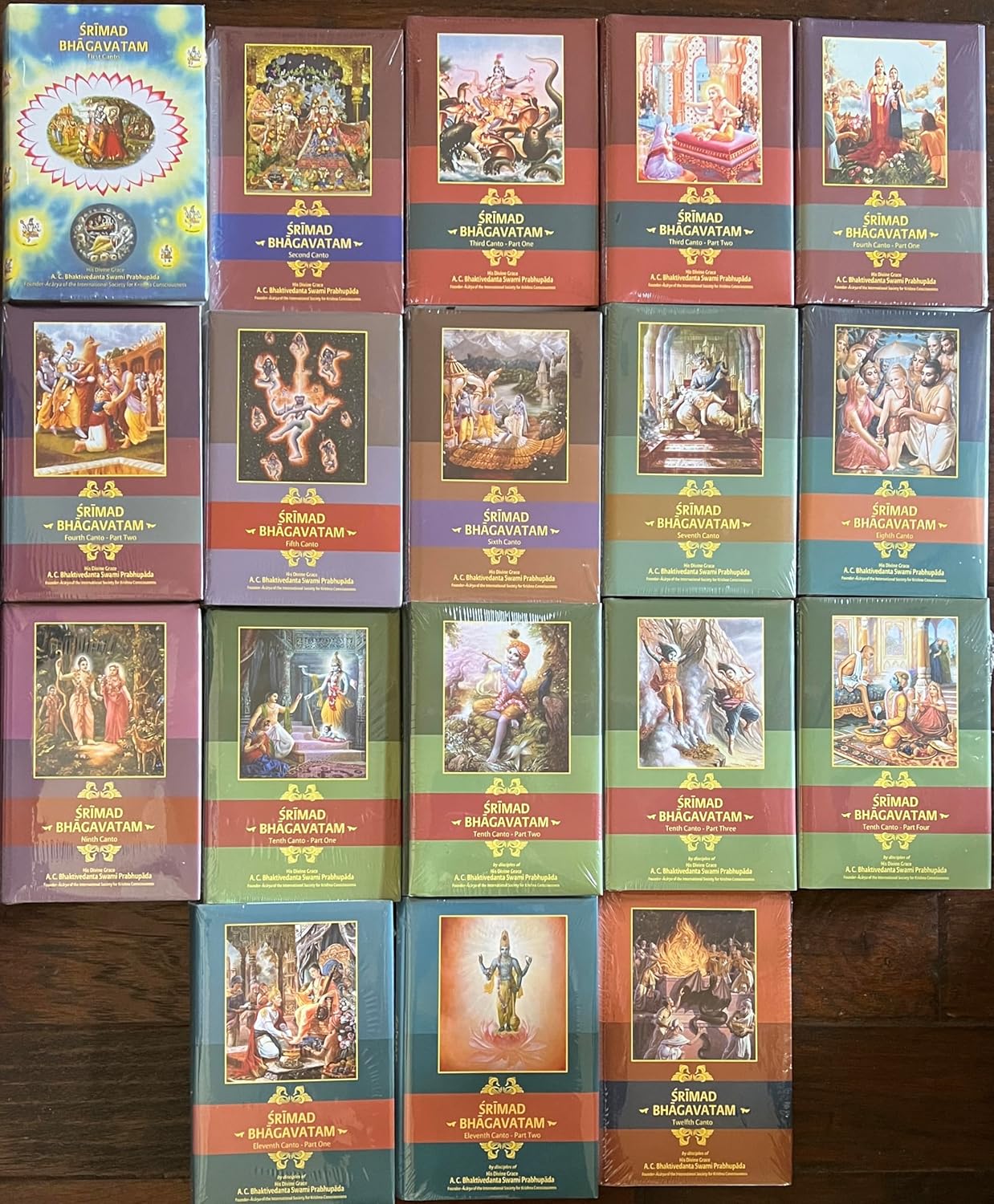
Are Kali and Krishna the Same? Insights from Hindu Texts
Hindu texts, particularly those rooted in Advaita Vedanta and Tantric traditions, emphasize the non-dual nature of divinity. The Upanishads and Bhagavad Gita assert that all forms of God are manifestations of the same ultimate reality, Brahman—the formless, infinite consciousness underlying all existence. Let’s explore what specific texts say about Kali, Krishna, and their potential unity.
Scriptural Perspectives on Kali
Kali appears prominently in Tantric texts like the Devi Mahatmya (part of the Markandeya Purana), where she is an aspect of the Great Goddess, Durga. In the Devi Mahatmya, Kali emerges from Durga’s forehead to slay the demons Chanda and Munda, symbolizing the destruction of ego and ignorance. Tantric texts, such as the Kali Tantra and Mahanirvana Tantra, describe Kali as the supreme reality, the primordial Shakti (energy) that creates, sustains, and dissolves the universe. She is both the source of all forms and the liberator who cuts through illusion to reveal the eternal Self.
Scriptural Perspectives on Krishna
Krishna’s divinity is elaborated in texts like the Bhagavata Purana and Mahabharata (which includes the Bhagavad Gita). In the Gita (Chapter 10), Krishna declares himself the source of all beings, the eternal seed, and the ultimate reality: “I am the Self, O Gudakesha, seated in the hearts of all beings” (10.20). The Bhagavata Purana portrays Krishna as the Supreme Personality of Godhead, whose playful acts (lila) encompass creation and liberation. His teachings emphasize surrender to the divine, uniting the individual soul (jiva) with the universal consciousness.
The Non-Dual Perspective
Advaita Vedanta, as expounded by Adi Shankaracharya in texts like the Vivekachudamani, posits that all deities are expressions of Brahman. The Chandogya Upanishad (6.8.7) states, “Tat Tvam Asi” (“Thou art That”), affirming that the individual soul and the divine are one. Similarly, the Devi Mahatmya (11.5) describes the Goddess as “the supreme knowledge, by which one attains liberation.” Both Kali and Krishna, in their respective traditions, guide devotees toward this realization.
In Tantric philosophy, Kali is the dynamic energy (Shakti) of the static consciousness (Shiva). The Kularnava Tantra and other Tantric texts emphasize that Shakti and Shiva are inseparable, like fire and its heat. Krishna, in Vaishnava texts, is often identified with Vishnu or the Supreme Brahman, whose energy manifests as the material world (maya). The Bhagavata Purana (10.8.12) describes Krishna as the source of all energies, paralleling Kali’s role as the cosmic Shakti.
Recommended Read
Symbolic Connections
While their forms and methods differ, Kali and Krishna share symbolic parallels:
- Time and Eternity: Kali, derived from “kala” (time), represents the transient nature of existence, destroying illusions to reveal the eternal. Krishna, in the Gita (11.32), declares, “I am Time, the great destroyer of the worlds,” revealing his cosmic role in dissolution and renewal.
- Liberation: Kali liberates by severing egoic attachments, while Krishna teaches detachment through devotion (bhakti). Both lead to moksha (liberation) by transcending the material world.
- Cosmic Play: Kali’s fierce dance and Krishna’s playful lila both reflect the divine orchestration of the universe, where creation and destruction are two sides of the same coin.
Some regional traditions explicitly connect the two. In certain Bengali Shakta-Vaishnava syncretic practices, Kali and Krishna are worshipped together, with Kali as the divine mother and Krishna as her child or consort. The Chaitanya Charitamrita (a 16th-century Gaudiya Vaishnava text) describes Chaitanya Mahaprabhu, an incarnation of Krishna, worshipping Kali, suggesting a devotional synthesis.
Differences in Form and Function
Despite their philosophical unity, Kali and Krishna differ in their approach and worship:
- Iconography and Energy: Kali’s fierce, dark form contrasts with Krishna’s charming, youthful image. Kali’s energy is raw and transformative, while Krishna’s is nurturing and enchanting.
- Worship Practices: Kali is central to Tantric rituals, often involving esoteric practices, as described in the Kali Puja texts. Krishna’s worship, rooted in bhakti, emphasizes love and surrender, as seen in practices like kirtan (devotional singing).
- Cultural Context: Kali is prominent in Shakta strongholds like Bengal, while Krishna is central to Vaishnava traditions in Vrindavan and beyond.
Unity in Diversity
Hindu texts reveal that Kali and Krishna are not “the same” in form or function but are unified in essence as manifestations of Brahman. Kali’s destructive power and Krishna’s loving guidance both lead to the same truth: the realization of the Self as one with the divine. The Mundaka Upanishad (3.2.6) states, “He who knows the Self crosses beyond sorrow,” a goal both deities facilitate in their unique ways.
For devotees, whether one worships Kali’s fierce compassion or Krishna’s divine love depends on personal inclination (svadharma). Yet, as the Rig Veda (1.164.46) proclaims, “Truth is one, though the wise call it by many names.” Kali and Krishna, though distinct in their divine play, are ultimately expressions of the same eternal reality, guiding humanity toward liberation.
References:
- Devi Mahatmya (Markandeya Purana)
- Bhagavad Gita
- Bhagavata Purana
- Chandogya Upanishad
- Mundaka Upanishad
- Kali Tantra and Mahanirvana Tantra
- Chaitanya Charitamrita
This exploration invites devotees and seekers to appreciate the unity beneath the diversity of Hindu divinity, embracing both the fierce grace of Kali and the loving wisdom of Krishna.