Raakh on Prime Video: A Gripping but Uneven Retelling of Horror That Struggles to Transcend Sensationalism
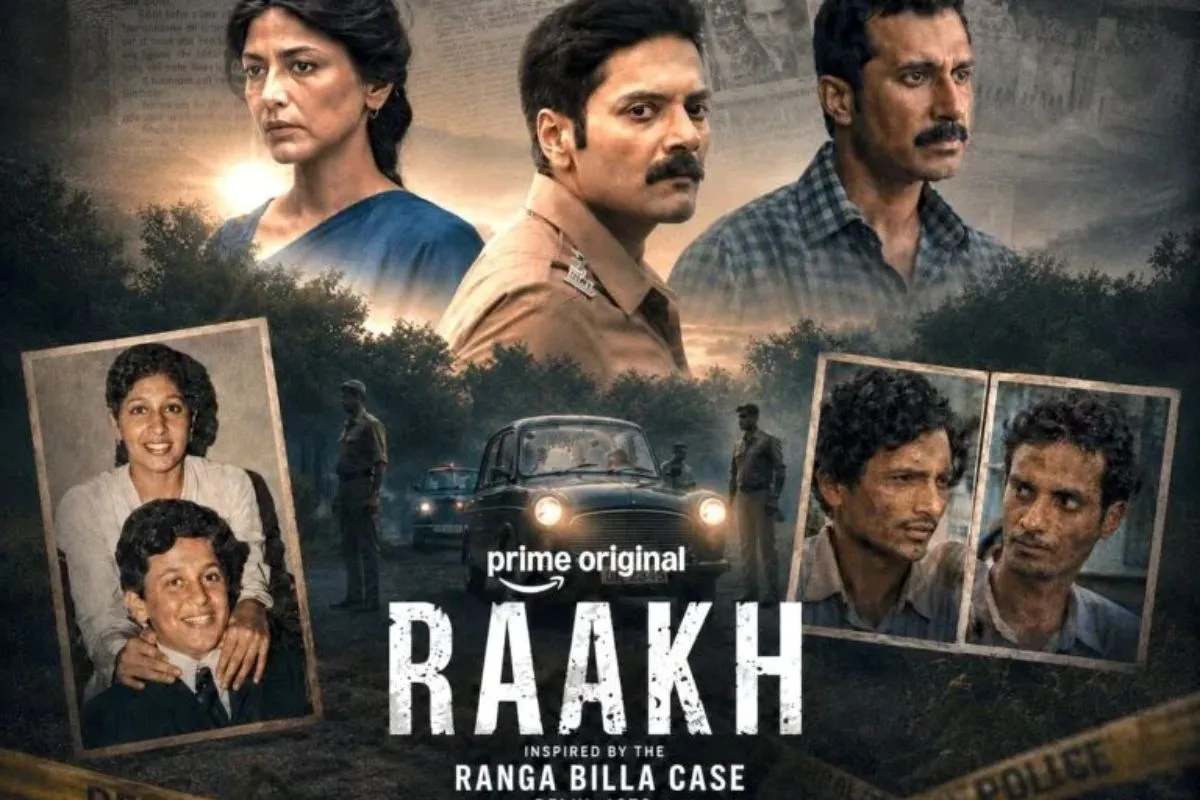
“Raakh” arrives on Prime Video riding the renewed wave of public interest in the 1978 Ranga-Billa case—the abduction, rape, and murder of Geeta and Sanjay Chopra that shattered Delhi’s fragile sense of safety and altered how an entire generation of Indian parents raised their children. The series promises a forensic-deep dive into one of India’s most defining crimes. At its best, it delivers tense, atmospheric storytelling and strong performances that make the horror feel immediate. At its worst, it succumbs to the very pitfalls of true-crime dramatization: selective storytelling, heavy-handed social messaging, and a willingness to prioritize emotional manipulation over unflinching historical fidelity.
The Story and Structure: Faithful Enough, Yet Manipulative
The core events remain chillingly recognizable. Siblings Geeta (a college student) and Sanjay, children of a naval officer, are offered a lift by strangers Kuljeet Singh (Ranga) and Jasbir Singh (Billa) while heading to an All India Radio program. What follows is abduction, sexual violence, and cold-blooded murder. The manhunt that ensues involves old-school policing, forensic breakthroughs (fingerprints, hair, blood groups), public appeals, and eventual dramatic arrest on a train.
“Raakh” excels in recreating the suffocating dread of 1970s Delhi—the empty roads, the casual trust in strangers that feels alien today, and the raw panic that grips the city once the children go missing. The early episodes build tension masterfully through the parents’ desperate search and the police’s initial fumbling. The depiction of the crime itself is handled with restraint in some parts and gratuitous brutality in others—a familiar tightrope walk in Indian OTT.
Where the series sharpens its edge is in showing the long shadow of the crime: how it birthed widespread parental paranoia, changed attitudes toward child safety, and marked Delhi’s slide toward its “crime capital” reputation. These broader societal ripples are the show’s strongest contribution.
Performances: Standouts Amid Formula
The actors playing the investigators deliver committed, lived-in turns that ground the procedural elements. The portrayal of Ranga and Billa captures their predatory dynamic—one more dominant and sadistic, the other complicit—without turning them into cartoon monsters. The parents’ grief feels authentic and devastating, particularly in quiet moments of denial and rage.
However, supporting characters occasionally slip into stereotypes. The series’ attempt to weave in commentary on caste, class, and institutional bias sometimes feels forced, with certain police figures painted in broad ideological strokes that clash with the real-life investigation led by officers like Inspector V.P. Gupta. This is where “Raakh” reveals its modern lens most intrusively.
Sharp Critiques: Propaganda Over Precision
Here is the blunt truth: “Raakh” is less a neutral historical reconstruction and more a contemporary ideological project. By tweaking names, backgrounds, and motivations of peripheral figures (for instance, altering the religion or caste of investigators in ways that diverge from documented reality), the show pushes a narrative of systemic prejudice that feels more 2020s than 1970s. The real Ranga-Billa case was cracked through persistent policing, public help, and early forensic use—not primarily through the social justice frameworks retrofitted here.
This selective reshaping dilutes the terror. The raw evil of the perpetrators—their opportunistic brutality and callous disposal of the children—should stand as a stark reminder of human monstrosity. Instead, the series occasionally softens or contextualizes criminality through societal lenses in ways that border on excusing the inexcusable. True crime demands moral clarity; “Raakh” sometimes chooses ambiguity for dramatic or political effect.
Pacing issues also plague the later episodes. The manhunt drags, and some subplots feel padded to stretch the runtime. While the technical aspects—cinematography, period recreation, sound design—are competent and occasionally excellent, the writing lacks the surgical precision of top-tier series like “Delhi Crime.” Emotional manipulation through lingering shots of suffering replaces deeper character exploration.
Cultural Impact and Relevance
Despite its flaws, “Raakh” succeeds in one crucial respect: it reopens a conversation India needs. The 1978 case was a turning point. Before it, children roamed with relative freedom; after it, fear became parental instinct. Watching it today, amid continuing headlines of brutality against women and children in Delhi and beyond, the series underscores how little the foundational rot has been addressed—weak deterrence, investigative shortcomings, and societal desensitization.
It serves as a stark reminder that one shocking crime can change collective behavior. Decades later, we are still living with the consequences: anxious parenting, restricted freedoms, and a capital that struggles with safety.
Final Verdict: Watch with Caution
“Raakh” is worth a watch for its atmospheric tension, strong lead performances, and willingness to revisit a case that deserves remembrance. It effectively transports viewers to a Delhi on the cusp of losing its innocence. However, it is not the definitive account. Viewers should approach it as dramatized entertainment with a pointed agenda rather than pure documentary truth.
Rating: 6.5/10. Compelling but compromised. It captures the smoke of horror but sometimes obscures the fire with modern ideological ash. If you’re interested in the real Ranga-Billa case, supplement the series with factual reports and court records. The truth needs no embellishment—it was horrifying enough.
Prime Video has given us a glossy, uneven reminder of a national scar. Whether it heals or merely picks at it for views remains the sharper question.