Monsoon Skincare: Why Your Summer Sunscreen Is Failing You Right Now
Monsoon Skincare
The sunscreen that felt perfect in April can turn into a genuine problem by July. Skin that pilled slightly under a matte gel formula now breaks out from the same product mixed with sweat and humidity. A sunscreen that sat beautifully under makeup in dry heat suddenly slides off within two hours. None of this means you chose the wrong sunscreen back in summer. It means monsoon changes the rules, and most routines never get updated to match.
This piece continues our sunscreen series, building on the Honest Guide to Sunscreen in India and our breakdown of oily versus dry skin textures. Monsoon deserves its own dedicated look, since it is the one Indian season where sunscreen behavior changes the most while sun protection need barely drops at all.
The Monsoon Sun Protection Myth
The most damaging monsoon belief is that clouds and rain mean you can ease up on SPF. UV radiation passes through cloud cover far more easily than most people assume, and UV index readings across much of India remain moderate to high through monsoon months, even on days that feel grey and overcast. Sunburn on a cloudy monsoon afternoon is common precisely because people go outside without sunscreen, assuming the missing sunshine means missing UV exposure.
If anything, monsoon adds a second layer of risk on top of UV: the humidity itself accelerates how quickly skin barrier function can break down when it is already under stress from heat, sweat, and constant damp air.
Why Your Summer Formula Stops Working
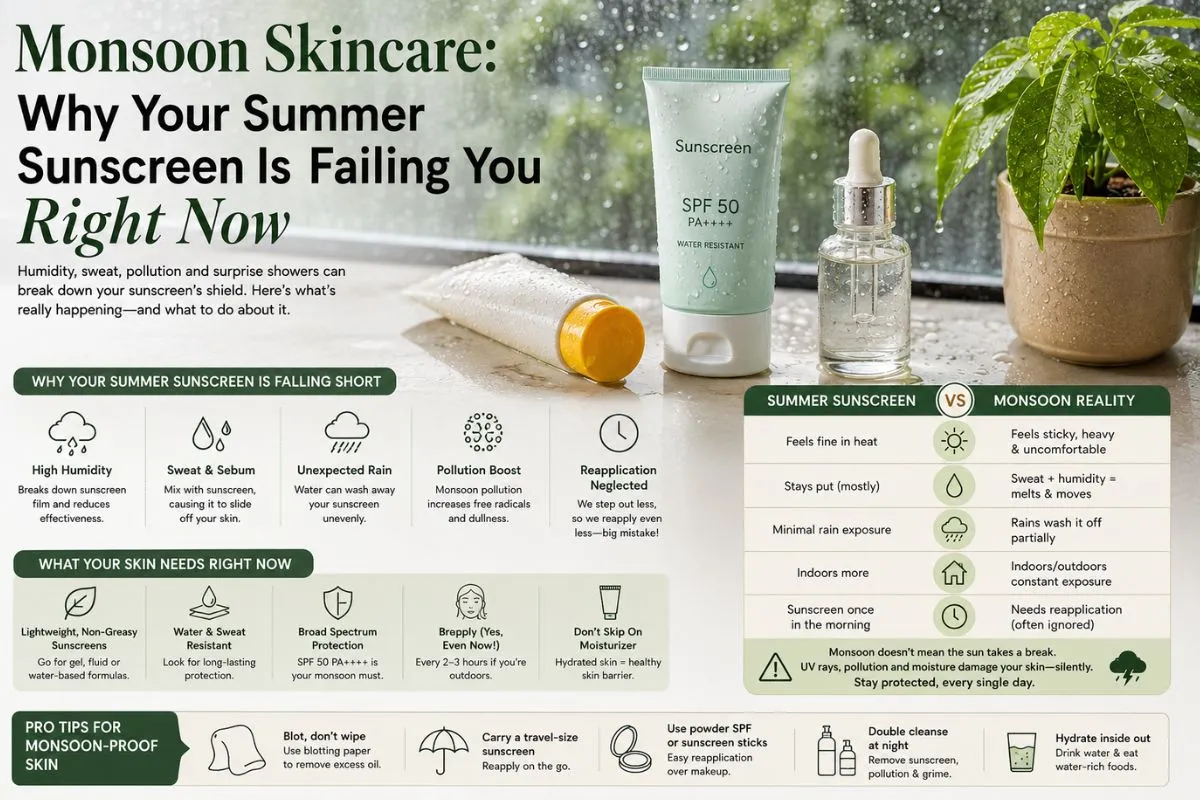
A sunscreen that performed well in dry summer heat is optimized for a very different environment than the one monsoon creates. A few specific failure points show up again and again.
Sweat and humidity break down film formers faster. Many sunscreens rely on a thin film across the skin to hold the UV filters in place. In dry heat, that film stays largely intact through a normal day. In monsoon humidity, combined with sweat, that film degrades faster, which is part of why a sunscreen that felt like it lasted all day in April might need reapplication by early afternoon in July.
Heavier, richer formulas trap moisture against the skin. A cream or lotion sunscreen that felt comfortable in dry winter or summer air can feel genuinely suffocating once ambient humidity climbs, since the skin is already struggling to release its own moisture and heat into damp surrounding air. This is a major contributor to monsoon breakouts, since trapped moisture and product residue together create an environment that congested pores thrive in.
Water resistance is not the same as sweat resistance, and neither is unlimited. Water resistant sunscreen claims are tested against a specific number of minutes of water exposure, typically 40 or 80 minutes, and sweat behaves differently on skin than pool or rain water does. A “water resistant” label does not mean your sunscreen can handle a full day of monsoon humidity and sweat without needing attention.
What to Actually Switch To
The core fix is texture, not brand loyalty or price. A few practical swaps make the biggest difference during monsoon months.
Move to gel, fluid, or aqua based sunscreens. These formulas are built to sit lighter on the skin and dry down faster, which matters enormously when ambient humidity is already working against a comfortable finish. If you normally reach for a cream sunscreen the rest of the year, monsoon is the season to set it aside temporarily.
Prioritize oil free and non comedogenic formulas, even if your skin is not typically oily. Monsoon humidity increases everyone’s oil production somewhat, and skin that behaves as normal to dry for most of the year can act noticeably oilier during peak humidity months.
Consider a silicone based primer style sunscreen if you wear makeup daily. These formulas create a smoother, more breathable base than heavier creams and tend to hold up better against the combination of humidity and sweat that defines an Indian monsoon commute.
Keep a powder or spray sunscreen in your bag specifically for reapplication. Rubbing a cream sunscreen over makeup that has already started shifting in the humidity rarely goes well. A compact powder or spray SPF gives you a genuinely usable way to top up protection midday without undoing your makeup in the process.
Reapplication Gets Harder in Monsoon, Not Optional
The two hour outdoor reapplication guideline from our pillar sunscreen guide still applies during monsoon, arguably more strictly, since sweat and humidity shorten how long a single application genuinely holds up. The honest challenge is that reapplication feels harder during monsoon, since skin already feels damp and product application feels less pleasant. This is exactly why switching to a lighter, faster absorbing formula for these months matters so much: a sunscreen that feels comfortable to reapply is one you will actually reapply.
Monsoon Skincare Beyond Sunscreen
Sunscreen sits inside a broader monsoon skincare shift, and it works best alongside a few supporting changes. Cleansing twice, once with a gentle oil or micellar formula to lift sunscreen and sweat, then once with your regular cleanser, tends to prevent the buildup that leads to monsoon breakouts far better than a single wash. Skipping heavy, occlusive moisturizers in favor of lighter gel or lotion hydrators keeps the overall routine breathable, which matters more during monsoon than almost any other season. Exfoliating slightly more consistently, without over doing it, helps manage the congestion that comes with a season defined by trapped moisture and sweat.
Our piece on Does the 10-Step K-Beauty Routine Actually Work in India? found something similar with a lightweight organic sunscreen tested across seasons: a formula that felt like a dream in dry Delhi heat turned noticeably greasy by mid afternoon once humidity climbed. That is not a flaw in the product. It is a reminder that no single sunscreen, however well loved, is built to perform identically across India’s very different seasonal climates.
The Simple Monsoon Rule
If your sunscreen has started feeling heavy, greasy, or like it is contributing to breakouts over the last few weeks, the season changed before your routine did. Swap to a lighter, oil free, gel or fluid formula for the monsoon months, keep a portable reapplication option in your bag, and go back to your richer summer or winter formula once the humidity actually breaks. Your skin does not need a completely different routine every season. It just needs sunscreen that matches the air it is actually sitting in.
This article is for informational and educational purposes only and does not constitute medical or dermatological advice. Consult a qualified dermatologist for persistent breakouts, sensitivity, or skin concerns.