
A Step Toward Safety and Sanity: Why the Supreme Court’s Ruling on Stray Dogs in Delhi-NCR is Essential
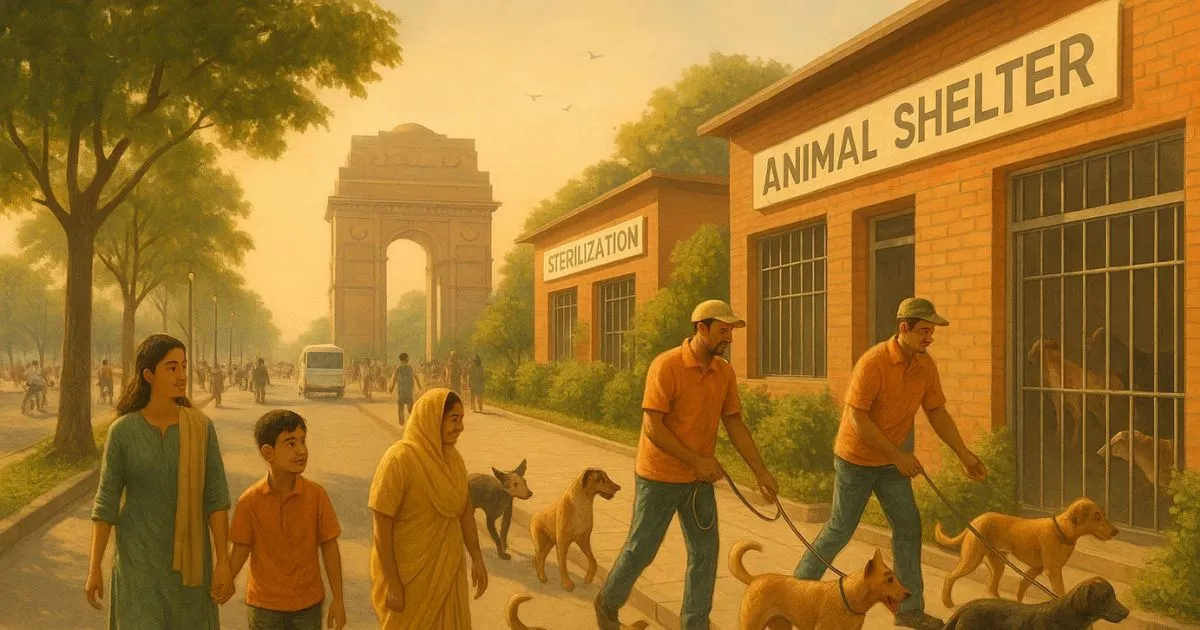
On August 11, 2025, the Supreme Court of India delivered a landmark directive ordering the complete removal of stray dogs from the streets of Delhi and the National Capital Region (NCR) within eight weeks, mandating their relocation to dedicated shelters. This ruling, issued by Justices J.B. Pardiwala and R. Mahadevan, prioritizes public safety over the flawed Animal Birth Control (ABC) Rules, which have failed to address the escalating stray dog crisis. Far from being an act of cruelty, this decision is a constitutional triumph that balances human safety with animal welfare, addressing a public health emergency that has claimed too many lives. The ruling is not only timely but necessary, and here’s why.
A Public Health Crisis Demands Urgent Action
Delhi’s stray dog population is estimated at around 10 lakh, a number that has overwhelmed civic infrastructure and fueled a public health crisis. In 2024 alone, over 2.2 million dog bite cases were reported across India, with Delhi recording 26,334 incidents in the first half of 2025. Rabies, a nearly 100% fatal disease, claims approximately 20,000 lives annually in India, accounting for 36% of global rabies deaths. A tragic example is the death of six-year-old Chavi Sharma in Delhi’s Pooth Kalan area in July 2025, who succumbed to rabies after a stray dog bite. This incident, among hundreds of others, prompted the Supreme Court to take suo motu cognizance, highlighting the “alarming and disturbing” rise in dog bite incidents.
The court’s directive comes in response to a grim reality: stray dogs pose a clear and present danger to vulnerable populations, particularly children and the elderly. CCTV footage from cities like Delhi, Mumbai, and Uttar Pradesh shows harrowing attacks, with victims often left maimed or dead. The elderly and delivery workers, who navigate streets daily, are especially at risk. The court rightly emphasized that “infants and young children should not fall prey to rabies,” underscoring the urgency of protecting human lives over sentimental considerations.
The Failure of the ABC Rules
The Animal Birth Control (ABC) Rules, enacted in 2001 and updated in 2023, have been the cornerstone of India’s stray dog management policy. These rules mandate sterilizing and vaccinating stray dogs before releasing them back to their original locations. However, this approach has proven ineffective. Sterilized dogs can still bite, spread rabies, and cause accidents, as their territorial instincts remain intact. The rules also encourage feeding strays in public spaces, which exacerbates territorial conflicts and increases attack risks. In Delhi, only 4.7 lakh of the estimated 10 lakh stray dogs have been sterilized as of 2023, far below the 70% threshold needed to control population growth.
The ABC Rules, rooted in the Prevention of Cruelty to Animals Act, were intended to balance animal welfare with public safety. However, they have tilted too far toward animal rights, often at the expense of human lives. The Supreme Court’s rejection of the rule requiring sterilized dogs to be released back to their original locations as “unreasonable and absurd” is a bold acknowledgment of this failure.
The court’s stance aligns with global practices in countries like the United States and Australia, where stray dogs are impounded and, if unclaimed, euthanized to protect public safety and biodiversity. India’s experiment with the ABC model has not only failed to curb the stray population but has also perpetuated suffering for both humans and dogs.
Why Shelters Are the Solution
The Supreme Court’s order to relocate stray dogs to shelters is a pragmatic step toward a safer and more humane future. The directive mandates the creation of shelters for at least 5,000 dogs within eight weeks, equipped with staff for sterilization, immunization, and care, monitored by CCTV to ensure compliance. This approach addresses the root causes of the crisis: uncontrolled breeding, territorial aggression, and lack of accountability. By prohibiting the release of captured dogs back onto streets, the court ensures that public spaces remain safe for residents, particularly in vulnerable areas like schools and parks.
Critics, including animal rights activists like Maneka Gandhi and PETA India, argue that the ruling is “unscientific” and “cruel,” citing the lack of shelter infrastructure and potential harm to dogs. While their concerns about shelter conditions are valid, the status quo—leaving millions of strays to roam streets, scavenge for food, and face abuse—is far from humane. The court’s directive is not a call for cruelty but a demand for accountability. It orders civic authorities in Delhi, Noida, Ghaziabad, and Gurugram to establish a dedicated helpline for dog bite complaints, ensuring rapid response within four hours, and warns of contempt proceedings against those who obstruct the capture process. This framework prioritizes both human safety and structured animal care.
Practical Challenges, Necessary Action
Admittedly, implementing the ruling poses challenges. Delhi’s current infrastructure, with only 20 sterilization centers housing fewer than 5,000 dogs, is woefully inadequate for an estimated 10 lakh strays. Building 2,000 shelters, each housing 500 dogs, requires significant funding, land, and manpower. The Municipal Corporation of Delhi (MCD) faces issues like staff shortages and local resistance, as seen in protests at India Gate following the ruling. An India Today investigation revealed overcrowding and poor hygiene at MCD-run sterilization centers, highlighting the need for robust oversight and investment.
However, these challenges do not justify inaction. The court’s directive provides a clear timeline—eight weeks—and a mandate for civic bodies to act decisively. The creation of shelters, coupled with sterilization and vaccination drives, can break the breeding cycle while ensuring dogs are cared for in controlled environments. The government must allocate funds, train handlers, and collaborate with veterinarians and NGOs to build a sustainable model. The ruling also calls for publicizing access to authentic rabies vaccines, addressing shortages that exacerbate the crisis.
A Constitutional and Moral Imperative
The Supreme Court’s ruling is grounded in Article 21 of the Indian Constitution, which guarantees the right to life and a safe environment. By prioritizing human safety, the court upholds the social contract, restoring faith in governance that has been eroded by years of ineffective policy. As Ryan Lobo writes in The Indian Express, “Permanently removing strays isn’t cruelty but a crucial step toward upholding the fundamental rights of 1.4 billion people and preventing the unnecessary suffering of stray dogs.” Mahatma Gandhi’s words from 1926 resonate here: roving dogs reflect “ignorance and lethargy” rather than compassion. True compassion, as Gandhi advocated, prevents suffering for both humans and animals, with human safety taking precedence.
The opposition from animal lovers, while heartfelt, often overlooks the grim reality faced by victims. Rahul Gandhi and Priyanka Gandhi have called the ruling “shortsighted” and “cruel,” but their arguments fail to address how to protect children like Chavi Sharma or the countless others injured daily. PETA India’s claim that mass sterilization is the only solution ignores the evidence: even sterilized dogs bite, and the ABC model has failed to control the population after 25 years. The court’s refusal to entertain interventions from animal rights activists underscores its focus on public interest over sentiment.
A Path Forward
The Supreme Court’s ruling is a clarion call for Delhi-NCR to confront a long-ignored crisis. It demands a coordinated response: rapid shelter construction, rigorous sterilization and vaccination programs, and public awareness campaigns to ensure responsible pet ownership and reporting of dog bites. While animal welfare is important, it cannot supersede the right to life. The ruling offers a chance to create a model that other Indian cities can emulate—one that ensures safer streets, healthier dogs, and a restored balance between human and animal rights.
In conclusion, the Supreme Court’s directive is a bold and necessary step toward resolving Delhi’s stray dog crisis. It addresses a public health emergency, upholds constitutional rights, and challenges a failed policy that has endangered lives for too long. By acting swiftly and decisively, civic authorities can turn this ruling into a blueprint for safer, more humane cities. The time for sentiment has passed; the time for action is now.
Disclaimer: This opinion piece reflects the author’s perspective, informed by available data and public interest considerations, and does not represent an official stance.