Who is Mahavatar Babaji? The Eternal Yogi and Beacon of Spiritual Wisdom
Mahavatar Babaji, often revered as the “deathless guru,” is a legendary figure in the spiritual traditions of India, particularly within the lineage of Kriya Yoga. Known as the immortal yogi who resides in the remote Himalayan regions, Babaji is celebrated as a Mahavatar, or Great Avatar, whose timeless presence and teachings continue to inspire spiritual seekers worldwide. His life, shrouded in mystery yet illuminated by divine purpose, serves as a profound reminder of the eternal nature of the soul and the transformative power of yoga. This article explores the spiritual significance of Mahavatar Babaji, his role in reviving Kriya Yoga, and his enduring influence on modern spirituality.
The Enigmatic Presence of Mahavatar Babaji
Mahavatar Babaji’s existence transcends conventional historical documentation, as he is believed to have lived for centuries, maintaining the youthful appearance of a young man in his mid-20s. According to Paramahansa Yogananda’s seminal work, Autobiography of a Yogi, Babaji has chosen to remain in the Himalayas, revealing himself only to a select few who are spiritually prepared to receive his guidance. His birth name, often cited as Nagaraj, and his origins are matters of speculation, with some sources suggesting he was born around 203 AD in Parangipettai, Tamil Nadu. Yet, as Yogananda notes, Babaji’s eternal nature renders historical details secondary to his spiritual mission.
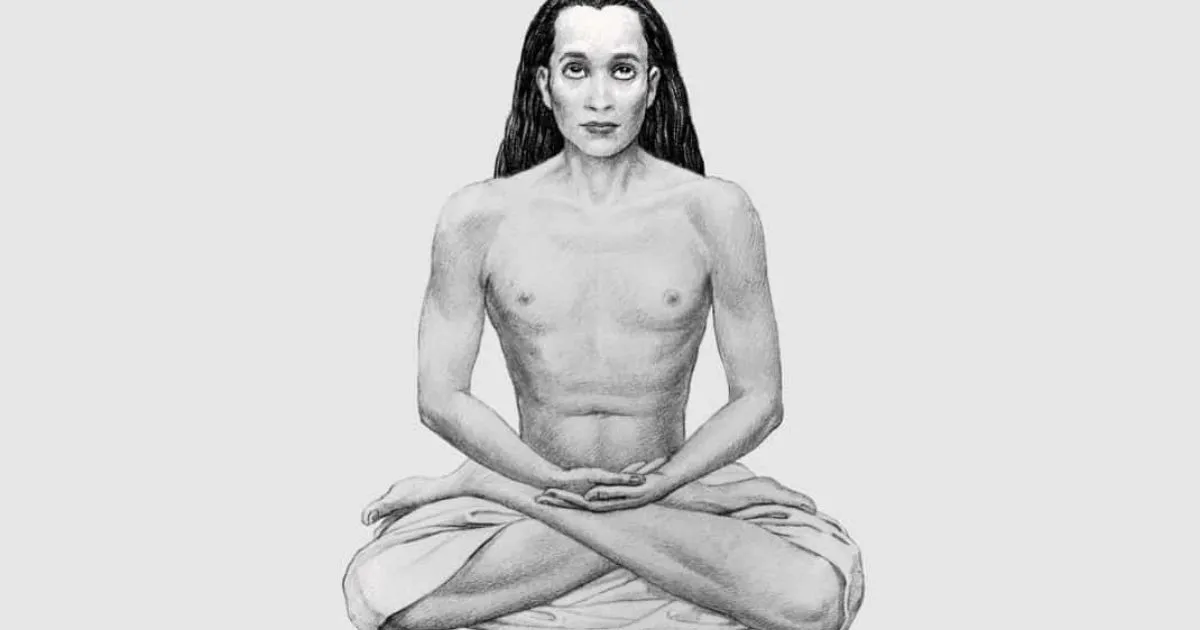
Babaji is described as a siddha, a perfected being who has transcended human limitations through yogic mastery. His physical form, characterized by a snowy-white complexion, long shoulder-length hair, and sharp features, is said to radiate divine light and serenity. Unlike traditional gurus who establish public followings, Babaji works silently behind the scenes, guiding spiritual luminaries and humanity at large toward enlightenment without seeking recognition or adulation.
The Revival of Kriya Yoga
One of Mahavatar Babaji’s most significant contributions to humanity is the revival of Kriya Yoga, a scientific meditation technique designed to accelerate spiritual evolution. In 1861, Babaji initiated Lahiri Mahasaya, a householder yogi from Varanasi, into Kriya Yoga, entrusting him with the mission to spread this sacred practice to the world. Babaji described Kriya Yoga as a revival of the ancient science once taught by Lord Krishna to Arjuna and later known to sages like Patanjali.
Kriya Yoga, as explained by Yogananda, is a psychophysiological method that purifies the blood, enhances life force, and rejuvenates the brain and spinal centers, leading to a direct experience of the Divine. Babaji’s decision to revive this practice in the 19th century was a response to the spiritual needs of the modern age, offering a universal path to self-realization that transcends religious boundaries. Through Lahiri Mahasaya and subsequent disciples like Sri Yukteswar and Paramahansa Yogananda, Babaji’s teachings reached the West, fulfilling his vision of uniting East and West in a “golden middle path” of material progress and spiritual wisdom.
Babaji’s Spiritual Mission and Influence
Mahavatar Babaji’s mission extends beyond the dissemination of Kriya Yoga. He is believed to work in communion with divine figures like Jesus Christ, sending vibrations of redemption to inspire humanity to abandon materialism, sectarianism, and conflict. His role as a Mahavatar involves assisting prophets and saints in their dispensations, as seen in his initiations of Adi Shankaracharya, the 9th-century reformer of Hinduism, and Kabir, the 15th-century mystic revered by Hindus and Muslims alike.
Babaji’s influence is not limited to spiritual giants. Anecdotal accounts from devotees, such as those shared by Swami Nirmalananda Giri, reveal miraculous encounters with Babaji, including his interventions in the lives of disciples like Vijay Krishna Goswami and ordinary seekers facing personal crises. For instance, a story recounts Babaji rescuing Goswami from his wife’s complaints by transporting her to the Himalayas, demonstrating his ability to transcend physical limitations to aid his devotees.
Modern figures like Rajinikanth, the Indian superstar, have also been touched by Babaji’s legacy. Rajinikanth, a devotee since reading Autobiography of a Yogi in 1999, attributes transformative experiences to Babaji, including a mystical “light-spark” encounter that guided his spiritual journey. His devotion led him to produce the film Baba in 2002 to popularize Babaji’s teachings and to establish a meditation center near Babaji’s cave in Dunagiri, Almora.
The Mystical Cave and Pilgrimage
The cave near Dunagiri in the Kumaon Himalayas, where Babaji initiated Lahiri Mahasaya, has become a sacred pilgrimage site for Kriya Yoga practitioners and spiritual seekers. Located about an hour from Dunagiri, this cave is a testament to Babaji’s enduring presence and the transformative power of his teachings. Pilgrims like Rajinikanth and others visit this site to meditate and connect with Babaji’s divine energy, which is believed to permeate the area.
The cave’s significance lies not only in its historical connection to Babaji but also in its role as a spiritual vortex where devotees experience profound peace and clarity. As one X user described, the mere utterance of Babaji’s name with reverence is said to attract instant spiritual blessings, a belief rooted in Lahiri Mahasaya’s teachings.
Debates and Perspectives on Babaji’s Existence
While Babaji’s legacy is profound, his existence has sparked debate, particularly within certain Hindu traditions. Some skeptics on platforms like Reddit question whether Babaji is a myth created to sustain spiritual movements, citing the lack of photographic evidence or scriptural references outside the Kriya Yoga lineage. Others argue that his invisibility to the naked eye aligns with his status as an advanced being who operates on astral planes. However, many within the guru-shishya parampara (teacher-disciple tradition) affirm Babaji’s reality based on personal experiences, emphasizing that faith and direct experience outweigh empirical proof in spiritual matters.
Proponents of Babaji’s existence, including devotees initiated into Kriya Yoga, assert that his subtle influence transcends physical visibility. They point to the transformative impact of his teachings and the testimonies of revered figures like Yogananda and Sri Yukteswar as evidence of his divine presence. The absence of historical records is seen as intentional, aligning with Babaji’s desire to remain an anonymous guide rather than a celebrated figure.
The Eternal Legacy of Mahavatar Babaji
Mahavatar Babaji’s life and teachings embody the essence of Sanatana Dharma, the eternal religion that underlies Hinduism’s universal principles. His emphasis on Kriya Yoga as a path to self-realization reflects a timeless truth: that spiritual liberation is accessible to all, regardless of creed or culture. By working through disciples like Lahiri Mahasaya, Sri Yukteswar, and Paramahansa Yogananda, Babaji has bridged the spiritual traditions of East and West, fostering a global movement toward unity and enlightenment.
For devotees, Babaji is more than a historical figure; he is a living presence, a divine instrument of the Supreme Being who continues to guide humanity toward its highest potential. His message, as articulated by Yogananda, is one of hope and empowerment: through disciplined practice and sincere devotion, every individual can awaken to their divine nature. As Babaji himself is quoted, “The vibrations of many spiritually seeking souls come floodlike to me. I perceive potential saints in America and Europe, waiting to be awakened.”
In a world often divided by materialism and conflict, Mahavatar Babaji’s teachings offer a path to inner peace and universal harmony. Whether through the practice of Kriya Yoga, a pilgrimage to his sacred cave, or the simple utterance of his name, devotees find in Babaji a source of divine inspiration and a reminder of the eternal truth that the soul is boundless, and the Divine is ever-present.