India Burns, and Women Bear the Heat First
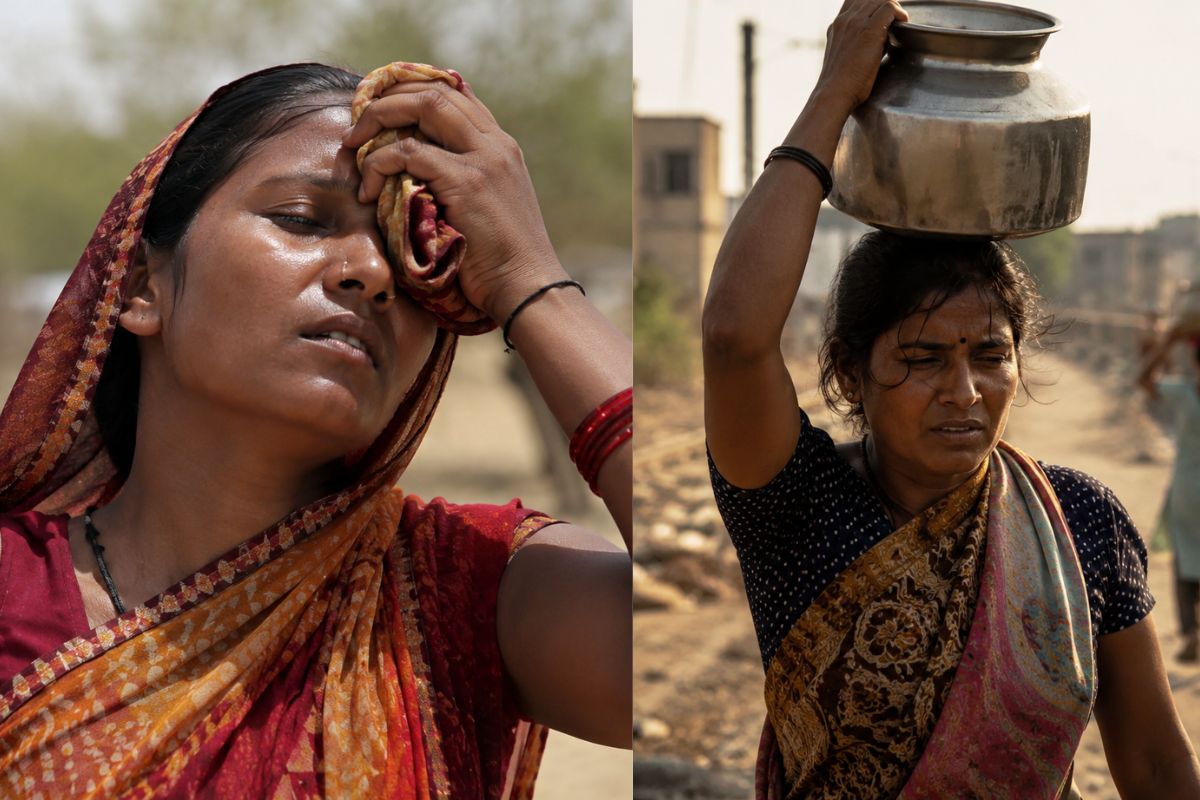
While the nation watches thermometers hit 46°C, millions of Indian women face a crisis hiding in plain sight. The heatwave doesn’t discriminate, but our systems do.
India is on fire. Not metaphorically, literally. Temperatures across Delhi, Haryana, Rajasthan, and Uttar Pradesh have been smashing 45°C for weeks, arriving earlier in the year than almost any record in living memory. The India Meteorological Department has issued warnings. Schools have closed. And yet, for tens of millions of Indian women, there is no early holiday, no work-from-home option, no escape. The heat simply becomes another burden they carry: invisibly, silently, and without relief.
This is not a natural disaster that strikes equally. It is a crisis shaped by the same inequalities that govern every other dimension of Indian women’s lives. And it is past time we name it for what it is: a gender emergency.
The Kitchen as Ground Zero
Before we talk about outdoor labourers or street vendors, let’s start where the day begins for most Indian women — the kitchen. Over the past decade, LPG connections have reached millions of households across India, including many remote villages, significantly reducing dependence on traditional fuels. Yet, a large number of rural families still continue to use biomass like wood, dung, and crop residue alongside LPG, especially during financial hardship or supply shortages. Imagine standing over a hot stove when the outside temperature is already 44°C. This is not merely discomfort; it is a daily health burden that disproportionately falls on women, because in most households, cooking still remains “women’s work.”
“The heatwave doesn’t begin at the door. For women, it begins at the chulha and it never really ends.”
The walls of many homes particularly in urban slums and rural settlements are made of tin or asbestos sheeting. These materials trap heat brutally. A woman in such a home during a heatwave is essentially living inside a slow oven. There is no air conditioning. Often, there is no reliable electricity for even a fan. And water which should be the first line of defence against heat is increasingly scarce.
The Invisible 90 Minutes
Here is a number that should outrage every policy-maker in this country: during heatwaves, women in India take on an additional 90 minutes of unpaid care work every single day. This figure comes from the Arsht-Rock Foundation’s landmark report, “The Scorching Divide.” When it’s too hot for children to go to school, women stay home to care for them. When elderly relatives need extra attention in the heat, it is women who provide it. When the tap runs dry and water must be fetched from further away, it is women who walk.
Indian women already spend 2.5 times more hours on unpaid work than men even before a heatwave. The crisis simply amplifies an injustice already baked into the system. This is time taken away from paid work, from rest, from health, from ambition. It is a tax on being a woman in a warming world and nobody is compensating anyone for it.
Working in the Heat with No Choice
For women in the informal economy and that is the majority of India’s working women; there is no sick leave, no remote work, no climate-controlled office. A woman selling vegetables at a roadside stall doesn’t have the luxury of staying inside. A construction worker cannot choose not to lay bricks in 46°C heat. A domestic worker walks between houses in the full glare of the midday sun because her family needs the income.
Who Bears the Brunt — The Real Picture
- Women in informal settlements live in tin-and-asbestos homes that trap heat with no escape
- Female street vendors and construction workers have no access to cooling facilities or paid sick leave
- Rural women cooking on biomass stoves face compounded indoor and outdoor heat stress
- Water scarcity forces women to travel further and longer — in the hottest part of the day
- Rising temperatures are linked to increased domestic violence and mental health crises
- Restrictive gender norms around clothing and mobility make managing heat even harder
And there is another layer to this that rarely makes it into mainstream conversation: research has increasingly linked extreme heat to spikes in domestic violence. When people are physically uncomfortable, stressed, and trapped in small spaces with no relief, tension escalates. Women, already at higher risk of violence at home, face compounded danger during heatwaves. The thermometer rises. And so does the threat.
A System That Looks Away
India has a National Action Plan on Climate Change. It has heat action plans in several cities. It has the IMD issuing daily warnings. What it does not have — not adequately, not consistently — is a gendered lens on any of it. Heat relief measures are largely designed as if the population experiences heat uniformly: cooling centres that women cannot always access safely alone, advisories that assume people can simply “stay indoors,” water distribution systems that don’t account for who actually collects the water.
The climate crisis is a feminist issue. Full stop. Any response that doesn’t centre the most vulnerable and in India’s heatwaves, that disproportionately means women, particularly Dalit women, tribal women, and women in urban poverty — is an incomplete response. It is, in fact, a failure dressed up as policy.
What Must Change NOW
We are not asking for the impossible. We are asking for the obvious. Cooling centres must be safe, women-only spaces in addition to general facilities. Heat action plans must include specific provisions for pregnant women, lactating mothers, and female informal workers. Biomass cooking must be urgently replaced with clean cooking alternatives — not in ten years, now. Water distribution points must be redesigned to reduce the burden on women. And perhaps most importantly, unpaid care work during climate emergencies must be counted, recognised, and compensated.
The heatwave will pass. The monsoon will come. The headlines will move on. But the structural vulnerabilities that make extreme heat so much more dangerous for Indian women will remain, until we decide, collectively and loudly, that this is unacceptable. That her life in the heat is not a natural fact. It is a political choice. And we can choose differently.
Her Story Deserves to Be Heard.
Share this article. Talk about it. Demand that your local representatives include women in every climate policy conversation. Because silence in the face of injustice is just a different kind of heat.