The Chakra System, Explained Beyond the Instagram Version
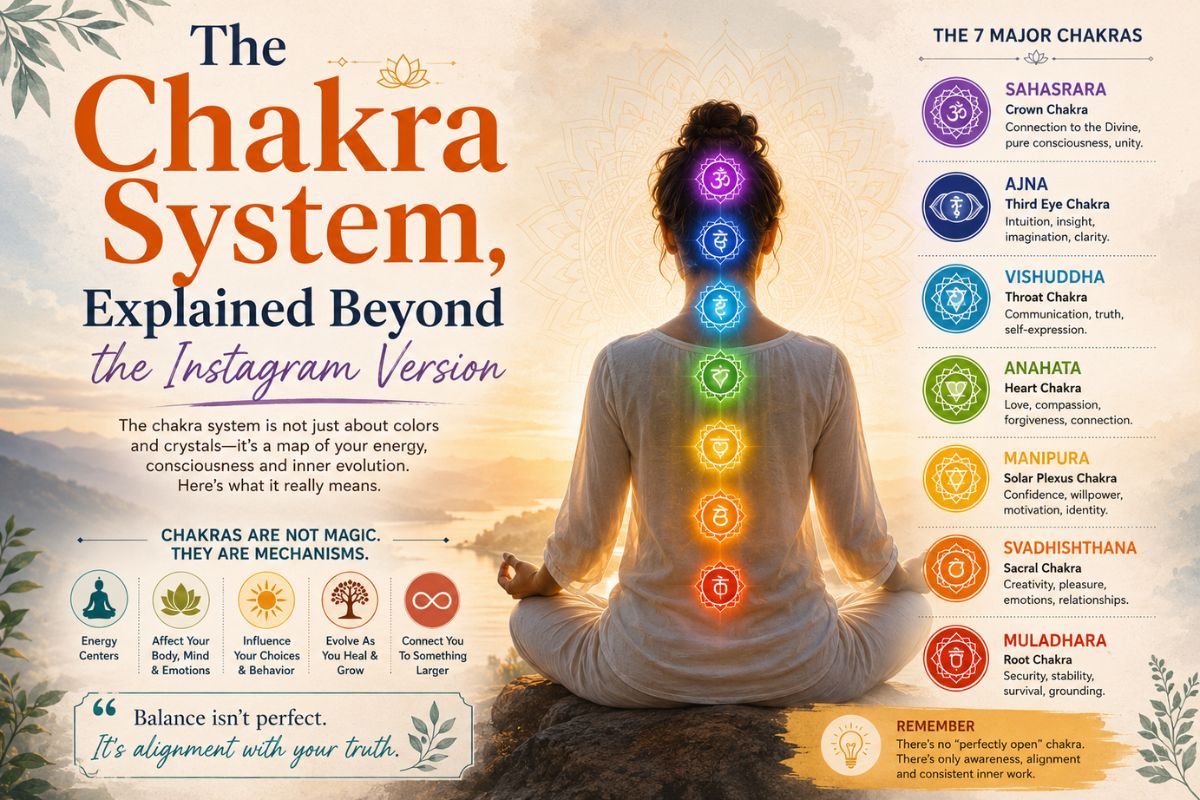
Somewhere between a yoga studio playlist and a crystal shop checkout counter, the chakra system got flattened into seven colored circles and a handful of affirmations. Root chakra, money blocks. Heart chakra, self love. Third eye, intuition. It photographs well and it sells well, and none of that makes it wrong exactly, but it does mean most people encounter the idea of chakras already stripped of the framework that gave it meaning in the first place. The actual system is older, stranger, and considerably more useful than a scented candle can convey.
Where the Idea Actually Comes From
Chakra is a Sanskrit word meaning wheel or disc, and the concept shows up across several strands of Indian philosophy, most prominently in Tantric and Yogic texts written roughly between the sixth and fifteenth centuries. These texts describe a subtle body, a layer of human existence that sits alongside the physical body but is not identical to it, made up of channels called nadis through which a form of vital energy called prana is said to move. Chakras are described as the major junctions along that network, points where energy concentrates and where physical, emotional, and psychological experience are believed to intersect.
The number and location of these centers vary slightly between texts, but the version that became standard in the West, the familiar seven running from the base of the spine to the crown of the head, comes largely from a text called the Sat-Chakra-Nirupana, written in the sixteenth century and later translated and popularized by the British scholar Sir John Woodroffe in the early twentieth century. That translation is worth knowing about, because it explains a lot about why the chakra system feels both ancient and oddly Victorian in places. What reached English readers first was already one interpretation among several, filtered through a colonial era translator working with the tools and assumptions of his time.
None of that makes the system less worth understanding. It just means the seven rainbow colored wheels most people picture are a specific historical snapshot, not the entire tradition.
The Seven Centers, Without the Sales Pitch
Each chakra is traditionally associated with a location along the spine, a Sanskrit name, an element, and a cluster of psychological themes. Stripped of marketing language, here is roughly what the older texts describe.
Muladhara, the root, sits at the base of the spine and is tied to the earth element, physical safety, and survival instinct. Traditional texts associate an unsettled Muladhara with chronic anxiety about basic security, not primarily with wealth, whatever a manifestation workshop might claim.
Svadhisthana, the sacral center, sits just below the navel and is linked to water, creativity, and pleasure in the broadest sense, including sexuality but not limited to it. Texts describe this center as governing a person’s relationship with change and with their own desires.
Manipura, the solar plexus, is associated with fire and sits with will, confidence, and personal power. This is the center most directly tied to a sense of agency, the difference between feeling like something happens to you and feeling like you are the one acting.
Anahata, the heart center, is linked to air and to the capacity for compassion, grief, and connection. Interestingly, in the older texts this is described less as romantic love and more as the point where the lower, more self oriented centers meet the upper, more transcendent ones. It is a bridge, not just a feeling.
Vishuddha, at the throat, is tied to space or ether and governs communication, truth telling, and the gap between what a person feels internally and what they actually say out loud.
Ajna, the third eye, sits between the eyebrows and is associated with insight, discernment, and the ability to see beyond immediate appearances. This is closer to clarity of judgment than to psychic ability, whatever the term has come to imply in popular use.
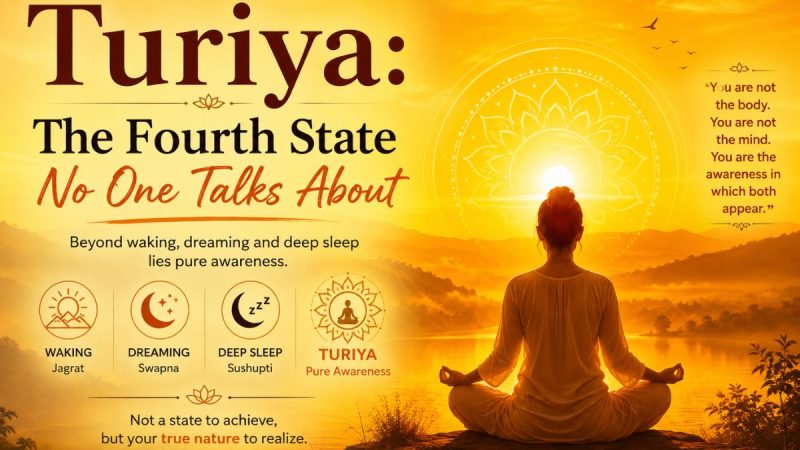
Sahasrara, the crown, sits at the top of the head and is described as the point of connection to something beyond individual identity entirely. Several traditions describe full activation of this center as inseparable from the kind of consciousness described in the older Upanishadic texts, states of awareness that sit beneath and beyond ordinary waking experience.
Why the System Gets Flattened
A framework this layered does not survive a fifteen second video format well. What tends to make it through is the color, the location, and a single keyword, which is how a genuinely complex psychological and spiritual model becomes “unblock your throat chakra to speak your truth” and little else. Real Shee Power has written before about how the wellness industry often takes practices rooted in Indian spirituality and repackages them for a very different market, stripping out the cultural and philosophical context along the way. The chakra system is one of the clearest examples of exactly that pattern. It gets sold as self improvement software when it was written as something closer to a map of the whole self.
That same flattening happens with the language itself. A word like chakra travels through translation, through marketing copy, through a hundred small simplifications, until the Sanskrit original barely resembles what people repeat. It is the same pattern covered in an earlier piece on how Sanskrit gets treated as decorative rather than understood, and the chakra system, more than almost any other concept from Indian philosophy, has been on the receiving end of that particular kind of erosion.
The Body Connection Is Not New
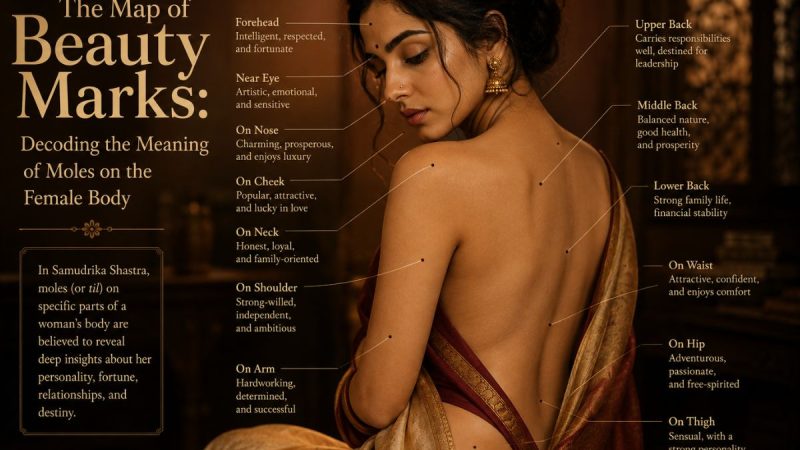
One detail that rarely makes it into the simplified version is how directly older Indian traditions link the subtle body to the physical one, treating them as continuous rather than separate. Samudrika Shastra, the classical Indian system of reading physical features for insight into character and life path, makes a similar move. A recent piece on what body reading traditions claim about a woman’s inherent traits describes how markings on the body are read as reflections of internal energy structure, the same underlying idea that the chakra system builds on at a larger scale. None of this is presented in these texts as separate from physical reality. It is presented as a different resolution of looking at the same reality.
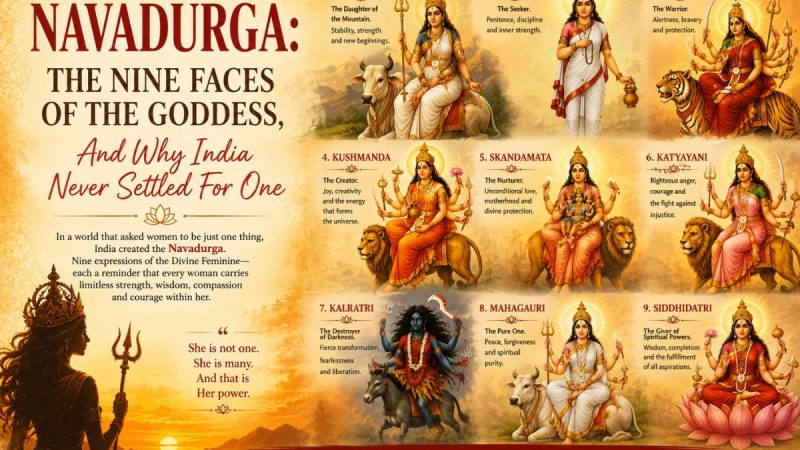
This is also where chakras intersect with sacred geography. The Shakti Peethas, the network of temples said to mark where parts of the goddess Sati’s body fell across the Indian subcontinent, are described in tradition as corresponding to specific chakras and body parts, turning an entire map of India into something like an external chakra system laid across the land itself. The complete guide to these sites walks through that correspondence in detail, and it is a useful reminder that the chakra framework was never meant to live only inside an individual body. In classical thought, the same structure repeats at every scale, in a person, in a temple, in the land itself.
What a Grounded Practice Actually Looks Like
None of this requires buying a crystal set or believing anything you are not inclined to believe. A few starting points that stay closer to the source material than to the marketing version.
Start with breath rather than belief. Traditional texts treat pranayama, structured breathing practice, as the primary technique for working with these energy centers, long before visualization or affirmation enters the picture. A recent piece on Shiva Bhakti during the month of Sawan makes the same point from a devotional angle, that a few minutes of quiet, deliberate breathwork each morning does more for genuine inner balance than most add on rituals.
Read a real translation before a summary. The Sat-Chakra-Nirupana and the broader Tantric literature it comes from are dense but not inaccessible, and reading even a chapter in a proper translation will do more to correct the flattened version than a dozen infographics.
Treat the physical and psychological themes as descriptive, not diagnostic. Feeling anxious does not mean your root chakra is broken in some literal sense that needs a specific crystal to fix. It means an old framework has offered you a vocabulary for something you were already noticing, which is a genuinely useful thing a vocabulary can do, without needing to be treated as medical fact.
Notice where a claim has drifted from the source. If a workshop or an app attaches a very specific modern promise, career success, weight loss, a soulmate, to an ancient energy center, that is usually the marketing layer talking, not the original text.
The System Deserves Better Than a Filter
The chakra system survived several centuries of transmission, translation, and reinterpretation before it ever reached a phone screen, which says something about how much genuine insight it holds. It was never meant to be seven neat colors in a row. It was meant as a working model of how a person’s physical existence, emotional life, and deeper awareness are connected rather than separate, the same thread that runs through sacred geography, through devotional practice, and through the older philosophical texts that first tried to describe what sits beneath the noise of ordinary experience. Understood on those terms, it holds up considerably better than the version sold at checkout.