Turiya: The Fourth State No One Talks About
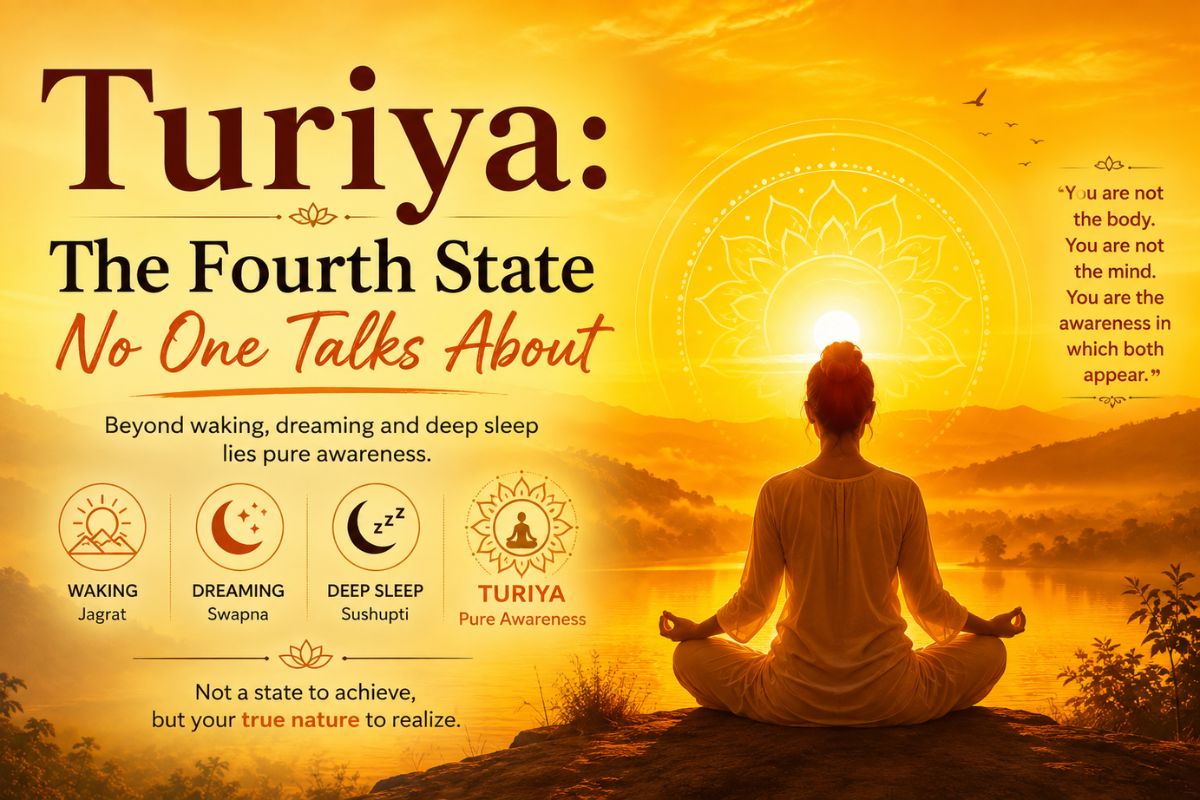
Ask most people how many states of consciousness exist, and they will name three without thinking twice. Waking, dreaming, and deep sleep. Ancient Indian philosophy has always insisted there is a fourth, quieter than all of them, and stranger to describe. It is called Turiya, and it may be the closest thing Sanatan Sanskriti has to a map of what lies underneath ordinary awareness.
What Turiya Actually Means
The word itself is simple. In Sanskrit, turiya just means “the fourth.” It first appears in the Mandukya Upanishad, a short but dense text that spends its entire length examining the syllable “Om” and the states of mind it is said to represent. Waking (jagrat), dreaming (svapna), and dreamless sleep (sushupti) are the first three. Turiya is described not as a fourth experience alongside the others, but as the silent background that is present in all three, the awareness that watches the watcher.
That distinction matters. Turiya is not a special mood, a high, or a peak experience you chase and then lose. It is described as the constant that never actually leaves, the way the screen never leaves even while the movie changes scene after scene. Most of us simply never notice it because our attention is glued to the story rather than the screen it is playing on.
Why It Gets Overlooked
Modern wellness culture is comfortable talking about mindfulness, breathwork, and stress reduction, all useful tools with real evidence behind them. Turiya sits a level deeper than most of that conversation, closer to philosophy than to a ten minute morning routine. It asks a harder question than “how do I feel calmer today.” It asks what is actually doing the noticing when you feel calm, anxious, joyful, or bored. That question does not fit neatly into a listicle, which is probably why it rarely comes up outside genuinely rooted spiritual writing.
There is also a real risk of the idea being flattened for content. Someone can namedrop Turiya in a caption without ever engaging with the text it comes from, the same way yoga postures get separated from the philosophy that gave them meaning in the first place. Real Shee Power has written before about how Sanskrit itself gets treated as decorative rather than understood, and Turiya runs the exact same risk when it gets reduced to a buzzword instead of studied as the layered concept it actually is.
How Practitioners Describe Reaching It
No serious teacher claims Turiya can be manufactured on demand through a technique. What they describe instead is a gradual quieting that makes the ground beneath ordinary experience easier to notice. A few threads show up again and again across different traditions.
Long, unhurried meditation is the most common route, not the kind aimed at relaxation but the kind aimed at simply watching thought without following it anywhere. Silence, both external and internal, is treated as a doorway rather than an inconvenience. Many of the older texts also point to the space between two thoughts, the tiny gap most people never register because the next thought arrives so quickly, as a brief and ordinary glimpse of Turiya that everyone has already had without naming it.
Sadhguru, whose teachings have carried a great deal of this philosophy to a global audience, often frames it less as a mystical destination and more as a shift in what a person identifies with. His work on presence and self-awareness, covered in an earlier piece on his influence, leans on very similar language. The point is not to add something new to your mind, but to stop mistaking the noise for the whole of who you are.
A Practical Way In, Without Overselling It
You do not need a Himalayan retreat to start paying attention to this. A few honest starting points:
- Sit quietly for a few minutes without trying to fix your mood, simply noticing thoughts arrive and leave.
- Pay attention to the pause right after you wake up, before the day’s plans flood in. That brief stillness is often the easiest place to catch a glimpse of what the texts are pointing to.
- Read the source material itself rather than secondhand summaries. The Mandukya Upanishad is short enough to sit with in a single afternoon.
- Resist the urge to turn it into a productivity hack. Turiya is not a tool for better focus at work, even if calmer focus happens to be a side effect.
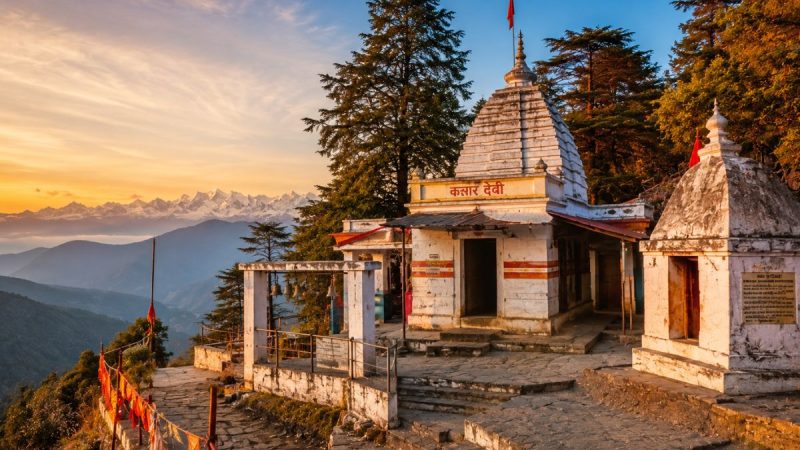
If a physical place helps ground an abstract idea, somewhere genuinely quiet does more work than any app. Real Shee Power’s guide to Kasar Devi Temple in the Himalayas is a good example of a place built around exactly this kind of stillness, somewhere silence is the point rather than a byproduct of poor phone signal.
The Point of Naming It At All
There is a reason a tradition thousands of years old bothered to name something this hard to pin down. Once you have a word for the quiet background awareness underneath waking, dreaming, and sleep, you start noticing it is already there, in the pause before you speak, in the half second after a surprise, in the stillness right before sleep takes over. Turiya was never meant to be an escape from ordinary life. It was meant as a reminder that something steady sits underneath all of it, whether or not you ever go looking for it.