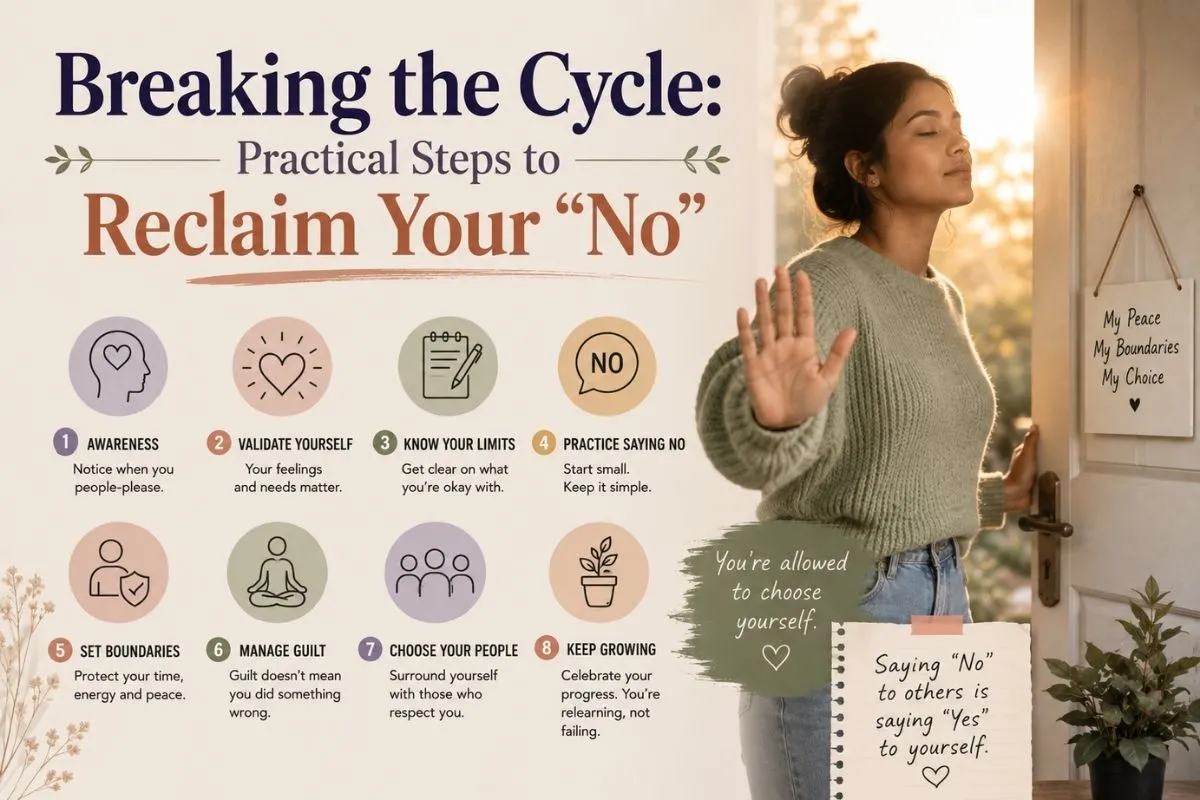
Breaking the Cycle: Practical Steps to Reclaim Your “No”
Part of our series on the psychology of people-pleasing. Start with the pillar guide:Why Women People-Please
Knowingwhyyou people-please is one thing. Actually changing the pattern is another. The good news: you don’t need a personality overhaul — you need small, repeatable practices that gradually retrain your nervous system to tolerate other people’s disappointment without treating it as an emergency.
1. Build a Pause Into Every Request
The default people-pleasing response is instant agreement — often before you’ve even checked in with yourself. Interrupt this by creating a standard pause: “Let me check and get back to you.” This single habit does more than almost anything else, because it separates therequestfrom thereflexive yes, giving you room to actually consult your own preference.
2. Practice Saying No in Low-Stakes Situations First
You don’t have to start by setting a boundary with your most difficult relationship. Start small: decline a minor request from a stranger, skip an optional social event, tell a waiter you’d like your order changed. These low-stakes reps build the tolerance you’ll need for higher-stakes ones later.
3. Expect the Discomfort — and Let It Pass
Here’s the part most advice skips: saying nowillfeel bad at first, even when it’s the right choice. That discomfort isn’t a sign you did something wrong — it’s your nervous system reacting to something unfamiliar. Discomfort is not danger. Most of it passes within minutes if you don’t rush to undo it by over-explaining or apologizing.
4. Separate Someone’s Reaction From Your Responsibility
You can care about someone’s feelings without being responsible for managing them. If a friend is disappointed you can’t make it to dinner, that disappointment is hers to feel — not yours to fix. This distinction is one of the hardest to internalize, and one of the most freeing once it clicks.
5. Reconnect With Your Own Preferences on Purpose
Since chronic people-pleasing often dulls your sense of your own wants, rebuild that muscle deliberately. Ask yourself small daily questions — what doIwant for lunch, what doIwant to do this weekend — and actually follow through on the answer, even in tiny ways.
6. Notice Resentment as Useful Information
Instead of pushing resentment away, treat it as a signal worth investigating: what boundary went unspoken here? Resentment, looked at honestly, is often the clearest map you have of where your limits actually are.
This Is a Practice, Not a Personality Transplant
You won’t wake up one day fully cured of people-pleasing — and that’s not the goal. The goal is more moments of conscious choice, and fewer of automatic compliance.
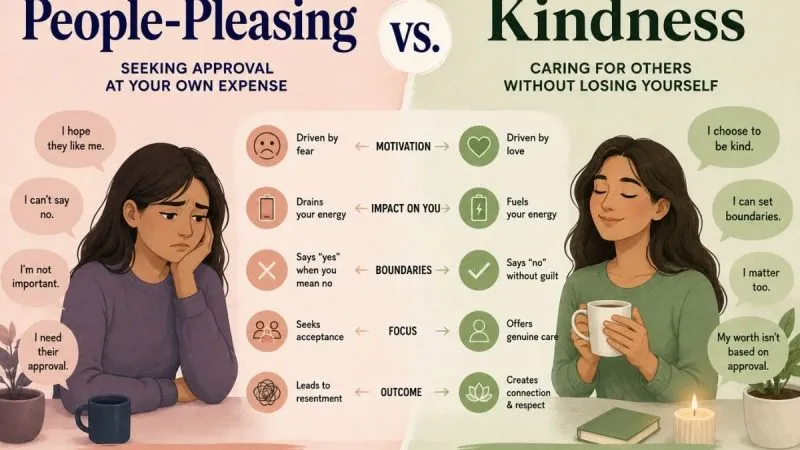
For a deeper look at how to tell healthy giving from fear-based giving as you practice this:People-Pleasing vs. Kindness: How to Tell the Difference
Or explore where these patterns started in the first place:The Root Causes: How Childhood Conditioning Shapes People-Pleasing in Women