
Are These 7 Everyday Habits Quietly Making You Look Years Older?
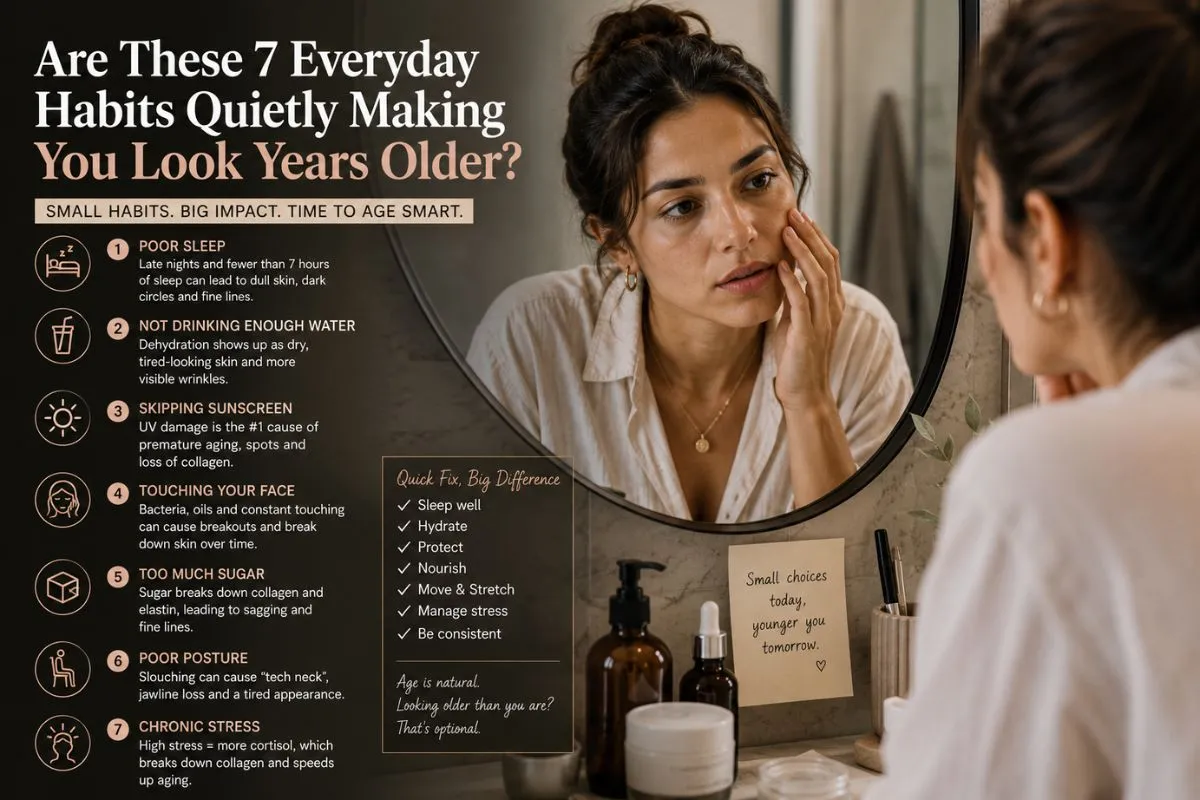
Nobody wakes up one morning and suddenly looks five years older. It happens in tiny, invisible increments, one skipped sunscreen application, one more sleepless night, one more sugary coffee, repeated so many times that the pattern eventually shows up on your face and in your energy before you even notice the shift happened.
Real Shee Power is your everyday lifestyle bestie, helping you build a life that actually feels good to live.
Here is the genuinely good news hiding underneath that slightly uncomfortable opening. Almost none of the habits that age you fastest have anything to do with genetics or bad luck. They are small, repeatable choices, which means they are also completely reversible. This is a deep dive into the seven biggest offenders, backed by what dermatologists and sleep researchers actually say, not what a skincare ad wants you to believe.

Photo by Yan Krukov via Pexels
Habit One: Skipping Sunscreen On Cloudy Or Indoor Days
This is, without competition, the single biggest driver of visible skin aging, and most people only apply sunscreen when the sun is obviously blazing. UVA rays, the ones responsible for wrinkles, sagging, and dark spots, penetrate clouds and even glass windows. Dermatologists consistently point to daily, unprotected sun exposure as the cause of the vast majority of visible skin aging, far more than natural aging on its own.
The fix here is almost embarrassingly simple. A broad spectrum SPF 30 or higher, applied every single morning regardless of weather, rain or shine, indoors or out. Not just on beach days. Every day, as a permanent step in your routine, the same way you would not skip brushing your teeth.
Habit Two: Chronic Under Sleeping
Sleep is not downtime for your skin and body, it is active repair time. During deep sleep, your body increases blood flow to the skin, rebuilds collagen, and clears out inflammatory buildup from the day. Cut that process short night after night and the repair work simply does not finish.
The visible signs show up fast, dull skin, puffiness that does not resolve by midday, and fine lines that seem to deepen within weeks of a stretch of poor sleep. Beyond appearance, chronic sleep deprivation is linked to higher stress hormone levels, which independently accelerates collagen breakdown.
Seven to nine hours is the range most sleep researchers agree on for adults, and consistency matters nearly as much as total hours. Going to bed and waking up at roughly the same time every day, even on weekends, trains your body’s repair cycles to work more efficiently than an inconsistent schedule ever will. Blue light from phones and laptops in the hour before bed also delays the release of melatonin, the hormone that triggers your body’s repair cycle, so even a full eight hours can feel less restorative if it starts an hour later than it should because of a scrolling session.
Habit Three: High Sugar Intake
This one surprises people the most. Excess sugar in your bloodstream binds to collagen and elastin fibers in a process called glycation, and the resulting damaged fibers become stiff and brittle instead of bouncy and supple. Over time, this shows up as premature fine lines and a loss of skin elasticity, essentially aging your skin from the inside regardless of how good your skincare routine looks on the outside.
You do not need to eliminate sugar entirely, that kind of restriction rarely lasts anyway. Simply becoming aware of hidden sugar in sauces, flavored yogurts, and sweetened drinks, and swapping even a few of those for whole food alternatives, measurably reduces glycation over months, not years.
Habit Four: Chronic Stress Without Any Outlet
Stress in short bursts is completely normal and even useful. Stress that never gets released is a different story entirely. Prolonged elevated cortisol breaks down collagen, disrupts sleep quality, and has been linked to visibly accelerated skin aging in multiple studies. It also shows up in posture, tension held in the shoulders and jaw creates a tired, older appearance that has nothing to do with actual age.
If chronic stress and screen fatigue sound familiar, our
self care Sunday guide walks through a realistic weekly reset built specifically around this exact problem, no elaborate spa day required, just genuine nervous system recovery.🧞♀️ Real Shee Power Genie Takeaway
You do not need to fix all seven habits at once, and trying to will just burn you out faster than any of them individually. Pick the one that resonates the most uncomfortably right now, that discomfort is usually a sign you already know it is the real problem, and work on only that one for the next thirty days.
Habit Five: Dehydration You Do Not Notice
Most people walk around mildly dehydrated without realizing it, and the effects compound quietly. Dehydrated skin looks duller, fine lines appear more pronounced, and under eye hollows become more visible simply because the skin has lost volume and plumpness. Beyond skin, chronic mild dehydration is also linked to fatigue and reduced cognitive sharpness, both of which read as tiredness on your face regardless of how much sleep you got.
A simple, sustainable target is roughly eight glasses of water a day, adjusted upward if you exercise regularly or live somewhere hot. Herbal tea and water rich foods like cucumber and watermelon count toward this total too, it does not have to come from plain water alone.
Habit Six: Poor Posture From Screen Time
This is one of the least discussed aging accelerants, and one of the most visible. Hours spent hunched over a phone or laptop creates what is sometimes called tech neck, along with rounded shoulders and a forward head position that reads as tired and older at any age, completely independent of skin condition.
The fix is less about a single exercise and more about awareness throughout the day. Setting your screen at eye level, taking a short standing break every thirty minutes, and doing a simple chest opening stretch a few times a day gradually retrains your posture. This is a slow habit to rebuild, but a genuinely effective one, and it often changes how people are perceived years before any skincare change would.
Habit Seven: Neglecting Your Neck And Hands
Most skincare routines stop firmly at the jawline, but the skin on your neck, chest, and hands is often thinner and shows sun damage and aging even faster than facial skin. It is simply the area most consistently forgotten in a daily routine.
The fix is almost too easy to skip, extend whatever you already put on your face down to your neck and the backs of your hands, sunscreen included. This single habit shift, more than almost any product upgrade, is what dermatologists say separates people whose skin ages visibly slower from everyone else.
Putting It All Together: A Realistic 30 Day Approach
Trying to overhaul all seven habits simultaneously is a guaranteed way to abandon all of them within a week. Instead, pick the single habit that felt the most uncomfortable to read about, that discomfort is usually a sign it is genuinely your biggest gap, and focus on nothing but that one for thirty days.
Once it feels automatic, add a second one. This is exactly the same principle behind sustainable habit change more broadly, covered in more depth in our morning routine guide, where the same slow, one habit at a time approach applies just as well to mornings as it does to aging prevention.
None of these seven fixes require an expensive product line or a dramatic lifestyle overhaul. They require noticing, and then quietly, consistently, doing the boring thing every single day. That consistency, more than any single product or trick, is genuinely what separates people who look years younger than their actual age from everyone else.
FAQs
Which of these seven habits matters the most? Sun protection consistently ranks as the single largest factor in visible skin aging across dermatology research, more impactful than any other habit on this list. If you can only fix one thing, start there.
Can you reverse damage that has already happened? To a meaningful degree, yes. Skin has genuine regenerative capacity, and habits like consistent sunscreen use, adequate sleep, and hydration measurably slow further damage while allowing some existing damage to improve over months.
Do I need expensive skincare products to see results? No. Consistency in basic habits, sunscreen, sleep, hydration, and reduced sugar intake, outperforms expensive products used inconsistently almost every time, according to dermatologists.
How long before I see a difference? Hydration and sleep improvements often show visible results within one to two weeks. Sun protection and collagen related changes take longer to show, typically eight to twelve weeks of consistent habit change before a noticeable difference appears.
Reading List
If this one hit home, these go deeper on the exact same threads.