The Living Fortresses of the Parvati Valley: A 2026 Guide to Kath-Kuni Architecture
Kath-Kuni Architecture
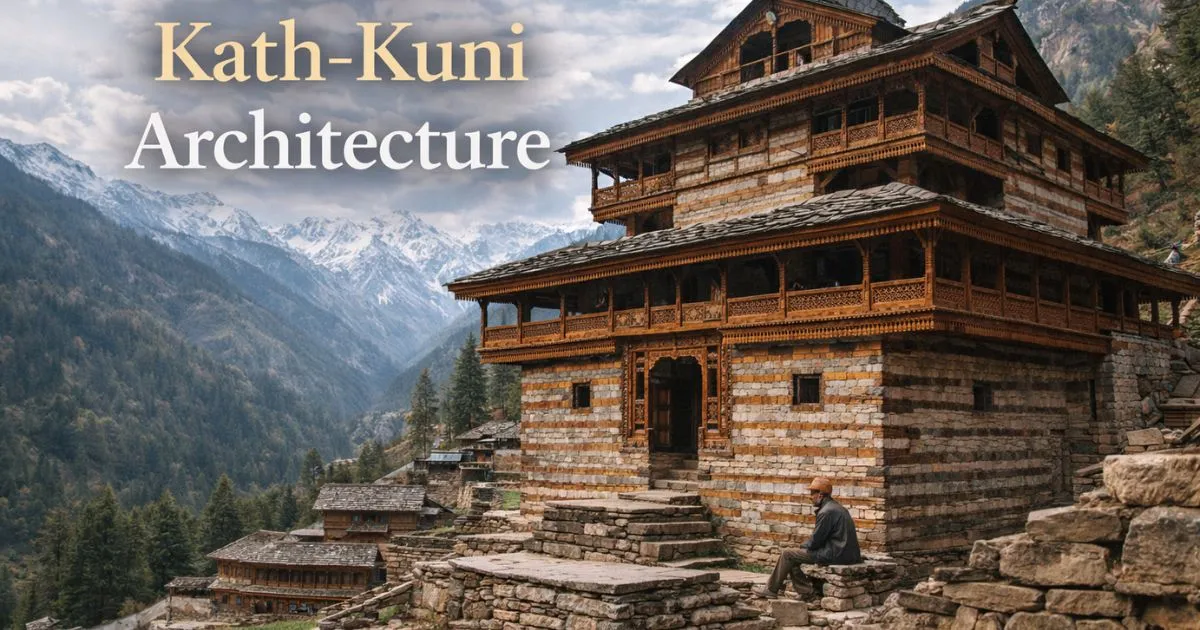
Deep in the Parvati Valley, as you ascend toward the remote village of Grahan, the landscape shifts from dense pine forests to a cluster of towering, stone-and-wood structures that seem to grow directly out of the mountain. These are not just homes; they are a masterclass in seismic engineering that has protected Himalayan communities for over a millennium.
Known as Kath-Kuni (literally “wood-corner”), this architectural style is the silent guardian of the Himachal interior. While modern concrete structures struggle with the region’s shifting tectonic plates, these ancient fortresses have survived centuries of tremors with barely a crack in their facade.
The Physics of Flexibility: Why They Don’t Fall
The genius of Kath-Kuni lies in its alternating layer construction. Unlike rigid concrete, which snaps under seismic stress, Kath-Kuni is designed to move.
- Interlocking Layers: Builders stack heavy local stone and seasoned Deodar wood (Himalayan Cedar) in alternate courses. Crucially, no mortar or nails are used in the core structure.
- The “Lap Joint” Corner: At the corners, the wood is joined using elaborate lap joints. During an earthquake, these joints act as shock absorbers, allowing the layers to shift slightly and dissipate energy without collapsing.
- Dry Masonry: Because there is no cement, the stones can “chatter” and settle back into place after the ground stops shaking.
Technical Note: Deodar wood is the cornerstone of this design. It is naturally resistant to rot and pests, and its high tensile strength allows it to bear the massive weight of the stone walls while remaining flexible enough to bend.
Natural Climate Control
In the Parvati Valley, where temperatures can swing from 18°C in the sun to well below freezing at night, thermal regulation is a survival necessity.
| Material | Function | Thermal Property |
| Pahari Stone | External Shell | High thermal mass; absorbs heat during the day. |
| Deodar Wood | Structural Binding | Natural insulator; prevents heat transfer. |
| Slate Roof | Weatherproofing | Sheds heavy snow easily; acts as a secondary heat sink. |
| Mud Plaster | Interior Finish | Breathable layer that regulates humidity levels. |
The walls are often two to three feet thick. This creates a “thermal lag” effect: the heat absorbed by the stones during the day slowly radiates into the living quarters throughout the night, maintaining a stable internal temperature.
The Cultural Blueprint
Walking through Grahan in 2026, you’ll notice the social hierarchy built into the architecture.
- Ground Floor (Goshala): Used for livestock. The body heat from the cattle rises, providing a “radiant floor” heating effect for the residents above.
- Middle Floor: Storage for grains and dry goods, acting as an extra layer of insulation.
- Top Floor: The primary living space, often featuring a wrap-around wooden balcony (Berndani) to catch the winter sun.
Preserving the Marvel in 2026
As the Parvati Valley becomes more accessible, the push for modern “quick-build” concrete is high. However, a 2026 revival is underway. Local artisans are now integrating modern solar panels and discreet water filtration systems into Kath-Kuni frames, proving that ancient resilience and 21st-century comfort can coexist.
For the traveler, these buildings are a reminder that the most sophisticated solutions are often found by listening to the mountains themselves.