Piplantri: The Rajasthan Village Where Trees Celebrate the Birth of a Girl
Piplantri: A Village Where Every Girl Blossoms Into a Tree
In the heart of Rajasthan’s Rajsamand district lies a village that defies every stereotype associated with rural India. Piplantri is not just a village—it’s a living, breathing testimony to the power of community, sustainability, and respect for women. Here, the birth of every girl child is greeted not with sorrow or regret, but with the planting of 111 trees in her name.
Yes, you read that right.
While the world debates climate change and gender inequality in grand forums, Piplantri has quietly scripted its own revolution—rooted in the soil, nurtured by hope, and watered by collective will.
The Beginning of a Green Revolution
This unique tradition began in 2006, thanks to the visionary leadership of Shyam Sundar Paliwal, the former sarpanch (village head) of Piplantri. After losing his young daughter Kiran to dehydration and illness, Paliwal decided to transform his grief into something life-affirming.
In her memory, he began planting trees every time a girl was born in the village.
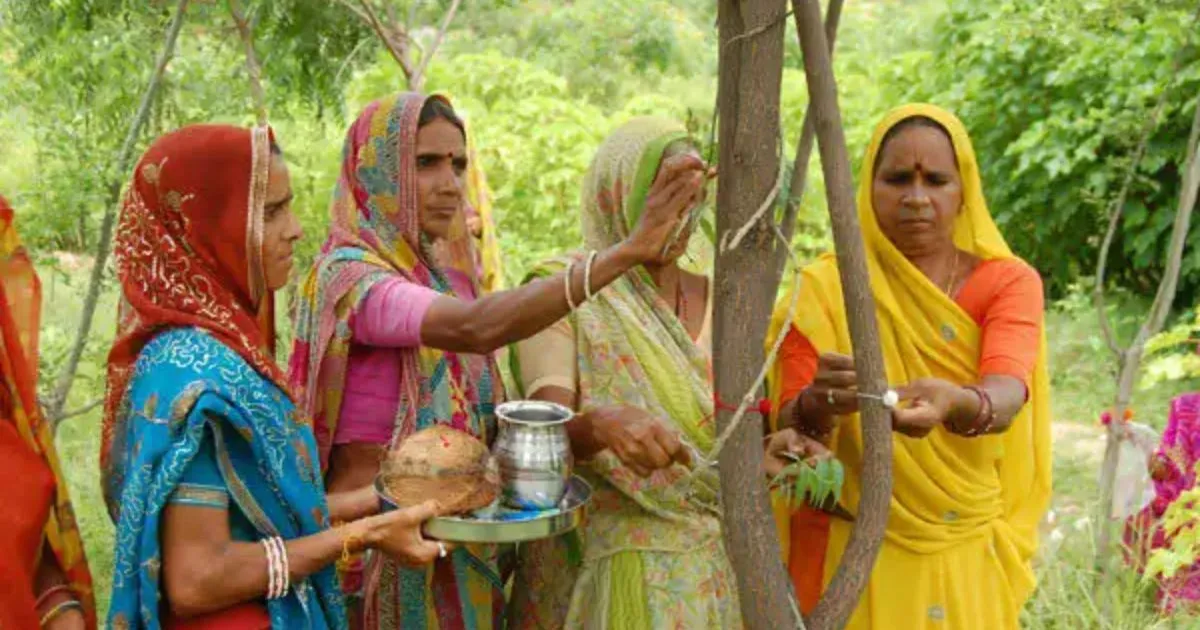
What started as a personal tribute soon turned into a community-wide movement. Today, it’s a custom—and not just symbolic. The villagers gather together, dig the soil, and plant 111 saplings for every newborn girl, making sure they grow strong—just like the girls they represent.
More Than Just Trees: A Holistic Model of Empowerment
Piplantri’s success goes beyond greenery. It’s a village that has woven women empowerment, ecology, and economic development into one seamless fabric. Here’s how:
1. Environmental Conservation
With over 350,000 trees planted, including neem, sheesham, mango, and amla, the village has transformed its once-barren land into a green oasis. These trees have recharged the groundwater table, cooled the microclimate, and brought biodiversity back to the region.
What’s even more inspiring is the community-driven protection mechanism. Each family pledges to care for the saplings planted in their daughter’s name, ensuring survival rates as high as 90%.
2. Empowering the Girl Child
For every girl born, the village community raises a fixed deposit of ₹31,000, contributed by her parents and the gram panchayat. The money is locked in until she turns 18, ensuring a financial cushion for her future. In return, the parents sign an affidavit:
- They will not marry her off before the legal age.
- She will receive a proper education.
- They will nurture and protect the planted trees.
It’s a social contract that has uplifted the status of girls in the village and challenged age-old patriarchal norms.
3. Economic Sustainability
The trees planted are not just decorative—they are economically useful. Aloe vera is grown between the trees and processed into products like gels, juices, and soaps. The village has set up small-scale industries managed by women’s self-help groups (SHGs), generating employment and empowering women financially.
What was once a poor village struggling with drought and poverty is now a self-sustaining micro-economy built on green principles.
Piplantri by the Numbers
| Feature | Data |
|---|---|
| Population | Approx. 8,000 |
| Trees Planted | 350,000+ |
| Girls Honoured with Trees | 10,000+ |
| Survival Rate of Trees | 90% |
| Women Self-Help Groups | 40+ |
| Local Products | Aloe vera, amla, soaps, handicrafts |
Recognition and Global Attention
Piplantri’s model has attracted global praise. It has been featured in:
- UNDP case studies on rural innovation
- International documentaries on sustainable villages
- India’s own Swachh Bharat and Beti Bachao, Beti Padhao campaigns
Shyam Sundar Paliwal received the Padma Shri Award in 2021 for his extraordinary contribution to environmental and social change.
A Village That Teaches Us What Progress Looks Like
In a country where female foeticide, child marriage, and gender discrimination still make headlines, Piplantri offers a radically hopeful narrative. It’s not just planting trees; it’s planting dignity, equality, and future—one girl child at a time.
What makes Piplantri even more remarkable is that it didn’t wait for government funding or foreign aid. The change began from within—a grieving father, a compassionate village, and a collective vision to redefine what it means to celebrate life.
How to Visit Piplantri
If you ever find yourself in Rajasthan, do not miss a visit to this village of hope.
- Location: Rajsamand district, around 70 km from Udaipur
- Best Time to Visit: October to March
- Nearest Airport: Maharana Pratap Airport, Udaipur
- What to Expect: Tree plantations, eco-tourism, local products by women SHGs, and conversations that change perspectives
What the World Can Learn from Piplantri
- Climate action doesn’t always require big budgets—just big hearts.
- Gender equality can be rooted in tradition if you’re willing to reimagine it.
- Communities have power—when they work together.
In the age of urban disconnection, environmental despair, and gender injustice, Piplantri shows that answers can sometimes come from the most unexpected corners of the country—where soil, soul, and spirit meet.
Would you celebrate a girl with a tree?
Because in Piplantri, they’ve been doing it for nearly two decades—and in doing so, they’ve changed their world.