The Radiant Child Goddess: The Story of Bala Tripura Sundari
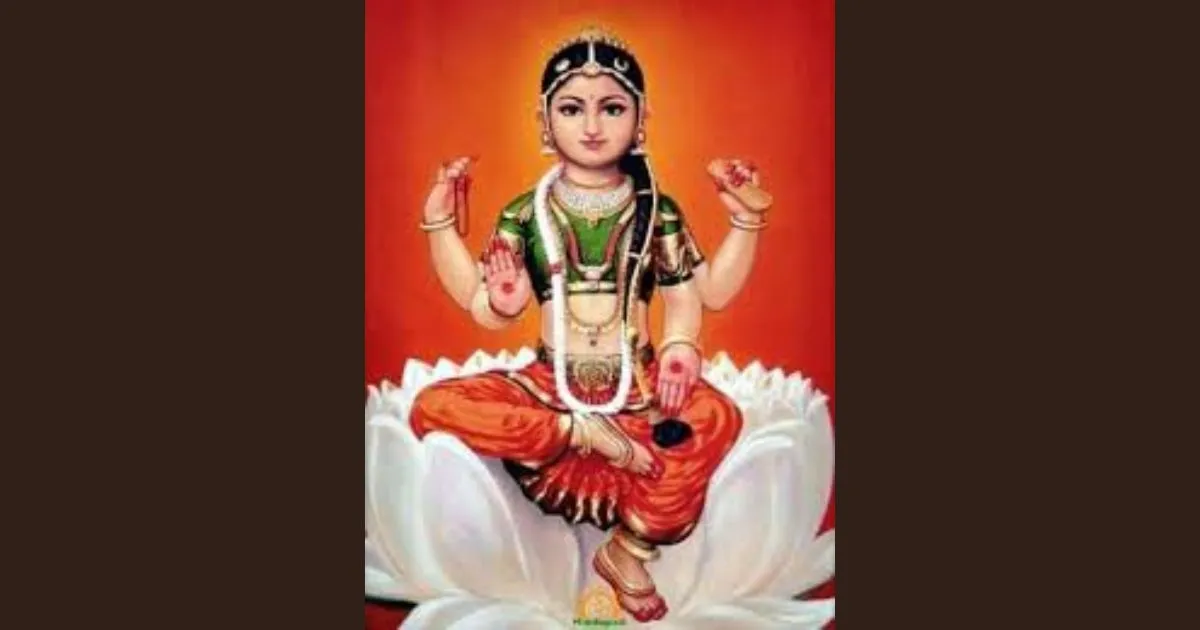
In the vast tapestry of Hinduism (Sanatan Dharma), few figures shine as brightly yet enigmatically as Bala Tripura Sundari, the divine child goddess revered in the Tantric Shri Vidya tradition. Known as the “Beautiful Child of the Three Worlds,” she embodies the paradox of youthful innocence and boundless power, a deity whose playful form belies her cosmic might. Her story, drawn from ancient texts like the Brahmanda Purana, is a testament to the triumph of divine will over malevolent forces, offering devotees a path to wisdom, strength, and spiritual awakening.
Bala Tripura Sundari is often described as the youthful aspect or daughter of Lalita Tripura Sundari, the supreme goddess of Shaktism, who is also known as Adi Parashakti, the primal cosmic energy. The term “Tripura” signifies the three worlds—heaven, earth, and the netherworld—while “Sundari” denotes her unparalleled beauty. As Bala, she appears as a nine-year-old girl, radiating innocence, yet wielding the power to vanquish evil and restore cosmic balance. Her story, found in the Lalitopakhyana of the Brahmanda Purana, centers on her heroic role in the cosmic battle against the demon Bhandasura.
Long ago, when the universe trembled under the tyranny of Bhandasura, a demon empowered by boons that rendered him nearly invincible, the gods found themselves outmatched. Bhandasura’s armies wreaked havoc, disrupting the cosmic order and threatening all creation. Born from the ashes of Kama (the god of desire) incinerated by Shiva’s third eye, Bhandasura was a force of chaos, his power fueled by dark tapas (austerities). The devas, desperate, turned to the divine feminine, Lalita Tripura Sundari, the supreme goddess who embodies creation, preservation, and destruction.
As Lalita prepared to confront Bhandasura, a radiant young girl emerged from her divine essence—Bala Tripura Sundari, her child form, vibrant with prana, the life force of the goddess herself. Described as a nine-year-old with a luminous smile, Bala was no ordinary child. She was the embodiment of divine courage, wisdom, and playfulness, her form a testament to the goddess’s ability to transcend limitations. In the Brahmanda Purana, Bala steps forward with a bold request: to face Bhandasura’s sons, the demon’s fiercest warriors, in battle.
Lalita, ever the protective mother, hesitated. “You are but a child,” she said, her heart filled with love and concern. She pointed to the Matrikas, the fierce warrior goddesses, ready to join the fray. But Bala, with the unwavering determination of a divine warrior, insisted. Her innocence masked a fierce resolve, and Lalita, recognizing her daughter’s divine prowess, relented. She bestowed upon Bala her own celestial armor and an arsenal of divine weapons, blessing her for the battle ahead.
The battlefield was a cosmic stage, where the forces of chaos clashed with divine order. Bala Tripura Sundari, despite her youthful form, moved with unparalleled grace and power. With her divine weapons, she confronted Bhandasura’s sons, each a formidable warrior bolstered by their father’s dark boons. The Lalita Sahasranama, a sacred text of a thousand names praising the goddess, captures this moment in a single evocative line: “Bhandaputra vadhodyukta bālā vikrama nanditā”—Lalita rejoiced at the valor of young Bala as she vanquished the sons of Bhandasura. With precision and courage, Bala defeated the demon warriors, sending them to their cosmic end and paving the way for Lalita’s ultimate victory over Bhandasura himself.
This victory was not merely martial but symbolic. Bala Tripura Sundari, as a child goddess, represents the triumph of purity and divine will over arrogance and negativity. Her story teaches that true power lies not in physical might but in the unyielding spirit and divine grace that flow through even the smallest form. In Tantric traditions, particularly Shri Vidya, Bala is revered as the entry point to the worship of the goddess, her mantras like “Aim Kleem Sauh” initiating devotees into the mysteries of divine wisdom, pleasure, and prosperity.
Beyond the battlefield, Bala Tripura Sundari holds a deeper significance. In Shakta philosophy, she is the prana, or vital breath, of Lalita, embodying the dynamic energy that animates creation. Her youthful form symbolizes the potential within every soul—pure, untainted, and capable of extraordinary feats when aligned with divine purpose. The Siddhas, ancient yogic masters, regard her as a “secret” deity, her worship guarded to preserve its potency. Through rituals and mantras, devotees seek her blessings for wisdom, wealth, and spiritual liberation, believing that her grace unlocks the siddhis, or supernormal powers, latent within.
In temples across India, from the ancient shrine of Bala Tripura Sundari in Dolpa, Nepal, to sacred sites in Tamil Nadu and Karnataka, devotees honor her as the playful yet powerful goddess. Her festivals, such as Lalita Jayanti, see fervent celebrations, with devotees chanting her mantras and offering prayers to invoke her transformative energy. The temple in Dolpa, believed to be the only one dedicated solely to Bala, stands as a testament to her enduring reverence, its history stretching back nearly a millennium.
Bala Tripura Sundari’s story is a reminder that divinity transcends appearances. As a child, she embodies the eternal playfulness of the divine feminine, yet her actions ripple across the cosmos, restoring harmony and inspiring devotion. For your readers, she offers a timeless lesson: within each of us lies a spark of divine courage, waiting to shine forth like the radiant child goddess who conquered chaos with a smile.
Sources:
- Brahmanda Purana (Lalitopakhyana), Chapter 26
- Lalita Sahasranama, Shakta scriptures
- Shri Vidya tradition and Siddha teachings
- Historical references to Bala Tripura Sundari temple in Dolpa, Nepal