Beyond the Biryani: 4 Unexplored Indian Food Trails You Are Completely Missing Out On
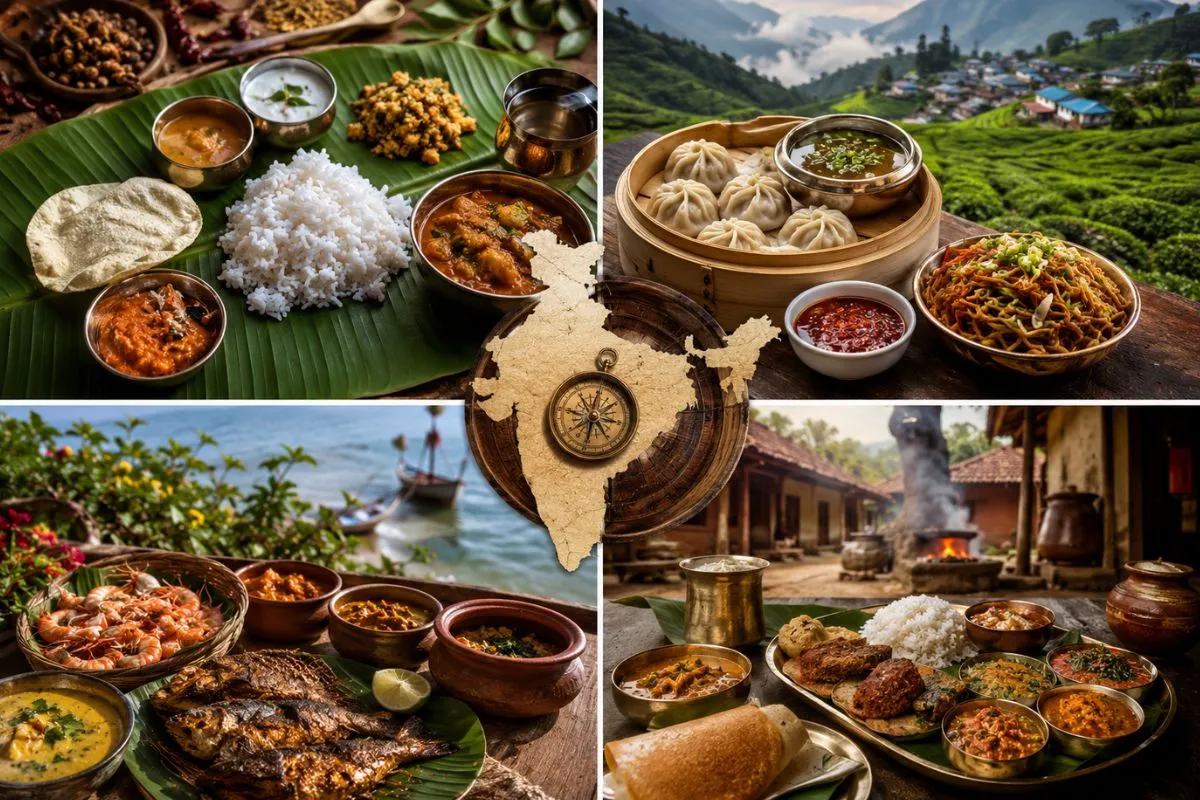
When people talk about food travel in India, the compass almost always points to the same legendary coordinates: the buttery parathas of Old Delhi, the slow-cooked Awadhi nihari of Lucknow, or the spice-laden fish curries of coastal Kerala.
But if your culinary map stops there, you are missing out on the vast, hyper-regional micro-cuisines quietly thriving away from the tourist radar. From high-altitude mountain preservation techniques to indigenous river-island smoking traditions, these four unexplored culinary trails deserve a spot on every true food lover’s bucket list.
1. The Kodava Plantation Feast (Coorg, Karnataka)
While travelers flock to the misty hills of Western Ghats for coffee, the true treasure lies inside the ancestral kitchen homes (Ainmanes) of the Kodava community. Unlike the predominantly vegetarian or seafood-heavy reputation of South Indian cuisine, Kodava food is rustic, earthy, and heavily built around forest foraging and hunting traditions.
- The Hero Dish: Pandi Curry (Coorg Pork Curry). This dish gets its deep, near-black color and sharp, mouth-puckering tang from Kachampuli, a rare, thick dark vinegar extracted from the local Garcinia gummi-gutta fruit.
- The Accompaniment: Kadambuttu (steamed, melt-in-your-mouth rice dumplings) or Akki Roti (flaky rice flatbreads), perfectly designed to soak up the intense, spice-heavy gravy.
- Hidden Gem: Don’t skip the local homemade wines. Kodava households ferment everything from bird’s eye chili and ginger to betel leaf and wild plums.
2. The Kath-Kuni Cold-Desert Trail (Spiti & Kinnaur, Himachal Pradesh)
High above the apple orchards, the extreme, arid winters of the trans-Himalayan belt have birthed a minimalist, fascinating culinary philosophy focused entirely on zero-waste, heat generation, and clever fermentation.
- The Hero Dish: Siddu. A heavy, yeast-leavened wheat bread stuffed with a rich paste of opium seeds (poppy seeds), walnuts, local herbs, and wild apricots, served drenched in local cow ghee (clarified butter).
- The Wild Card: Chhurpi. A rock-hard, smoky yak cheese. Locals keep a small cube in their mouth for hours to stay hydrated and energized while trekking the cold desert.
- The Beverage: Chhaang or Ghanti—locally brewed barley and millet spirits that taste mildly sweet but pack a serious warming punch.
3. The Mising Tribal Smoked Trail (Majuli, Assam)
Majuli, the world’s largest river island, is home to the indigenous Mising community. Their culinary style is a masterclass in elemental cooking, using only fresh river catch, wild forest greens, and three primary mediums: bamboo hollows, direct wood fire, and banana leaves.
- The Hero Dish: Purang Apin. This is sticky red hill rice wrapped tightly in Tora leaves and boiled. The leaf infuses the rice with a distinct, earthy aroma.
- The Technique: Namsing. A unique tribal preparation of dried, crushed fish paste mixed with wild herbs and preserved inside bamboo tubes. It is intensely pungent, spicy, and unforgettable when paired with wood-fire smoked pork cooked over an open hearth (Chang Ghar).
- The Beverage: Apong, a smooth, naturally sweet rice beer fermented using over 30 different local medicinal leaves and roots.
4. The Kutchi Nomadic Trail (Bhuj, Gujarat)
Most people associate Gujarati food with the sweet, multi-course vegetarian thalis of Ahmedabad or Surat. Step into the arid expanses of Kutch, however, and the flavor profile transforms into something stark, bold, and heavily influenced by pastoral, nomadic lives.
- The Hero Dish: Kutchi Bajra no Rotlo. Massive, hand-patted pearl millet flatbreads roasted over charcoal cow-dung cakes, giving them a distinct smoky crust. They are served with a mountain of fresh white butter (makkhan) and Lasaniya Marcha (a fiery garlic-chili paste).
- The Slow Cook: Baking under the sand. Traditional Kutchi shepherds still prepare slow-cooked, unrefined jaggery and lentil stews in earthen pots buried deep under hot desert embers.
- The Sweet Stop: Mesub—a historic, porous, subterranean sweet made of gram flour and ghee that literally vaporizes into liquid the second it touches your tongue.
Flavor Profile At A Glance
To help you choose your next road trip destination based on your palate’s cravings:
| Food Trail | Dominant Flavor Profile | Key Ingredients | Best Season to Visit |
| Coorg (Karnataka) | Sour, fiery, heavy wood-spice | Kachampuli vinegar, black pepper, wild boar/pork | October to March |
| Kinnaur (Himachal) | Earthy, nutty, rich fats | Poppy seeds, yak cheese, apricot oil, ghee | May to September |
| Majuli (Assam) | Pungent, smoky, clean herbal | Fermented bamboo shoot, Tora leaf, freshwater fish | November to February |
| Kutch (Gujarat) | Fiery, rustic, dairy-heavy | Pearl millet, garlic, fresh white butter, jaggery | November to February |
The Golden Rule of Food Travel: The best regional food in India doesn’t have a signboard. It lives in village homestays, highway shacks (dhabas) run by local grandmothers, and community festivals. If a dish looks completely unfamiliar and the locals are lining up for it—order it without questioning.