Why This Italian Ghost Town Is Actually Paradise
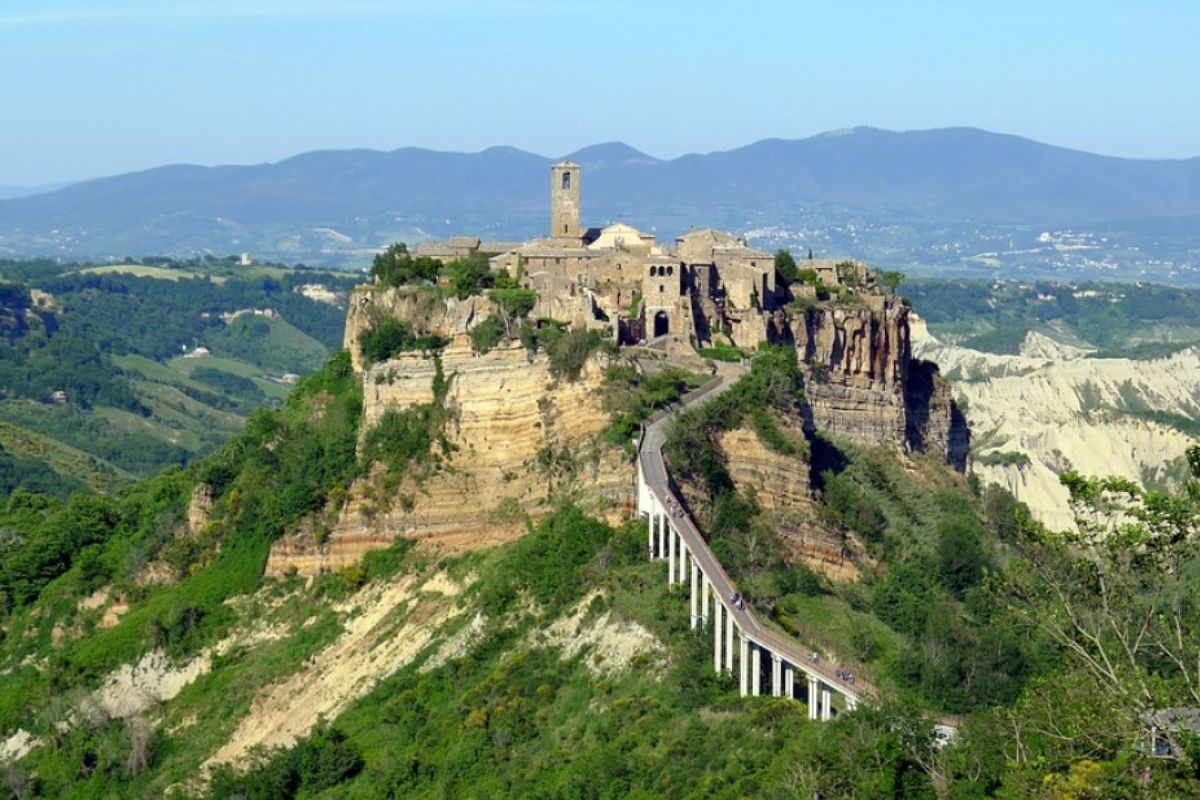
Imagine a city carved out of a single block of volcanic stone, perched on a crumbling pinnacle of rock that rises out of a vast, desolate canyon. This is Civita di Bagnoregio, a tiny Italian village in the heart of Tuscia, Northern Lazio.
Often called La Città che Muore (The Dying City), it is a place that shouldn’t still exist. Founded by the Etruscans 2,500 years ago, it is slowly being reclaimed by the wind and rain as the edges of its plateau break away into the valley below.
1. The Skywalk into History
The most scenic aspect of Civita is the journey to its gate. There are no roads leading to the village. The original path collapsed long ago, and today, the only way to enter is via a dramatic 300-meter-long footbridge that suspends you over a white clay canyon (I Calanchi).
- The Floating Illusion: On misty mornings, the clouds settle into the valley, leaving the village floating above the white vapor like a medieval island in the sky.
- The Gates: You enter through a massive stone archway carved by the Etruscans and later modified by the Romans. Once you cross that threshold, the 21st century simply vanishes.
2. A Living Museum of 12 Souls
In the winter, the permanent population of Civita often drops to just 12 people. This is not a “theme park” village; it is a community of survivors holding onto a spectacular piece of history.
- Stone Sophistication: Every alleyway is a masterpiece of ivy-covered stone, blooming geraniums, and medieval arches. There are no cars, no scooters, and no noise—only the sound of church bells and the distant wind in the canyon.
- The Underground Secret: Hidden beneath the village is a network of ancient caves and cisterns. One of them has been converted into a restaurant where you can eat handmade pici pasta in a cellar that was originally an Etruscan tomb.
3. Why You Should Go At Least Once
You should go to Civita because it is a tribute to human stubbornness. Despite earthquakes, erosion, and the passage of centuries, the village refuses to fall.
It offers a “scenic” experience that is deeply emotional. To look out from the edge of the piazza over the vast, crumbling “Lunar” landscape of the valley is to realize how fragile and beautiful our civilizations really are. It is a place for slow thought, deep wine, and the realization that some things are worth saving, even when the ground itself is giving way.
4. Practical Guide for 2026
- The Access: Civita is roughly 1.5 to 2 hours from Rome or Florence. You drive to the “new” town of Bagnoregio, park your car, and walk the bridge.
- The Fee: There is a small entry fee (around €5) that goes directly toward the preservation of the rock plateau to prevent further erosion.
- The Strategy: Avoid the midday tourist buses. The magic of Civita is found at sunrise or dusk, when the day-trippers leave and the village returns to its 12 inhabitants and its ancient silence.
➤ Up Next: Wow This Rainbow Mountain Is Actually A Giant Stone Poncho