A Man Falls From a Fort. A Girl Survives Thirty Men. Guess Which One Trends.
On June 18, 2026, two crimes happened in India on the same day. In Lohagad Fort, Maharashtra, a 26 year old businessman named Ketan Agarwal died after allegedly being pushed from the ramparts by his fiancee, Siya Goyal, and her lover. In Sri Ganganagar, Rajasthan, a 13 year old girl was allegedly sold by a rickshaw driver to a hotel operator and held captive for five days, during which police say she was raped by roughly thirty men.
One of these stories has, as of this writing, produced a nickname for the crime scene itself. Tourists now call the spot at Lohagad Fort where Ketan allegedly fell “Siya Point.” News channels have spent days debunking whether he actually had a stammer, whether he wore a wig, whether his family disclosed the wig to Siya’s family before the engagement. A film about a nearly identical case, the alleged murder of Raja Raghuvanshi by his wife Sonam Raghuvanshi during their honeymoon, is already in production, with the victim’s family’s blessing, titled Honeymoon in Shillong.
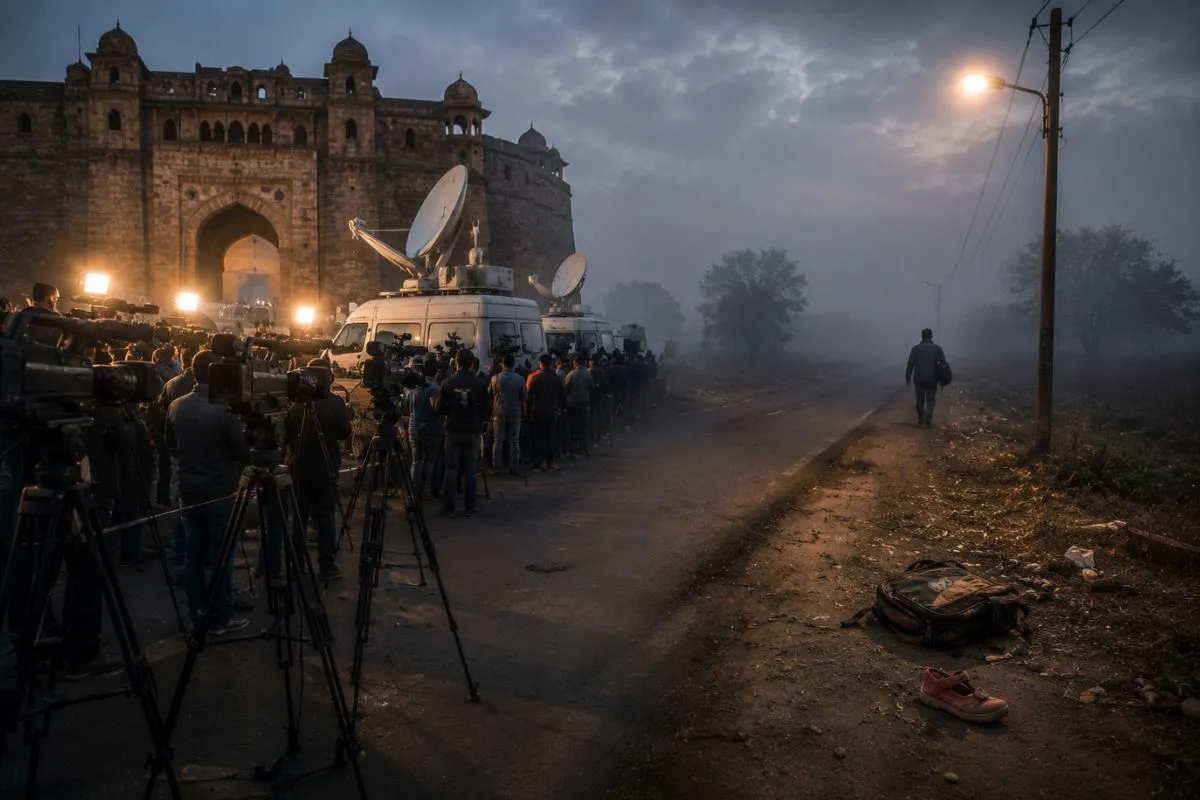
The other story ran for a few days. Police arrested fourteen people. Three hotels were bulldozed. And then, as these stories do, it moved off the front page, replaced by the next thing.
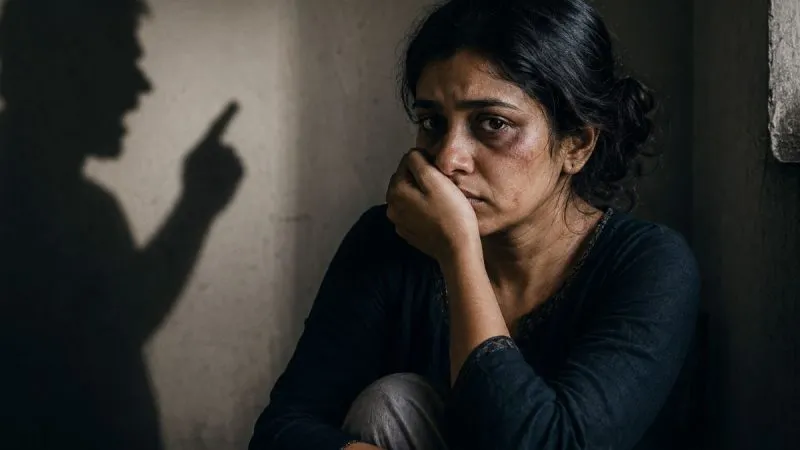
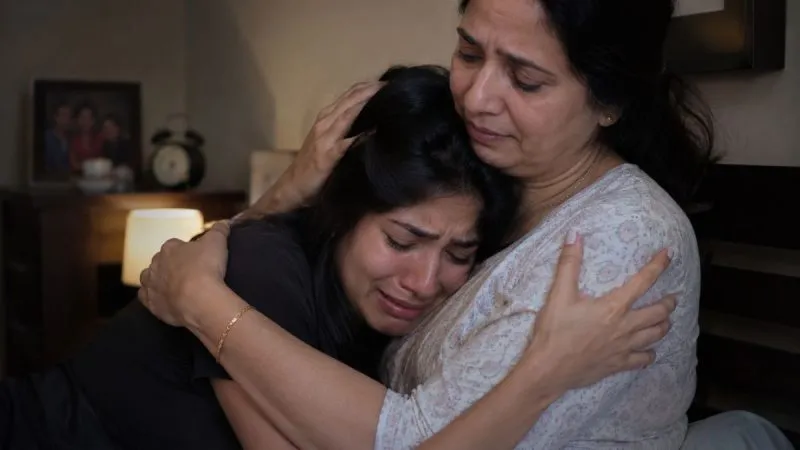
A woman or a girl being raped, trafficked, or killed is treated as an unfortunate, regrettable, and fundamentally ordinary event, the kind that gets a headline and then gets out of the way for the news that actually matters.
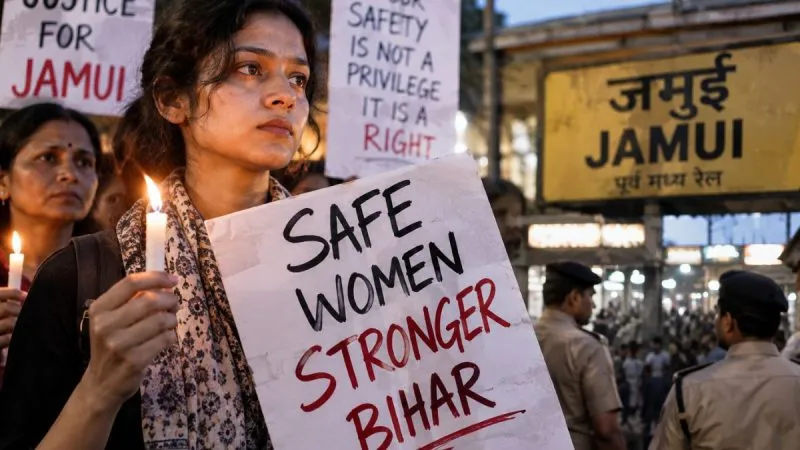
This is not a coincidence, and it is not new. It is a pattern precise enough to set your watch by, and it deserves to be named plainly: in India, a man being killed, especially by a woman, especially in a way that involves scandal, betrayal, or a hint of sex, is treated as a story the entire country needs to follow in real time, for weeks. A woman or a girl being raped, trafficked, or killed is treated as an unfortunate, regrettable, and fundamentally ordinary event, the kind that gets a headline and then gets out of the way for the news that actually matters.
The Coverage Math, Laid Out Plainly
Consider what actually happened in the days after June 18. Ketan Agarwal’s death generated wall to wall coverage: reconstructed timelines of his relationship with Siya, forensic speculation about the fall, interviews with his grieving father, viral debates about whether his alleged stammer was even real, and a permanent, unofficial rebranding of a UNESCO heritage site around the crime. The Sonam Raghuvanshi case, running in parallel since 2025, has produced Supreme Court hearings covered live, a viral video of a stranger slapping the accused at an airport, and now, a feature film.
The Sri Ganganagar case, involving a child, thirty alleged perpetrators, and a captivity that lasted five full days before anyone intervened, generated a news cycle. Not a movement. Not a nickname. Not a film deal. A news cycle, and then silence, the same silence that followed the Greater Noida dowry death of a 24 year old named Deepika in May, and the Sitamarhi dowry case in Bihar in June, cases we documented in detail in The Cost of Being a Woman in India. Our earlier piece on Sri Ganganagar itself noted the same thing: a bulldozer makes for a better photograph than sustained accountability, and apparently, a better news cycle too, briefly.
The Naming Problem, and Where the Comparison Actually Gets Complicated
There is a version of this argument that says simply: we know Siya’s name and Sonam’s name, but we don’t know the names of the men who killed Nirbhaya or Twisha Sharma. It is worth being precise here, because the actual truth is more damning, not less.
We do, in fact, know the names of Nirbhaya’s killers: Mukesh Singh, Ram Singh, Akshay Thakur, Vinay Sharma, and Pawan Gupta. We know them because one case, out of many thousands, generated a national uprising large enough to force that level of scrutiny, sustained across a trial, an appeal process, and eventual executions that took seven years. That is the exception that proves the rule. It took a level of public fury that India has managed to produce perhaps twice in the last fifteen years to get the killers of a woman named, tried, and remembered with anything close to the intensity that Siya Goyal received within days of a single man’s death.
Twisha Sharma’s alleged killers, her husband Samarth Singh and mother in law Giribala Singh, are named in court filings and news reports. They do not have a nickname. Nobody has proposed a film. No stranger has been filmed publicly confronting them in an airport. The information exists, technically, for anyone who goes looking for it. It has not captured the country’s imagination, because the country’s imagination, it turns out, is far more captivated by a woman as a villain than by a woman as a victim, and even more captivated by a woman as a villain than by a man as one.
This is the actual asymmetry, and it is worse than simple erasure. It is not that we cannot see women in these stories. It is that we can only really see them clearly when they are the ones accused.
Why a Scheming Fiancee Beats a Trafficked Child for Ratings
None of this happens by accident, and none of it happens because television producers or headline writers sit in a room and consciously decide that a raped child matters less than a pushed businessman. It happens because of what each story offers an audience, and it is worth being honest about the machinery.
A story like Siya and Ketan’s, or Sonam and Raja’s, offers romance, betrayal, class aspiration, and a clean, singular villain. There is a wedding video. There is a honeymoon. There is an affair, a motive, a scandal, the exact ingredients of a soap opera, except real, except with a body. It is a story with a beginning, a middle, and an end, one woman, one plot, one reveal. It asks nothing uncomfortable of the audience watching it, because the villain is a specific, named individual, safely separate from everyone else. You can watch it the way you watch a crime thriller, with the pleasant, guilt free thrill of judgment from a safe distance.
Sri Ganganagar offers no such comfort. It offers thirty unnamed men. It offers a rickshaw driver, a hotel owner, a hotel manager, an entire small, functioning economy of complicity that implicates not one villain but an unknowable number of ordinary men who went home to their families afterward. It does not have a clean plot. It has a girl who cannot be named, no romantic betrayal to dissect, no wig scandal, no engagement video, nothing that turns easily into entertainment, only a fact almost too large to sit with: that thirty separate men made thirty separate individual choices to do this, in a real city, over five real days, and only fourteen people have been arrested. A story like that does not ask you to judge a villain from a safe distance. It asks you to reckon with how many men, in any given town, might make that same choice given the same access and the same silence. Very few television formats are built for that kind of reckoning, and even fewer audiences seem to want it.
There is also, underneath all of this, a much older and much uglier calculation: a man dying is still treated as a genuine rupture, an event, a tragedy that interrupts the normal order of things. A woman or a girl being raped, trafficked, or killed has been normalized into weather. It happens so often, is reported so routinely, that it has stopped registering as rupture at all. Twenty nine thousand rape cases a year. Six thousand dowry deaths. Forty thousand child rape cases. These numbers, all real, all documented in our earlier reporting on India’s Persistent Rape Crisis, have become so large and so constant that they have achieved something no single crime against a man has ever managed: they have become boring. Not to the victims. To the audience.
Where Exactly Does a Woman Stand
So where does that leave her. If she is killed by a man, and most women who are killed are killed by men they know, she becomes a statistic, filed alongside thousands of others just like her, mourned briefly by her family and no one else. If she is raped, her name is legally protected, which is right and necessary, but the protection of her identity has somehow also become a permission slip for the story to fade faster than it should. If she kills a man, suddenly she is the most famous woman in India, her photograph on every channel, her engagement videos dissected frame by frame, her motives psychoanalyzed by panels of strangers for months, a movie deal in the works before the trial even concludes.
A woman, in other words, is currently only guaranteed sustained national attention in this country under one specific condition: that she be the one holding the knife. As a victim, she is routine. As a villain, she is unforgettable. Nowhere in that equation does a woman get to simply be seen, believed, and remembered for what was done to her rather than what she allegedly did to someone else.
That is not a coincidence of individual news judgment. It is a pattern that reveals exactly what this country has decided is newsworthy, and exactly what it has decided to live with. Thirty men raping a trafficked child over five days should have shaken this country the way Nirbhaya’s murder did in 2012. It did not, not because the crime was less horrific, and not because the facts were less available, but because the crime fit no entertaining shape, offered no singular villain to hate, and happened to a girl whose name the law rightly protects and whose story, apparently, the culture was never all that interested in keeping alive anyway.
Ketan Agarwal deserved justice, and so does his family. So does Raja Raghuvanshi. Nobody is arguing otherwise. The question this piece is actually asking is why their deaths bought them weeks of a nation’s undivided attention, a nicknamed cliff, and a movie deal, while a child raped by thirty men over five days bought her country’s attention for exactly as long as it takes to demolish a hotel and move on. Until that answer changes, the honest answer to where a woman stands in this country’s imagination is simple, and it should embarrass everyone reading this: she stands wherever the story is more entertaining than it is true.
If you or someone you know needs support related to domestic violence, trafficking, or sexual assault, Childline India can be reached at 1098, and complaints can be filed through India’s National Cyber Crime Reporting Portal at cybercrime.gov.in.