Unmasking the Subtleties: Is “Lokah Chapter 1: Chandra” a Veiled Propaganda Against Hindus?
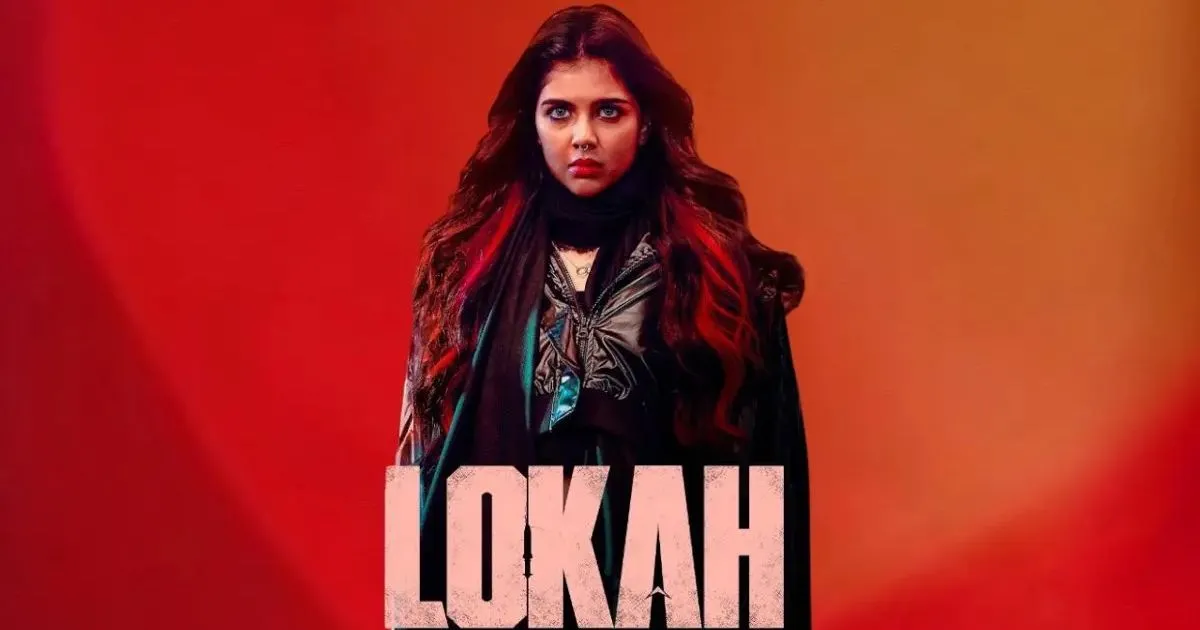
In the vibrant landscape of Indian cinema, where stories blend mythology, folklore, and modern narratives, few films have sparked as much debate as Lokah Chapter 1: Chandra. Released on August 28, 2025, this Malayalam dark fantasy superhero film, directed by Dominic Arun and produced by Dulquer Salmaan‘s Wayfarer Films, stars Kalyani Priyadarshan as the enigmatic Chandra (revealed as Kalliyankattu Neeli, a yakshi from Kerala folklore). With its stunning visuals, ambitious world-building, and a reported budget of ₹30 crore, Lokah has grossed over ₹200 crore worldwide, becoming the fourth highest-grossing Malayalam film ever. Critics have praised its reimagining of traditional tales into a female-led superhero origin story, calling it a “cinematic treat” that pushes the boundaries of the genre. Yet, beneath the spectacle lies a troubling undercurrent that has ignited accusations of anti-Hindu propaganda—subtle, layered insertions that paint Hindu characters and symbols in a negative light. As someone who watched the film recently, I couldn’t help but reflect on how these elements might have flown under the radar just a few years ago. Today, thanks to the relentless scrutiny of social media, nothing escapes notice, forcing us to confront a tragic reality: filmmakers wielding their art to subtly villainize Hindus, often without consequence.
What exactly is Lokah? At its core, it’s the inaugural chapter of a planned cinematic universe, blending dark comedy, fantasy, and thriller elements. The plot follows an aimless trio of friends in Bengaluru who encounter their mysterious new neighbor, Chandra, a woman with a haunting supernatural past tied to ancient myths. Drawing from Kerala’s rich folklore—yakshis (female spirits often depicted as seductive yet vengeful entities in Hindu tales)—the film thrusts viewers into a “shadow world” where reality meets myth. Chandra isn’t your typical Western-style superhero; her powers stem from persecution and cultural roots, making her transformation a commentary on folklore’s dark side. The film’s technical prowess, from cinematography to soundtrack, has been lauded, with reviews highlighting its “impeccable writing” and “consistent world-building.” But for many viewers, especially those attuned to cultural sensitivities, Lokah isn’t just entertainment—it’s an enforcement of a fictional narrative laced with Hindu hatred, so subtly woven that it masquerades as progressive storytelling.
Let’s pinpoint these purposeful insertions, starting with the infamous meat shop scene that exemplifies the film’s brazen approach. In a pivotal sequence set in a bustling Bengaluru market, a woman prominently featuring a tilak (the red vermilion mark on the forehead, a sacred Hindu symbol denoting devotion, marital status, or ritual purity) is shown as the owner of a meat shop, slaughtering animals with casual efficiency. This isn’t a fleeting background detail; the camera lingers on her tilak as she handles raw meat, blood staining her hands, while Hindu devotional music faintly plays in the backdrop. In reality, such a portrayal clashes violently with Hindu vegetarianism and ahimsa (non-violence) principles, where the tilak is reserved for pious, often vegetarian contexts—think temple rituals or home pujas. Many Hindus, including myself, view this as deliberate: why not choose a neutral character? Why emphasize a visible Hindu identifier in a scene that mocks sacred dietary norms? Social media erupted with screenshots and analyses, with users pointing out how this “subtle hint” reinforces stereotypes of hypocrisy among Hindus, portraying them as insincere in their faith while profiting from what their religion abhors. It’s tragic because, as one X post noted, “This isn’t art; it’s agenda-driven, making Hindus the villains in their own cultural narrative.”
This isn’t an isolated incident. The film is peppered with other scenes that, upon closer inspection, seem engineered to demean Hindu elements. Consider the depiction of the yakshi lore itself: In Hindu mythology, yakshis are complex figures—guardians of treasures in some texts (like the Mahabharata) or vengeful spirits in folklore—but Lokah amplifies their malevolent side, showing Chandra’s transformation as a curse born from Hindu societal persecution. A key flashback sequence portrays orthodox Hindu villagers (complete with saffron attire and temple bells) as barbaric persecutors, ritually hunting and “exorcising” yakshis in the name of purity. The director lingers on idols of Hindu deities being used as weapons against her, with one scene where a priest-like figure smashes a small Ganesha murti to “ward off evil,” symbolizing how Hindu rituals are twisted into tools of oppression. This isn’t neutral folklore adaptation; it’s a pointed critique that equates Hindu traditions with violence against women and the supernatural, ignoring the protective aspects of yakshi tales in Kerala culture. Another subtle jab comes in a party scene where Bengaluru (portrayed as a “hub of drugs and debauchery”) features Hindu festival elements—like Holi colors mixed with illicit substances—held by characters mocking “superstitious Hindu rituals” while indulging in excess. Here, the villains (often speaking in Kannada, adding a regional layer) are Hindu-coded, while the “innocent” protagonists are non-Hindu or secular, fueling accusations of the film turning Bengaluru into a “mallu land” at the expense of local Hindu culture.
These aren’t accidental; they feel purposeful, layered like an onion to peel back only if you’re looking. If I had watched Lokah five years ago, say in 2020, I probably wouldn’t have noticed these subtle hints anywhere in the film. Back then, social media wasn’t the vigilant watchdog it is today—no viral threads dissecting every frame, no X (formerly Twitter) storms amplifying cultural critiques. I’d have focused on the action, the VFX, and Kalyani Priyadarshan’s powerhouse performance, dismissing any unease as overthinking. But now, with platforms like X enabling deeper searches and chronological breakdowns of scenes, nothing gets missed. Users have compiled timelines of these moments, from the tilak-meat contradiction to the ritualistic violence, turning whispers into roars. It’s a double-edged sword: empowering for awareness, but tragic that it exposes how filmmakers exploit this subtlety to push narratives unchecked. As one reviewer astutely observed, films showing “truth as it is” about other religions get vilified as propaganda overnight, while anti-Hindu undertones slide by as “artistic liberty.”
This brazenness is what stings most. Lokah does it so in-your-face yet deniably—apologizing only for “demeaning Bengaluru women” in dialogues after backlash, while ignoring the deeper Hindu portrayal issues. We, as Hindus, can’t revolt or object without being labeled “intolerant” or “Hindutva extremists,” as seen in the film’s controversies where Kannada pride clashed with the narrative but religious angles were downplayed. Flip the script: Imagine a film showing a Muslim character with a hijab running a pork shop or equating Islamic rituals with persecution— it would be banned, called propaganda, and the makers blacklisted. Yet, when Hindu symbols are sullied, it’s celebrated as “bold” or “feminist,” especially in a female-led story. Colleagues in writing circles have echoed this in their pieces: Why are films critiquing Hindu patriarchy (like the yakshi persecution) hailed, while those touching other faiths are “offensive”? Lokah enforces a fictional story filled with this hatred so subtly that casual viewers applaud its “progressiveness,” unaware of the layers. It’s not just entertainment; it’s indoctrination disguised as myth-making.
So, is Lokah not propaganda? Absolutely, it reeks of it—an agenda to subtly villainize Hindus under the guise of folklore fantasy. In a nation where cinema shapes perceptions, this isn’t harmless. Filmmakers must reflect: Art should unite, not divide through cultural sabotage. Until we demand balance, these subtle poisons will continue to seep in, unnoticed by some, but impossible to ignore for the rest. Watch it if you must, but with eyes wide open—the shadows in Lokah run deeper than its superhero lore.