Milford Sound: Into the Heart of Fiordland
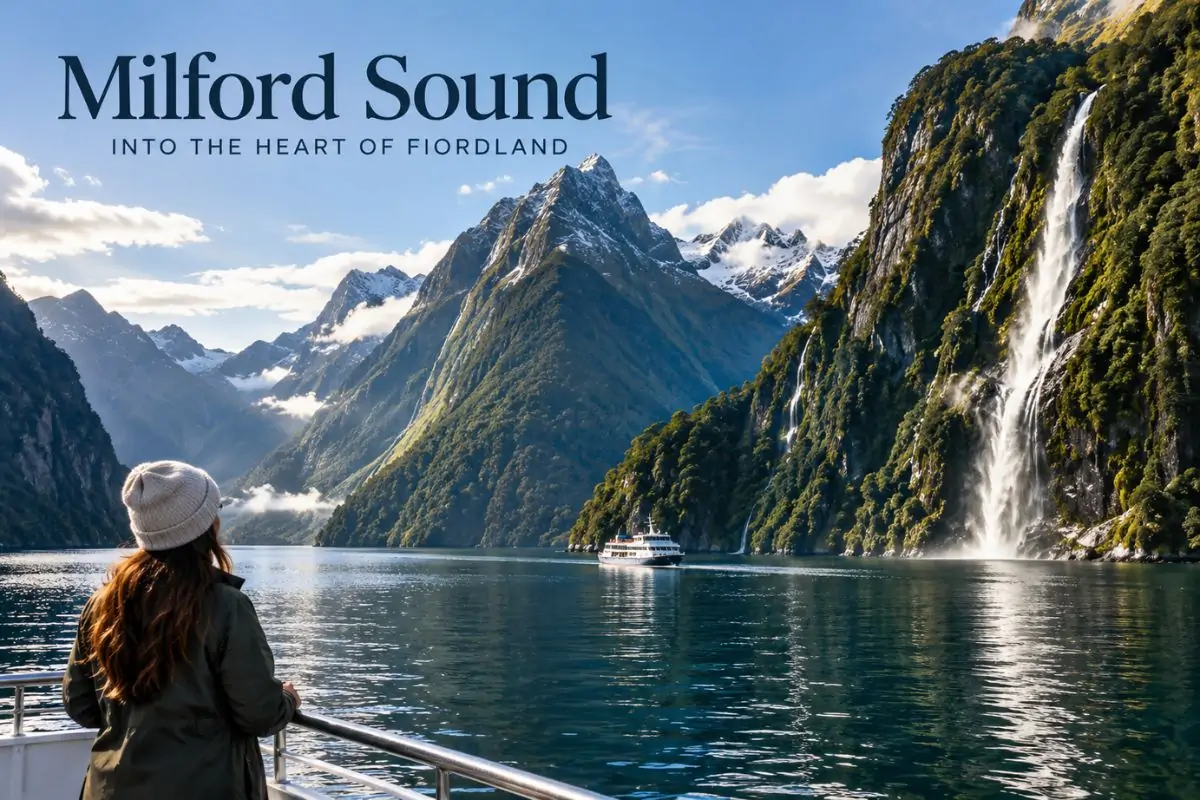
Where rain becomes spectacle and silence becomes the loudest thing in the room
There is a particular kind of quiet that settles over Milford Sound just after sunrise, before the first tour buses arrive from Te Anau and the water is still glassy enough to hold a perfect reflection of Mitre Peak. It is the kind of quiet that makes you understand why Māori named this place Piopiotahi, after a native thrush said to have flown here in mourning and never left. Long before it became one of the most photographed landscapes on Earth, this fiord was a place of grief, myth, and reverence. That history still lingers under the postcard.
A Fiord, Not a Sound
The first thing worth correcting, gently, is the name itself. Milford Sound is not actually a sound. A sound is a valley carved by a river; a fiord is carved by a glacier. What you are looking at when you stand at Milford is the work of ice, not water, grinding through solid rock over hundreds of thousands of years during repeated glacial cycles, leaving behind sheer granite walls that plunge more than a thousand meters straight into the Tasman Sea.
“It’s the only place I’ve been where the scale actually feels dangerous to look at directly, like the cliffs are still deciding whether to let you stay.”
That disorientation is by design, or rather, by geology. Mitre Peak, the fiord’s signature landmark, rises 1,692 meters almost vertically from the water, and because there is nothing nearby to give it scale, first time visitors often misjudge its size entirely. Boats that look enormous from shore become specks against the rock face within minutes of departure.
Getting There Is Part of the Story
Milford Sound sits at the end of the road, quite literally. The only way in by land is the Milford Road, a roughly 120 kilometer route from Te Anau that is as much a part of the experience as the fiord itself. The drive winds through the Eglinton Valley’s open tussock flats, past the mirror-still Mirror Lakes, through the eerie beech forest of the Hollyford Valley, and finally through the Homer Tunnel, a 1.2 kilometer hand-carved passage blasted through solid rock in the 1930s and 40s, largely by relief workers during the Great Depression.

The tunnel drops you, almost theatrically, into the Cleddau Valley on the other side, where the landscape shifts abruptly from alpine tussock to dense, dripping rainforest. It is a fitting entrance. Fiordland receives over 6,000 millimeters of rain annually, making it one of the wettest inhabited places on the planet, and that rainfall is not an inconvenience to be endured. It is the point.
Rain Is the Feature, Not the Bug
Ask anyone who has guided boats here for years, and they will tell you the same thing: the “bad weather” days are often the best ones.
“People apologize to us for the rain like it ruined their trip. I tell them, no, you got the real Milford. The dry days are the anomaly.”
When it rains heavily, and it often does, the sheer granite walls of the fiord come alive with temporary waterfalls, dozens of them, cascading directly off the cliff tops in ribbons that can appear and vanish within hours. On a clear, dry day, only two permanent waterfalls, Lady Bowen Falls and Stirling Falls, run consistently. After sustained rain, the fiord can display well over a hundred, some strong enough that boat captains will bring the vessel directly underneath the base for guests willing to get soaked.
Life Beneath and Around the Surface
Milford Sound’s ecology is stranger than its geology, if that’s possible. Because of the extreme rainfall, a layer of fresh, tannin-stained water sits on top of the salt water beneath, creating a permanent dark tea-colored film several meters deep. This freshwater layer blocks enough sunlight that deep-sea species, which normally live hundreds of meters down, exist here at depths divers can reach easily. It is one of the only places on Earth where black coral, a species that typically requires darkness found only in the deep ocean, grows within a few meters of the surface.
Above the waterline, the fiord supports a resident pod of bottlenose dolphins, along with New Zealand fur seals that haul out on Seal Rock, and, in the winter months, occasional visits from Fiordland crested penguins, one of the rarest penguin species on Earth, and the only one that nests in rainforest.
Fiordland’s Deeper Roots
Long before European explorers charted this coastline, Fiordland’s fiords were part of an important Māori trade route, prized for a particular type of pounamu, or greenstone, found in the region and carried inland for tool making and ceremonial carving. The mist and isolation that make Milford feel otherworldly to modern visitors were, for early Māori travelers, simply part of a dangerous but necessary passage.
“You come here thinking you’re seeing untouched wilderness, and in some ways you are, but people have been moving through this place with purpose for hundreds of years before it had a European name.”
European discovery came comparatively late. Welsh sailor John Grono is credited with naming the fiord in 1812, after Milford Haven in his home country, and it remained difficult to access by land until well into the twentieth century, which is part of why it still feels remote despite hosting hundreds of thousands of visitors each year.
How to Actually Experience It
Cruise, don’t just view.A scenic cruise, typically lasting one and a half to two hours, remains the most complete way to experience the fiord, since roughly ninety percent of Milford’s landscape can only be properly appreciated from the water. Early morning departures, ideally the first cruise of the day, offer the calmest water and the smallest crowds.
Consider an overnight cruise.A small number of operators run overnight cruises that anchor in the fiord after the day boats have left. Watching Mitre Peak disappear into darkness, then reappear at dawn with nobody else around, is a genuinely different experience from the daytime version.
Kayak if you can.Sea kayaking tours put you at water level, close enough to hear the waterfalls before you see them and to appreciate the scale of the cliffs from the most honest possible vantage point.
Fly in, at least once.Scenic flights from Queenstown or Te Anau cross the Southern Alps before descending into the fiord, offering a view of the broader Fiordland wilderness, an area larger than some countries and almost entirely roadless, that is impossible to grasp from ground level alone.
Walk part of the Milford Track, if time allows. Often called “the finest walk in the world,” this 53.5 kilometer, four-day trek finishes at Milford Sound itself, meaning hikers arrive at the fiord on foot, through the same wilderness that has made this corner of the country so difficult, and so worthwhile, to reach.
When to Go
December through February brings the warmest weather and the longest daylight, but also the largest crowds. April and May offer a quieter, cooler alternative with the autumn colors of the beech forest along the drive in. Winter, June through August, is the least visited season, cold and often snow dusted on the surrounding peaks, but rewards patient travelers with a starker, more solitary version of the fiord, and a real chance of catching the road on a still, frost-clear morning that photographers wait years for.
The Honest Take
Milford Sound is, by any measure, over-photographed and heavily commercialized, with hundreds of tour buses arriving daily during peak season. And yet it survives its own popularity in a way few natural landmarks manage. The scale is simply too large, and the weather too unpredictable, for it to ever feel fully tamed.
“You can put a thousand people on the water at once and it still feels like the fiord doesn’t notice you’re there.”
That, in the end, is what makes Milford Sound worth the long drive, the rain gear, and the crowds. It is a landscape old enough, and large enough, that a human visit, however many thousands of them happen each year, barely registers against it.