New Zealand: A Complete Portrait of the Land of the Long White Cloud
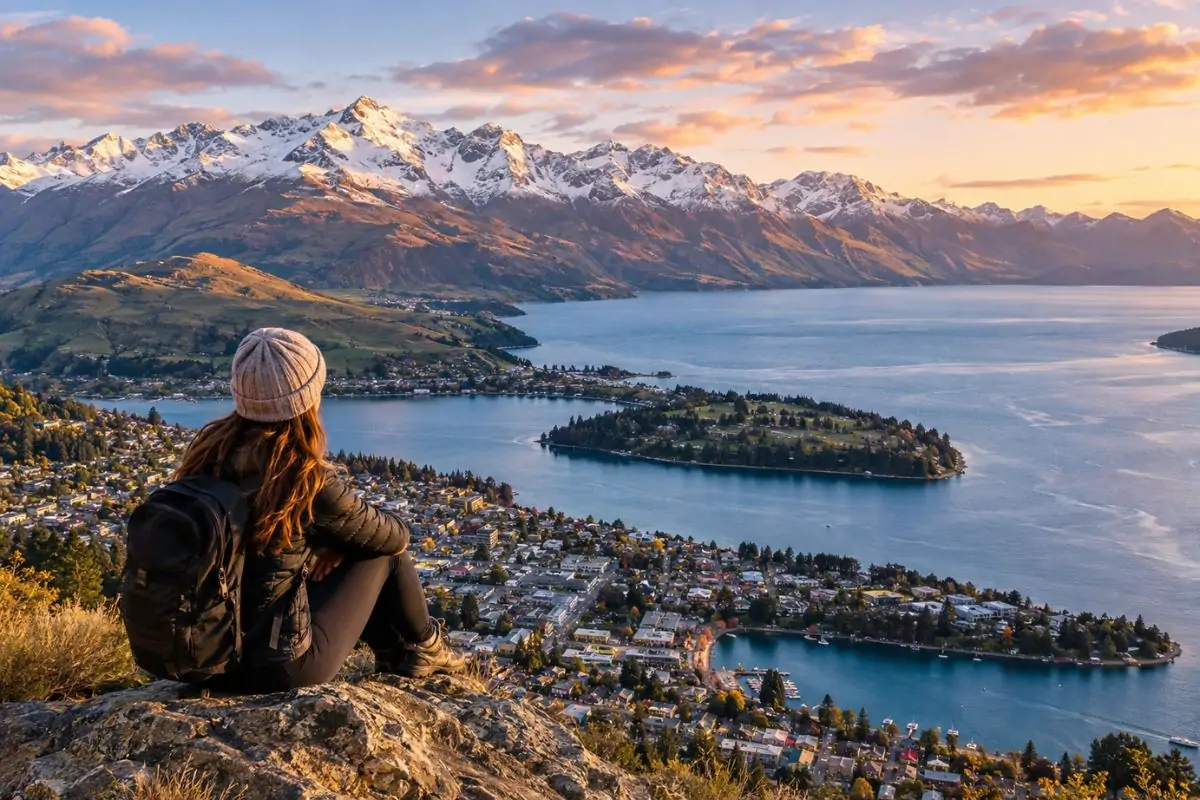
New Zealand known in Māori asAotearoa, “the land of the long white cloud” is one of the most geographically dramatic and culturally distinctive countries on Earth. Isolated in the South Pacific roughly 2,000 kilometers southeast of Australia, it is a nation of just over five million people spread across two main islands and a scattering of smaller ones, yet it punches far above its weight in landscape diversity, environmental ambition, and global cultural influence.
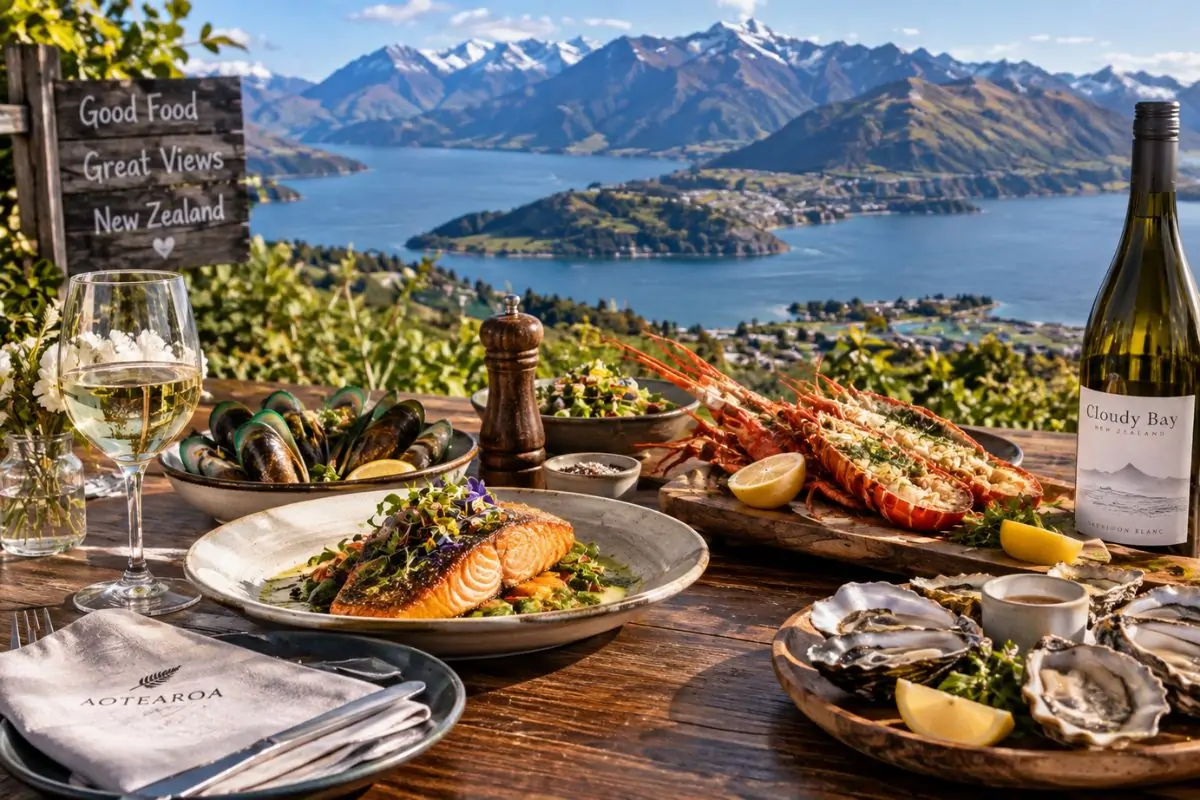
Geography and Natural Landscape
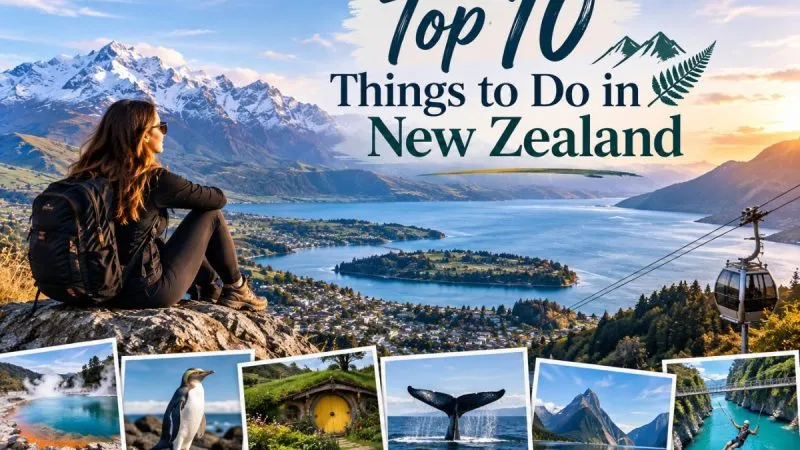
New Zealand consists primarily of two large landmasses, theNorth Island(Te Ika-a-Māui) and theSouth Island(Te Waipounamu), separated by the Cook Strait. The country’s geography is astonishingly varied for its size — within a few hours’ drive, one can pass from subtropical beaches to active volcanoes, temperate rainforest, glaciers, and alpine peaks.
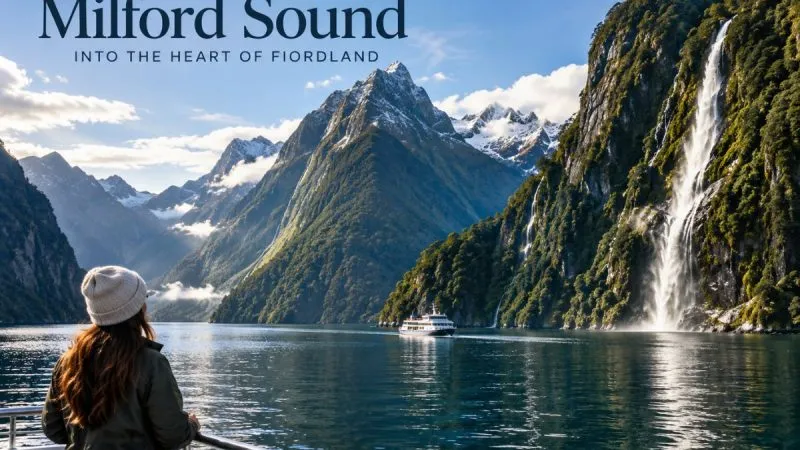
The South Island is dominated by theSouthern Alps, a mountain range running almost its entire length, home toAoraki/Mount Cook, the country’s highest peak at 3,724 meters. Glaciers such as Fox and Franz Josef descend dramatically close to sea level on the West Coast, a rarity at this latitude. The island’s west coast is a wild, rain-soaked wilderness of temperate rainforest and fiords, most famouslyMilford Soundin Fiordland National Park, while the east is drier, home to the Canterbury Plains and the wine regions of Marlborough and Central Otago.
:max_bytes(150000):strip_icc()/lake-taupo-1064966832-3a6e1aa5957948b082218b9e73c384d6.jpg "New Zealand: A Complete Portrait Of The Land Of The Long White Cloud 3")
The North Island is more volcanically active, featuring the geothermal wonderland ofRotorua, the volcanic plateau aroundLake Taupō(itself a massive volcanic caldera), and the active cone ofMount Ngauruhoein Tongariro National Park famously used as “Mount Doom” in theLord of the Ringsfilms. The country sits on the Pacific Ring of Fire, making earthquakes and volcanic activity a fact of life; the devastating 2011 Christchurch earthquake remains a defining recent event in the national memory.
New Zealand’s isolation for roughly 80 million years produced a unique evolutionary laboratory. With no native land mammals except bats, birds evolved to fill ecological niches elsewhere occupied by mammals — including flightless species like the iconickiwi, the extinct giant moa, and the kākāpō, a critically endangered flightless parrot. This isolation also makes the country’s ecosystems extraordinarily vulnerable to introduced predators like stoats, rats, and possums, driving one of the world’s most ambitious conservation efforts: the government’s goal to make New Zealandpredator-free by 2050.
History: From Polynesian Voyagers to Modern Nation
Human history in New Zealand is comparatively recent. Polynesian voyagers, ancestors of theMāori, arrived by canoe (waka) sometime between 1250 and 1300 CE, making it one of the last major landmasses on Earth to be settled by humans. Over centuries, Māori developed a distinct culture, language (te reo Māori), and social structure organized around iwi (tribes) and hapū (sub-tribes), with a worldview deeply connected to land, ancestry, and the natural world.
European contact began with Dutch explorer Abel Tasman in 1642, though sustained contact came later with British explorer James Cook’s voyages in the 1770s. British and other European settlement accelerated through the early 1800s, culminating in the signing of theTreaty of Waitangiin 1840 between the British Crown and Māori chiefs. The Treaty remains the founding document of modern New Zealand, though differing interpretations of its English and Māori texts led to prolonged conflict, land confiscation, and injustice during the colonial period — grievances that are still being addressed today through the Waitangi Tribunal and treaty settlement processes.
New Zealand became a British colony in 1841 and gradually gained self-governance, becoming a dominion in 1907 and achieving full independence over the 20th century. The country built an internationally recognized reputation for progressive social policy, becoming thefirst country in the world to grant women the right to vote, in 1893. New Zealand troops played a significant role in both World Wars, particularly the Gallipoli campaign of 1915, commemorated annually onANZAC Day.
In recent decades, New Zealand has pursued an increasingly independent foreign policy, most notably its nuclear-free stance declared in the 1980s, and has worked toward reconciliation with Māori through treaty settlements, growing revitalization of te reo Māori (now an official language alongside English and NZ Sign Language), and greater incorporation of Māori concepts into public life and law including granting legal personhood to natural features like the Whanganui River.
Government and Politics
New Zealand is a parliamentary democracy and a constitutional monarchy, with King Charles III as head of state, represented locally by a Governor-General. Executive power rests with the Prime Minister and Cabinet. The country uses aMixed-Member Proportional (MMP)electoral system, adopted in 1996, which tends to produce coalition governments and gives smaller parties meaningful representation in Parliament.
As of 2026, the government is led by Prime MinisterChristopher Luxonof the center-right National Party, governing in coalition with the ACT Party and New Zealand First since the October 2023 election. A general election is scheduled forNovember 7, 2026, with cost-of-living pressures and economic management expected to be central campaign issues.
New Zealand consistently ranks among the least corrupt nations in the world and performs strongly on indices of press freedom, ease of doing business, and quality of life, though it also faces persistent challenges around housing affordability, regional economic disparity, and infrastructure investment.
Culture and Identity
New Zealand’s cultural identity is shaped by the interplay of Māori tradition, British colonial heritage, and, increasingly, the influence of Pacific Island and Asian immigrant communities, particularly in cities like Auckland, one of the most ethnically diverse cities in the world relative to its size.
Māori culture is woven into national life in visible ways: thehaka— a ceremonial dance made globally famous by the All Blacks rugby team — is performed at everything from weddings to sports events; thehongi(pressing of noses) remains a traditional greeting; and marae (communal meeting grounds) continue to serve as centers of community life. Māori art, including intricate carving (whakairo) and the swirling koru-based visual language, has profoundly shaped the country’s aesthetic identity, appearing everywhere from tattoo art (tā moko) to the national airline’s branding.
Rugby union holds an almost religious place in New Zealand culture, with the national team, theAll Blacks, among the most successful sporting sides in history. Cricket, netball, and increasingly football also command strong followings. New Zealanders — commonly calledKiwis, after the native bird — are often characterized by a self-deprecating humor, a strong outdoors ethic, and the concept of “No. 8 wire” ingenuity: a do-it-yourself resourcefulness born of geographic isolation.New Zealand has also produced an outsized cultural footprint globally through film — most notably as the filming location and creative home base for Sir Peter Jackson’sLord of the RingsandThe Hobbit trilogies, which transformed global perceptions of the country as a fantasy-landscape destination and gave rise to a thriving screen production industry, often referred to as “Wellywood” for Wellington’s concentration of film talent.
Economy
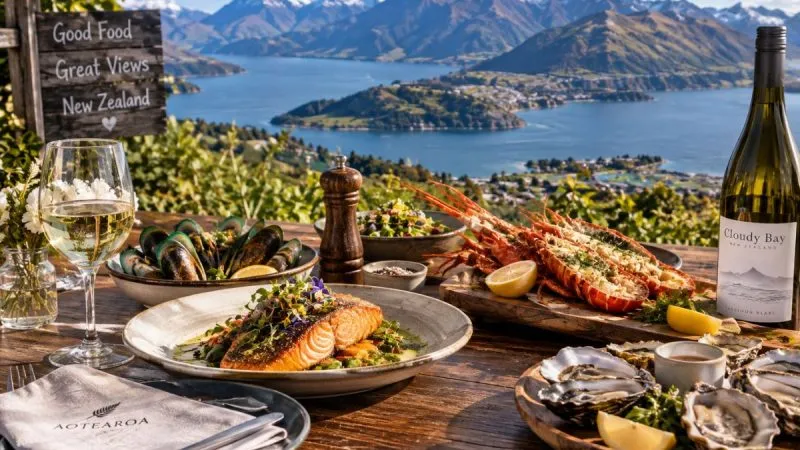
New Zealand’s economy is small but open and trade-dependent, historically built on agriculture. It remains one of the world’s largest exporters of dairy products (led by the cooperative giant Fonterra), meat, and wool, alongside significant wine, horticulture, and forestry sectors. Tourism is a major pillar of the economy, drawing millions of international visitors annually to experience the country’s landscapes, adventure sports (New Zealand is often credited as the birthplace of commercial bungee jumping, pioneered in Queenstown), and Māori cultural experiences.
In recent years, the economy has diversified further into technology, film and creative industries, and education, though it remains vulnerable to global commodity price swings and, given its geographic remoteness, to shipping and trade disruptions. The New Zealand dollar (“Kiwi dollar”) floats freely, and the Reserve Bank of New Zealand is internationally recognized as an early pioneer of inflation-targeting monetary policy.
Housing affordability, particularly in Auckland, has been a persistent economic and political challenge, alongside questions of productivity growth and the need to reduce reliance on primary industries as the country works toward its emissions reduction commitments.
Environment and Conservation
Environmental stewardship is central to New Zealand’s national brand, encapsulated in the tourism slogan “100% Pure New Zealand.” The country generates a very high share of its electricity from renewable sources, primarily hydroelectric and geothermal power, and has set ambitious climate targets, including a legislated goal of net-zero carbon emissions by 2050 (excluding biogenic methane, which has separate targets given the outsized role of agriculture in the national emissions profile).
Conservation is a national priority given the fragility of native ecosystems. The Department of Conservation manages an extensive network of national parks, covering roughly a third of the country’s land area, and community-driven conservation projects from urban predator-trapping initiatives to island sanctuaries reflect a broad public commitment to protecting endemic species like the kiwi, kākāpō, tuatara, and numerous native plants found nowhere else on Earth.
Why New Zealand Captivates the World
Few countries manage to combine such dramatic natural extremes glaciers and beaches, volcanoes and fiords, ancient forest and geothermal fields within such a compact and accessible area. Combined with a rich, living indigenous culture, a reputation for progressive governance, and a global cultural presence disproportionate to its population, New Zealand occupies a unique place in the world’s imagination: a small, remote nation that has become, in many respects, a testing ground for ideas about how a country can balance modernity, identity, and its relationship with the natural world.