The 2026 Space Traffic Accord: A “Red Light” for the Satellite Gold Rush
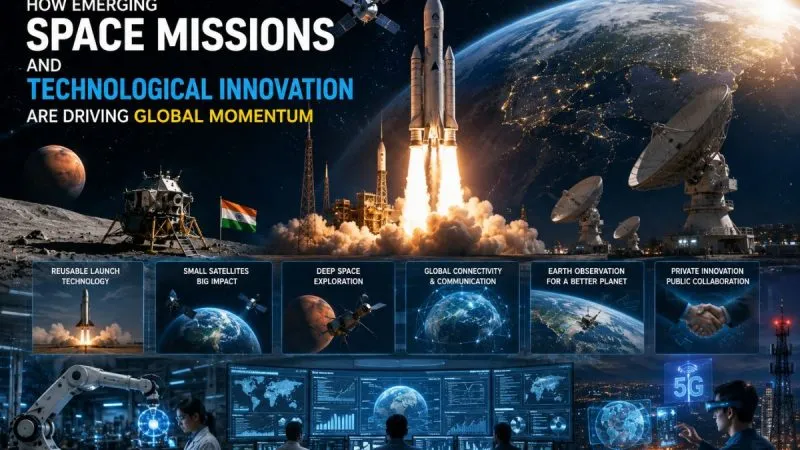
While the eyes of the world were on the Washington Peace Talks today, a different kind of diplomacy was unfolding in Vienna. The United Nations Office for Outer Space Affairs (UNOOSA) has officially released the first draft of the 2026 Space Traffic Accord. For the first time in history, the “Wild West” of Low Earth Orbit (LEO) is facing a set of hard, enforceable rules aimed at preventing a catastrophic collision chain reaction known as Kessler Syndrome.
The Crisis of the Commons: Why Now?
The urgency behind the accord comes from the rapid acceleration of the “Mega-Constellation” era. With Amazon’s Project Kuiper preparing to launch thousands of satellites following its Globalstar deal, and SpaceX’s Starlink already operating over 6,000 units, the sheer density of objects in LEO has increased by 400% since 2022.
Today’s report highlights that there are now over 130 million pieces of debris smaller than a centimeter orbiting Earth at 17,500 mph. At these speeds, even a paint fleck can hit with the force of a bullet, potentially triggering a cascade of destruction that could strip humanity of GPS, weather tracking, and global internet for centuries.
Read: The Satellite Internet War Heats Up
Key Pillars of the 2026 Accord:
- The “Congestion Tax”: Starting in 2027, satellite operators will be charged an annual “orbital occupation fee.” The revenue will be funneled into a global fund for active debris removal (ADR) missions.
- Mandatory De-Orbiting: Every satellite launched after June 2026 must have a “fail-safe” propulsion or drag-sail system to ensure it burns up in the atmosphere within five years of its mission end.
- Collision Avoidance Protocols: The accord mandates a centralized AI-driven traffic control system. If two satellites are on a collision course, the system—not the companies—decides which craft must burn fuel to move.
Industry Pushback: Musk vs. The UN
The reaction from the titans of industry has been swift. Elon Musk, currently focused on his Starship V3 launches, called the accord “bureaucratic overreach that stifles multi-planetary progress.” However, Amazon has taken a softer tone, with Jeff Bezos signaling support for “sustainable space development”—likely because the de-orbiting rules could act as a barrier to entry for smaller, lower-budget competitors.
Meanwhile, the European Space Agency (ESA) has already pledged full compliance, viewing the accord as a way to protect its own Iris² constellation from being “crowded out” by American and Chinese giants.
Summary: Can We Save the Sky?
The Verdict: The 2026 Space Traffic Accord is the most important piece of environmental legislation of the decade. It recognizes that “Space” is not an infinite resource, but a fragile environment that requires the same protections as our oceans and atmosphere. Whether the major powers will actually enforce these “tickets in the sky” remains the trillion-dollar question.
Trending Snippets for April 14, 2026:
- Physics Break: The “Hubble Tension” continues to trend in academic circles, with some physicists suggesting that Dark Energy might actually be “Dark Fluid” that changes density.
- Eco-Steel: Sweden’s Stegra plant has officially started its first hydrogen-powered furnace today, marking the beginning of the end for coal-based steel in Europe.
- The Viral Fail: The “Yoga Leg Extension” challenge has claimed its first celebrity victim—Tom Holland posted a hilarious video of himself toppling over while attempting it this morning.