She Rode Into the Horizon and Never Fully Came Back. The Complete Guide to Horse Riding Travel for Women
Part of the Real Shee Power Travel Series: 🔗 That Horse Riding Reel From Kazakhstan Is Real. Here Is How to Actually Live It. 🔗 She Packed One Bag And Got Her Whole Life Back: International Solo Travel for Women 🔗 India’s Safest Hidden Destinations for Women Travellers 🔗 Palace Stays in Rajasthan: The Complete Women’s Booking Guide 🔗 Kerala for Women Travellers: The Complete Guide
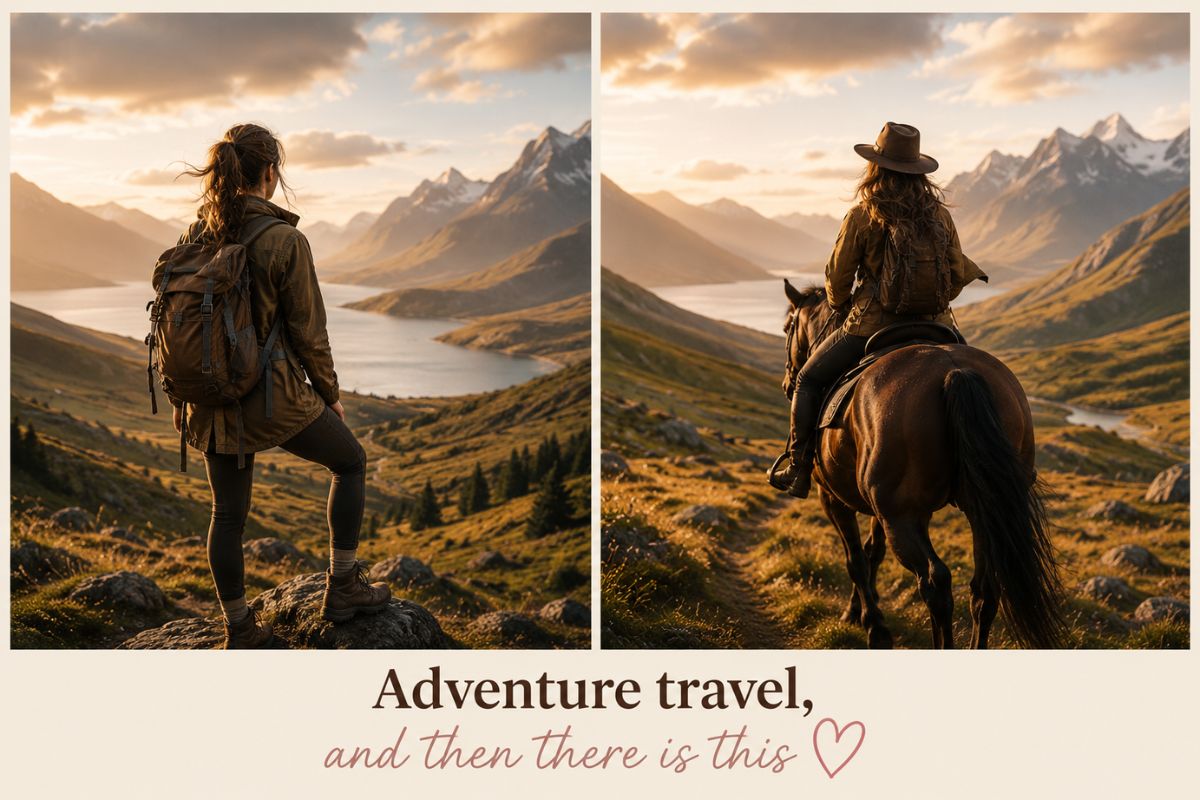
There is a particular kind of freedom that only happens on the back of a horse. It is not the freedom of a beach where you are still, or a mountain summit where you stop. It is moving freedom, the kind where the ground is passing under you without a machine between you and it, where you have negotiated something with a living creature and it has agreed to carry you, and together you are going somewhere neither of you could reach alone quite so completely.
Women have always known this. Rani Lakshmi Bai rode into battle on her horse Badal with her son tied to her back. Rani Velu Nachiyar was trained in horse riding alongside sword fighting and archery from childhood, eventually becoming the first Indian queen to raise an all-women army. These were not women performing courage on horseback. They were women for whom riding was simply part of being fully themselves in the world.
That lineage belongs to you too. This guide picks up where our Kazakhstan horse riding guide left off and goes wider, covering the best horse riding destinations globally for solo women travellers, what makes each one distinct, how to find the right operators, what to do if you are a complete beginner, and what to honestly prepare for so the trip becomes one of the most memorable and genuinely grounding experiences of your life.
Part One: Why Horse Riding Travel Is Different From Other Adventure Travel
Most adventure travel puts you in or through a landscape. Horse riding puts you in relationship with it, and with another living being at the same time.
The horse reads your energy before you understand it yourself. A calm, grounded rider produces a calmer horse. An anxious, tense rider gets a reactive one. This immediate biofeedback loop between human and animal is something no hiking trail or kayak tour can replicate, and women returning from multi-day horse treks often describe the experience in terms closer to therapy than tourism. Not in a precious way. In a very concrete, physiological way.
There is also the matter of scale. On foot, you cover perhaps 20 to 25 km on a good hiking day. On horseback, in terrain suited to riding, you cover 30 to 50 km, moving through landscapes that walking would not reach in the same time. You see more, access more, and feel more of a place.
And then there is the sitting still. At the end of a long riding day, when you have been present to the horse, the terrain, your body, and the environment for six or seven hours, you sleep in a way that most urban life does not produce. Deeply, completely, without the usual mental noise. Many women describe this as one of the unexpected gifts of the experience.
🧞 Real shee power Genie Says
“Every horse riding holiday I have heard about from women who have done it ends the same way. They stop talking about the views and start talking about something quieter. Something they found in themselves out there that they didn’t know was missing. That’s what this kind of travel actually gives you.”
Part Two: The Best Horse Riding Destinations for Women, Ranked by Experience Type
1. Kazakhstan — For the Dream of Endless Horizon
We have covered this in full in our Kazakhstan horse riding guide, and it remains the single most extraordinary backdrop for horseback travel available to Indian women right now, with the added advantage of visa-free entry for up to 14 days.
The open steppe near Almaty, the Zailiysky Alatau mountain ranges, the alpine lakes of Kolsay, and the remote wilderness of Katon-Karagay National Park offer genuinely different experiences within one country. The horse culture here is 5,500 years old and still alive. You are not visiting a reconstruction of nomadic life. You are riding alongside people for whom horses remain central to daily existence.
Best for: Travellers who want the reel-worthy landscape alongside genuine cultural depth. Beginner to intermediate riders, depending on the specific itinerary.
Key outfitters: Eastern Paths (@easternpaths.kz), At-Travel (@at_travel.kz), Zavkhan Trekking, Taiburyldyn Shabysy Ranch.
Season: May to September.
2. Kyrgyzstan — For the Nomadic Deep Dive
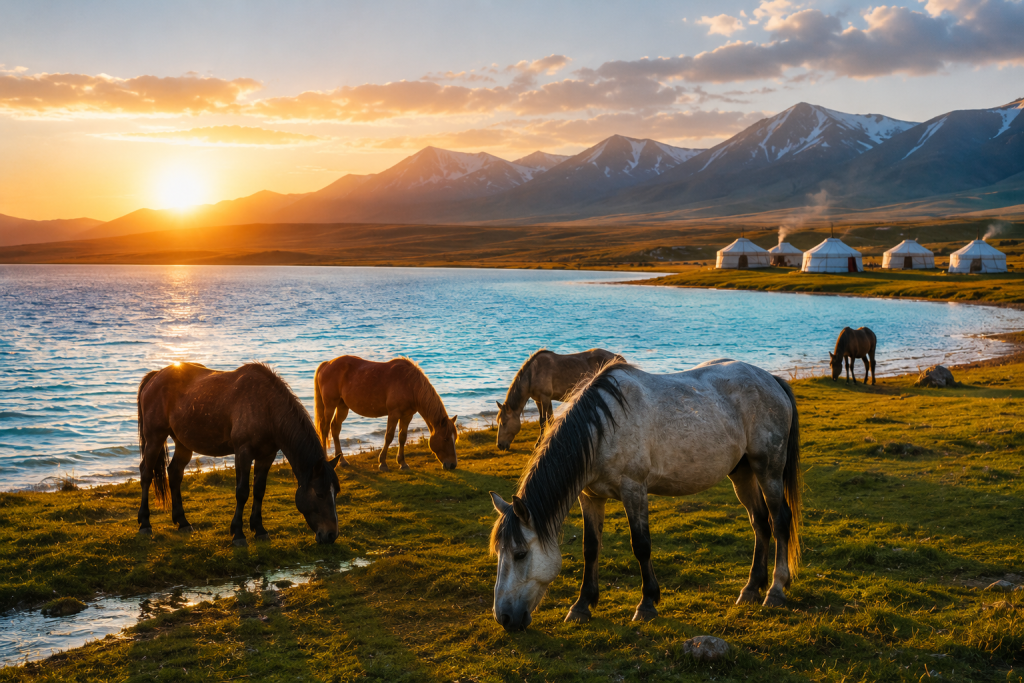
Often mentioned in the same breath as Kazakhstan, Kyrgyzstan is smaller, more compact, and in many ways more immediately immersive for horse travel. The country is roughly 90% mountains, and the tradition of nomadic life, the summer pastures called jailoos, the felt yurts, the eagle hunters of the east, the herders who still spend summers at altitude with their animals, is more visibly present in daily life here than almost anywhere else in Central Asia.
The Son-Kul Lake region, a high-altitude alpine lake surrounded by summer jailoos, is one of the most iconic horse riding settings on earth. You ride to the lake through mountain passes, stay in yurts with nomadic families, wake to the sound of horses outside, and ride out again. There is no other way to properly experience it.
Practical note for Indian travellers: As of 2026, Indian passport holders need a visa for Kyrgyzstan. An e-Visa is available online and relatively straightforward to obtain. Always verify current requirements at the official Kyrgyz e-Visa portal before booking.
Best for: Travellers wanting the deepest nomadic immersion available. Intermediate riders preferred for multi-day mountain routes.
Key outfitters: Shepherd’s Life (@shepherdlifetours on Instagram), CBT Kyrgyzstan (Community Based Tourism network, which works directly with local nomadic families and puts money directly into communities).
Season: June to September for high-altitude routes.
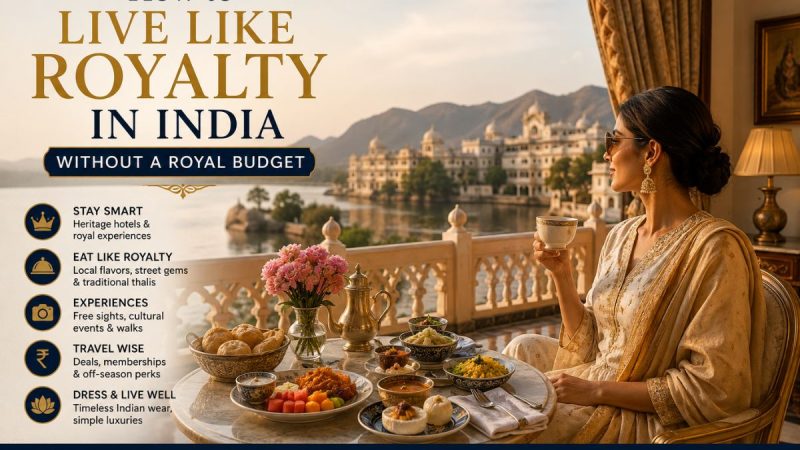
3. Rajasthan, India — For the Woman Who Wants to Start Close to Home
For Indian women who want their first proper horse riding travel experience without an international flight, Rajasthan is the answer, and it is a genuinely excellent one.
Heritage horse riding through the countryside around Udaipur, Jodhpur, and Jaisalmer gives you royal Marwari horses (a breed with distinctive inward-curving ear tips found nowhere else in the world), palace backdrops, village paths, and the landscape that has made Rajasthan one of the world’s most photographed travel destinations. Our Palace Stays in Rajasthan guide specifically notes that the horse riding offered through the countryside around several heritage properties is considered among the finest heritage riding experiences in the region.
Key operators worth knowing:
- Rajasthan Horse Safari runs multi-day rides between villages, with stays in tents and guesthouses, suitable for beginner to intermediate riders.
- Dundlod Horse Safari in the Shekhawati region offers heritage-focused rides through painted haveli villages on purebred Marwari horses, with a strong reputation for horse welfare and rider safety.
- Horses of India (based in Udaipur) specialises in countryside rides through rural Rajasthan specifically designed for women solo travellers, with a female-friendly operational ethos built into the program.
Best for: First-time horse riding travellers, women wanting cultural depth alongside riding, Indian women wanting a domestic starting point before going international.
Season: October to February. Avoid peak summer (April to June) in Rajasthan; the heat is genuinely extreme.
4. Uttarakhand, India — For the Mountain Riding Experience Close to Home
Uttarakhand’s horse tradition is different from Rajasthan’s. Here, horses are part of pilgrimage culture. The famous Char Dham yatra routes, particularly the ascent to Kedarnath, have for centuries been completed partly on horseback (or by doli), and the mountain ponies of the Garhwal Himalayas are sure-footed, calm, and entirely at home on steep, narrow trails.
For women who want mountain horse riding without leaving India, the Chopta to Tungnath route, the Haridwar to Rishikesh riverside trails, and the valley approaches around Auli and Munsiyari all offer organised riding experiences of varying lengths and difficulty.
The spiritual and healing dimension of Uttarakhand as a destination for women is captured beautifully in our piece on Triyuginarayan, one of the quietest and most genuinely restorative solo travel experiences available in the Himalayas. A horse riding itinerary and a Devbhoomi healing journey can be combined into a genuinely extraordinary trip.
Best for: Women who want mountain riding, spiritual depth, and the accessibility of a domestic destination.
Season: April to June and September to November. Monsoon (July to August) is generally not suitable for mountain riding.
5. Iceland — For the Woman Who Wants Something Entirely Unlike Anything Else
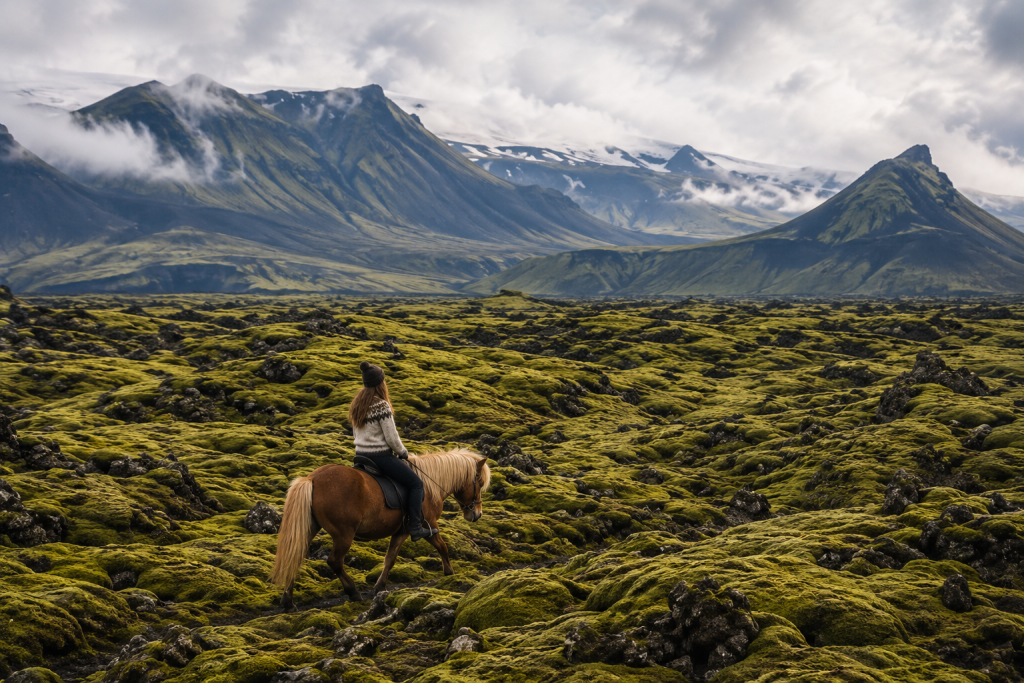
The Icelandic horse is unlike any other breed in the world. Due to Iceland’s isolation and a strict import ban on horses that has held for over 1,000 years, the Icelandic horse has remained genetically unchanged and has developed a unique fifth gait called the tolt, an exceptionally smooth, four-beat lateral gait that allows the rider to travel over terrain at speed without the bouncing discomfort of a trot.
What this means practically: even complete beginners can ride comfortably for hours in Iceland because the horse’s movement is so smooth. The landscape through which you ride, volcanic plains, geothermal fields, black sand beaches, glacier edges, lava fields covered in luminous green moss, is genuinely like nowhere else on earth.
Several operators run multi-day lava field treks as well as shorter beach and highland rides, and Iceland’s safety infrastructure for solo women travellers is among the best in the world.
Best for: Complete beginners who want comfort and confidence. Women who want extraordinary, otherworldly landscape. Those who want a short (3 to 5 day) but deeply memorable trip.
Key outfitters: Ishestar, Eldhestar, and Laxnes Horse Farm all have strong international reputations and professional English-speaking guides.
Season: Year-round, though summer (June to August) offers the midnight sun, which creates riding conditions of almost surreal beauty.
6. Morocco — For Desert Riding With a Cultural Soul
The Moroccan desert and its approaches offer horse and camel riding experiences that have drawn travellers for generations, but the horse riding specifically, through the Sahara edge towns of Merzouga and M’Hamid, through the Middle Atlas Mountains around Azrou and Ifrane, and through the Atlantic coastal areas near Essaouira, is a distinct and genuinely beautiful experience.
Essaouira in particular has developed a strong equestrian culture. The wide, wind-swept beach south of town is one of the most exhilarating places in the world to canter a horse, with the Atlantic crashing beside you and the old medina walls visible behind.
Practical note for Indian travellers: Indian passport holders need a visa for Morocco. Check current requirements at the Embassy of Morocco in India or through the official Moroccan visa portal before booking.
Best for: Women who want cultural depth alongside riding. Travellers who want the desert or coastal landscape without the Central Asian logistics.
Season: March to May and September to November. Avoid peak summer for the desert regions.
7. Ireland and Scotland — For the Woman Whose Heart Is in the Hills
Celtic horse country is not just scenery. It is a lived culture of equestrian excellence. Ireland in particular has a horse breeding and riding tradition that runs as deep as anywhere in the world, and riding through Connemara, the Burren, or the Dingle Peninsula on a native Connemara pony (another breed of extraordinary character and surefootedness) is a quiet, green, emotionally nourishing experience that sits at a completely different register from the steppe or the desert.
Scotland offers Highland trail riding through moorland, glen, and loch landscape. Several operators run multi-day supported treks through the Scottish Highlands, staying at farmhouses and rural guesthouses, and the riding is suitable for wide experience ranges.
Best for: Women who prefer lush, green, gentler landscape over dramatic steppe or desert. Those who want a riding trip combined with cosy accommodation, good food, and the particular emotional warmth of Celtic hospitality.
Season: May to September for the best weather, though autumn (September to October) in both Ireland and Scotland has a melancholic beauty that some travellers find even more moving.
Part Three: How to Find the Right Operator Anywhere in the World
This section applies to every destination listed above, and it is the most practically important part of this guide.
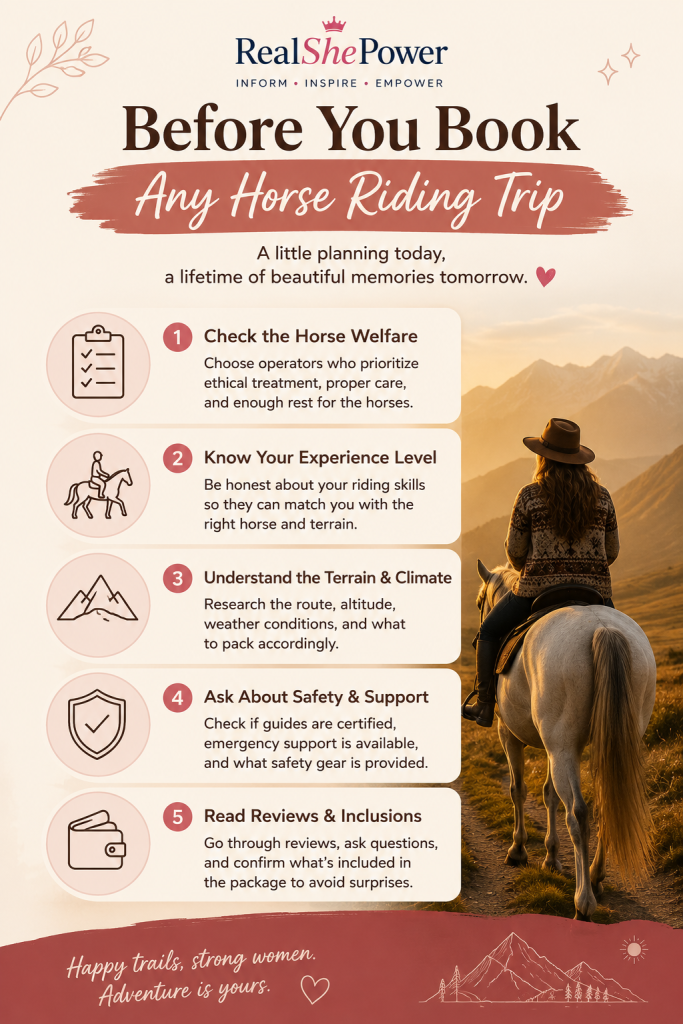
Ask these questions before committing money to any operator:
1. What is your horse-to-guide ratio? A responsible operator will have at least one guide per four to five riders for beginners, and will maintain a lower ratio on mountain or off-road terrain. If a guide is expected to manage eight or ten riders alone in open terrain, walk away.
2. How do you assess riders’ experience before the trip? Any serious operator will ask about your riding background before placing you on a horse. If they do not ask, they are not tailoring the experience to your safety and skill level.
3. What happens if the weather turns, or if I cannot continue? This reveals how prepared they are for contingencies. Good operators have clear protocols for weather emergencies, rider fatigue or injury, and horses that behave unexpectedly.
4. How are the horses cared for? Genuine question, not sentimental. Operators who care for their horses well also tend to operate everything else more carefully. Ask about rest schedules, feed, and veterinary access on multi-day treks.
5. Can I speak to or read reviews from recent solo women travellers specifically? Not group travellers. Not couples. Solo women travellers. Their experience of safety, comfort, and feeling genuinely welcomed is the data point that matters most for planning your own trip.
🧞 Real shee power Genie Says
“The best horse riding operators in the world have one thing in common: they talk about their horses before you have to ask. If a company leads with logistics and pricing before mentioning the animals, reconsider.”
Part Four: Building Real Skill Before the Trip — The Honest Preparation Guide
If You Are a Complete Beginner
Take a minimum of four to six proper riding lessons at a local stable before any horse riding holiday. Even short-duration instruction will teach you: how to mount and dismount safely, basic position and balance, how to ask the horse to walk, halt, and turn, and how to manage your own anxiety when the horse does something unexpected.
This is not gatekeeping. It is the difference between spending your entire riding holiday being anxious and spending it being present and genuinely thrilled. The first few lessons will be humbling. They are supposed to be. Riding looks effortless from the outside precisely because the rider has done enough repetitions that their body has learned to absorb the horse’s movement rather than fight it. That takes time and repetition, not talent.
Physical Preparation
As covered in detail in our Strength Training guide, horse riding engages the core, hips, inner thighs, and lower back more than any other activity it superficially resembles. On a single half-day ride, a rider with no baseline core strength will feel muscles she did not know she had. On a multi-day trek, this becomes genuinely limiting if not prepared for.
Specific preparation that directly transfers:
- Hip hinge strength (Romanian deadlifts, good mornings): builds the posterior chain stability that keeps your seat independent of the horse’s movement
- Core anti-rotation work (planks, dead bugs, pallof press): builds the stability that allows your upper body to remain quiet while your lower body absorbs the horse’s motion
- Hip flexor mobility: prolonged riding in a saddle can compress the hip flexors; building both strength and flexibility here prevents the back pain that many first-time riders experience on day two onward
- Inner thigh strength: relevant particularly for posting trot and sitting canter, where the leg needs to be stable without gripping
Even four to six weeks of targeted preparation from the Strength Training guide will make a measurable difference to how much you enjoy the physical dimension of the trip rather than simply enduring it.
The Mindset Piece
Horses are highly attuned to emotional state. They read cortisol, tension, and fear with extraordinary accuracy through your body, your breath, and your grip. This means that the nervous system regulation tools covered in our Mental Health guide are not just useful for daily life. They are directly applicable to riding.
A slow exhale before mounting. Softening your grip on the reins when anxiety spikes. Breathing from the belly rather than the chest when the horse moves faster than expected. These are not metaphors. They are practical, in-the-moment tools that change the horse’s response to you in real time.
Part Five: Solo Women and Horse Riding Travel — The Safety Conversation
Solo travel safety for women is something RealShePower takes seriously and covers honestly, from international solo travel to India’s safest hidden destinations. Horse riding travel adds a specific dimension to that conversation.
The physical safety dimension:
- Always wear a properly fitted riding helmet. Non-negotiable. Regardless of what local guides do, regardless of how short the ride is, regardless of how calm the horse appears. A helmet that fits correctly has one job and it is a very important one.
- Closed-toe shoes with a low heel at all times on horseback. Bare feet, flip flops, and sneakers with thick rubber soles (which can catch in the stirrup) are genuine hazards.
- Tell your guide your honest experience level before mounting. Not your aspirational level. Your actual level. A guide who knows a rider is a beginner will choose a calmer horse, use a shorter route, and pace the ride appropriately. A guide who thinks they have an experienced rider and discovers otherwise mid-ride has a much harder problem to manage.
- Learn basic emergency dismounting before any significant trail ride. This is rarely taught proactively. Ask your guide to show you.
The logistical safety dimension:
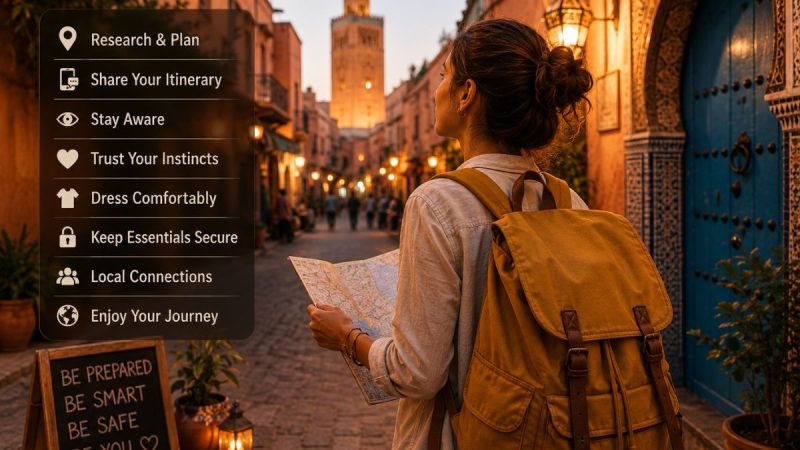
- Share your itinerary, including which operator you are using, departure and expected return times, and your accommodation, with someone who is not on the trip. This applies whether you are riding in Rajasthan or Kazakhstan.
- For remote wilderness treks (Katon-Karagay, Son-Kul, Scottish Highlands), confirm whether your guide carries a satellite communicator or personal locator beacon. In places where mobile signal is absent for days, this is the actual emergency infrastructure.
- Travel insurance that explicitly covers horse riding and adventure activities is essential. Read the policy. Many standard policies have an adventure sports exclusion clause. Check before you go, not after something happens.
The cultural dimension:
In all of the destinations covered in this guide, horse riding exists within a specific cultural context. In Rajasthan, horses carry centuries of royal and warrior meaning. In Kazakhstan and Kyrgyzstan, horses are still part of daily life and treated with a respect rooted in genuine dependence. Being a guest in those cultures means arriving with curiosity, following your guide’s lead about appropriate interaction with the animals and the community, and resisting the instinct to treat everything as a content backdrop before experiencing it as a real place.
Part Six: The Horse Riding and Inner Journey Connection
This is the part that is hardest to explain before you have done it, and immediately obvious afterward.
RealShePower’s piece on Triyuginarayan describes a certain quality of solo women’s travel that many articles miss: the way a place or an experience can return you to yourself. “You come here to remember who you were before burnout swallowed you whole.” Horse riding travel does this at a specific register.
There is something about the negotiation with a horse, the requirement that you be fully present, calm, and responsive rather than distracted and performing, that does not tolerate the half-presence most of us bring to daily life. You cannot scroll while riding. You cannot run through tomorrow’s to-do list while a horse is reading your body for information about whether the world is safe. You are required to be entirely where you are.
Women who return from horse riding travel, almost universally and across all destinations, describe a version of the same thing: that something that was wound very tightly in them came loose. That they slept differently. That they felt capable of something they were not sure about before. That the horse gave back something they had not realised was missing.
This is not mystical. It is neurological. Full embodied presence for sustained periods, combined with physical exertion, fresh air, genuine silence, and the company of an animal that cannot be fooled or impressed, produces a state of nervous system rest that urban life almost never offers. As covered in our Holistic Health guide, the nervous system recovery that happens in environments like these has real, measurable effects on hormones, sleep, and mental clarity.
A horse riding holiday is not an indulgence. For many women, it is some of the most important rest they have had in years. Budget accordingly, plan accordingly, and go without guilt.
🧞 real shee power Genie Says
“You will not come back the same. Not because something dramatic happened. Because for several consecutive days, you were completely, unavoidably yourself, and a horse knew it before you did.”
Part Seven: Building Your First Horse Riding Travel Itinerary
For the woman reading this who is genuinely ready to plan the trip, here is a realistic progression.
First trip (domestic, beginner-friendly): Rajasthan. Two to three days, starting with a half-day ride from a heritage property (Dundlod, or a Udaipur-area stable) before committing to a multi-day itinerary. Combine with the Palace Stays experience for a complete trip that earns its own story in both directions.
Second trip (international, intermediate): Kazakhstan. Four to five days based around Almaty, using Eastern Paths or Almaty Nomads for a private itinerary that combines the steppe, the mountains, and at least one night in a yurt. Full practical guide in our Kazakhstan horse riding article.
Third trip (advanced, immersive): Kyrgyzstan’s Son-Kul Lake via CBT Kyrgyzstan, or Iceland’s multi-day highland trek. Either of these will be the trip you reference for the rest of your life.
Running through all of them: The preparation, the physical readiness, the nervous system tools, and the self-knowledge that makes you a confident, present, genuinely joyful rider rather than a nervous one. Start that work now, whether or not the trip is booked yet.
Conclusion: The Horizon Has Always Been Yours
There is a woman in that reel who looked like she had the whole world to herself. She probably did, for that hour, in that landscape, on that horse. And she got there by booking the trip, doing the preparation, choosing the right guide, and showing up.
The horizon does not belong to women who already know everything. It belongs to women who decide to go and figure out the rest along the way.
Book the ride. Do the lessons. Build the strength. Find your guide. Then go.
The horse will meet you there.
Continue exploring on Real Shee Power: 🔗 That Horse Riding Reel From Kazakhstan Is Real 🔗 She Packed One Bag And Got Her Whole Life Back: International Solo Travel for Women 🔗 India’s Safest Hidden Destinations for Women Travellers 🔗 Palace Stays in Rajasthan: The Complete Women’s Booking Guide 🔗 Kerala for Women Travellers 🔗 Triyuginarayan: A Feminine Healing Journey in Uttarakhand 🔗 Lift Like a Woman: Strength Training for Women 🔗 She Feels Everything: Mental Health and Emotional Resilience 🔗 The Complete Woman’s Guide to Holistic Health 🔗 Rani Velu Nachiyar: India’s First Warrior Queen 🔗 Rani Lakshmi Bai: The Brave Queen of Jhansi 🔗 Solo Travel Tag 🔗 Adventure Tag 🔗 Travel Guide Tag
Disclaimer: Visa requirements, operator availability, and entry rules change. Always verify current requirements directly with official government portals and your chosen operator before booking. Horse riding carries inherent physical risk. Ensure your travel insurance explicitly covers equestrian and adventure activities. Always follow your guide’s safety instructions.