
Empowering Rural Women: Understanding the Lakhpati Didi Initiative
Hello readers, today I want to dive into one of India’s most inspiring government programs aimed at uplifting rural women and fostering economic independence. The Lakhpati Didi scheme, launched under the Deendayal Antyodaya Yojana – National Rural Livelihoods Mission (DAY-NRLM) by the Ministry of Rural Development, represents a powerful step towards women’s empowerment in the country’s villages. Translating to “sister with a lakh,” this initiative targets Self-Help Group (SHG) members, encouraging them to achieve an annual household income of at least one lakh rupees (Rs. 1,00,000), which equates to an average monthly earning of over Rs. 8,333. It’s not just about financial targets; it’s about transforming lives through sustainable livelihoods, skill-building, and community support.
At its core, the Lakhpati Didi concept celebrates women from SHGs who cross this income threshold over at least four agricultural seasons or business cycles. These women, often from economically disadvantaged backgrounds, become role models in their communities by adopting eco-friendly practices and maintaining a dignified standard of living. The program builds on the success of SHGs, which have already mobilized over 9 crore women across 83 lakh groups, shifting the focus from basic inclusion to entrepreneurial growth. By providing access to finance, training, and markets, the government is enabling these women to start micro-enterprises in areas like agriculture, handicrafts, livestock, and small-scale manufacturing.
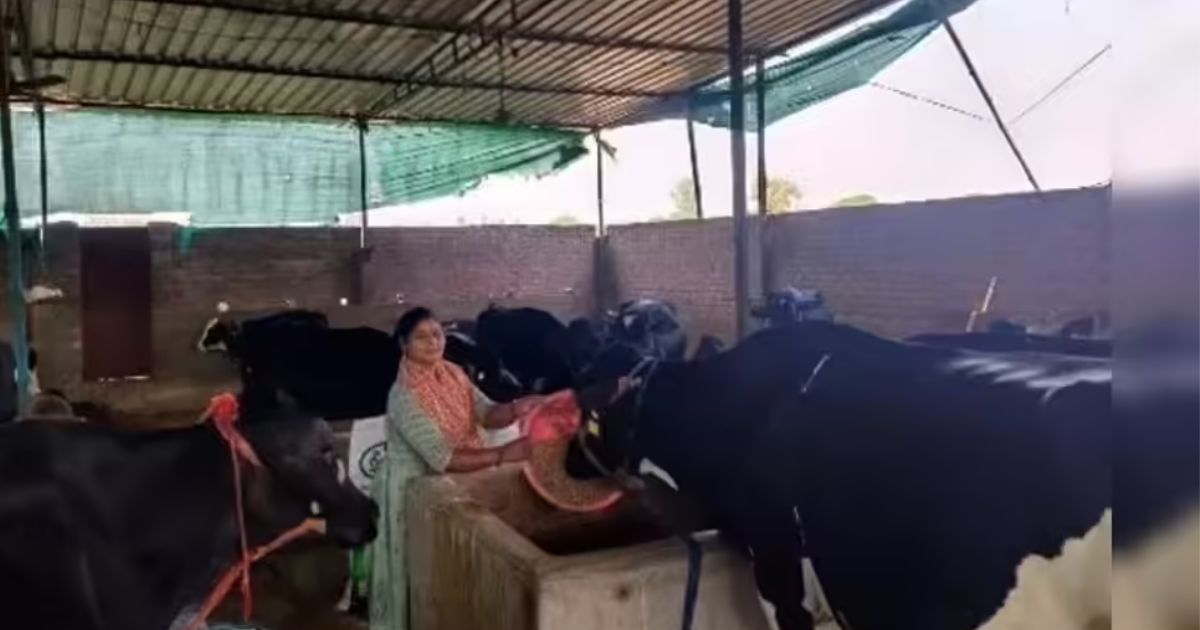
The scheme’s strategy is multi-faceted, emphasizing four key pillars: productive livelihoods that generate sustainable income, access to financial resources through bank linkages and government subsidies, skill development via training programs, and market linkages for selling products, including through e-commerce platforms. SHG members receive support in the form of assets like equipment and infrastructure, knowledge-sharing workshops on financial literacy, and connections to departmental schemes. Partnerships with organizations like NABARD and private sector players further amplify these efforts, ensuring technical and capacity-building resources reach the grassroots level.
Since its formal announcement in 2023, the Lakhpati Didi initiative has made remarkable strides. The government initially set a target of empowering 2 crore women but has since enhanced it to 3 crore by 2030, recognizing the rapid progress. As of recent updates, over 3.33 crore potential Lakhpati Didis have been identified, with one crore women already achieving the status. In a notable event in Jalgaon, Maharashtra, the Prime Minister felicitated 11 lakh new Lakhpati Didis and released a revolving fund of Rs. 2,500 crore benefiting 48 lakh SHG members, alongside Rs. 5,000 crore in bank loans for 25.8 lakh more. States like Andhra Pradesh lead with over 13.65 lakh Lakhpati Didis, followed by Bihar and West Bengal, while northeastern regions are catching up through targeted interventions.
The broader impact of Lakhpati Didi extends far beyond individual success stories. It contributes to India’s economic transformation by boosting rural economies and positioning women as key drivers in the nation’s journey to becoming the world’s third-largest economy. These empowered women inspire their peers, promote financial inclusion, and foster collective action within SHGs. Digital tools like the Aajeevika Digital Register, covering 8.7 crore members, help track progress and ensure transparency. Moreover, the scheme aligns with national goals of women-led development, addressing gender inequalities that have long hindered social progress.
Of course, challenges remain, such as coordinating multiple government schemes, ensuring equitable reach in remote areas, and overcoming barriers like limited market access or skill gaps. However, with ongoing expansions in technology adoption, deeper convergences, and global recognition, the future looks promising. Initiatives like financial disbursements exceeding Rs. 6,000 crore underscore the commitment to scaling up.
In conclusion, the Lakhpati Didi scheme is more than a financial target; it’s a beacon of hope for millions of rural women, empowering them to break free from poverty and build prosperous futures. By harnessing the power of SHGs and community spirit, India is scripting a narrative of inclusive growth where every “Didi” can dream big. If you’re part of an SHG or know someone who could benefit, exploring this program through local Anganwadi centers or the official Lakhpati Didi portal could be a game-changer. Let’s celebrate and support these incredible women shaping tomorrow’s India.