
How Vietnam Reclaimed Its Voice by Rejecting French
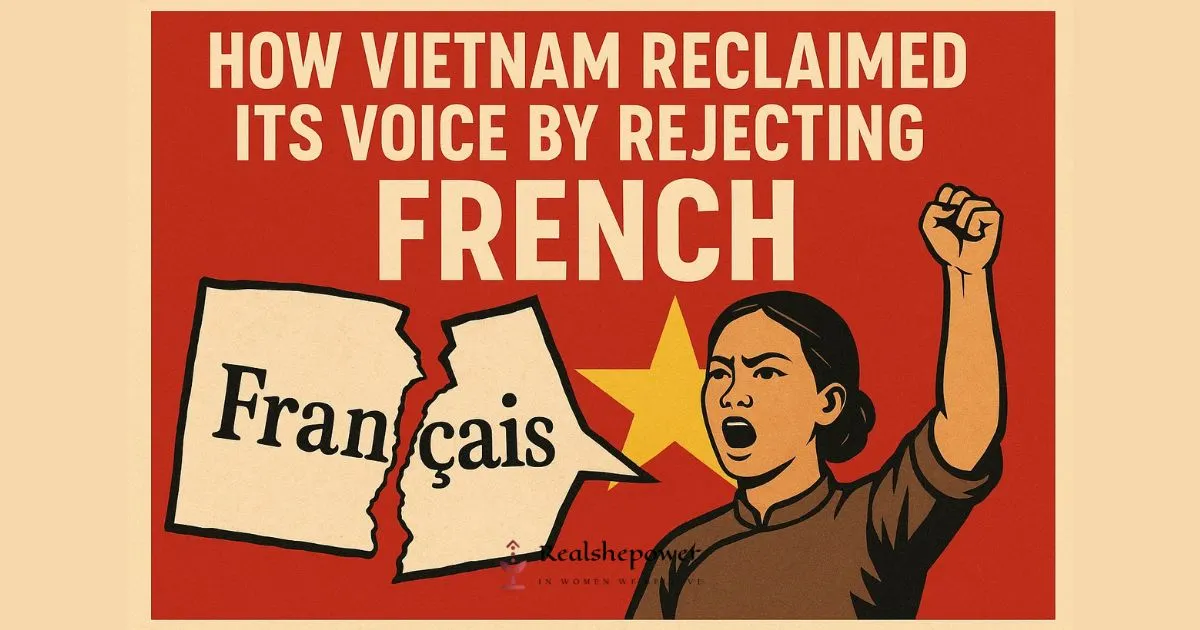
The narrative that Vietnam, a former French colony, has largely eradicated the French language from its cultural fabric, reflecting a deep-seated rejection of its colonial past, is both compelling and partially true. Unlike many former colonies where the colonizer’s language persists as a marker of elite status or administrative necessity, Vietnam stands out for the near-absence of French in daily life, despite nearly a century of French colonial rule (1858–1954). Official figures from 2019 estimate that only about 675,000 Vietnamese, roughly 1% of the population, are fluent in French, with regular usage limited to 5,000–6,000 people, primarily older individuals educated during the colonial era.
This stark linguistic disconnect, coupled with Vietnam’s deliberate pivot away from French cultural dominance, suggests a unique postcolonial trajectory—one rooted in fierce nationalism and cultural resilience. However, the story is not as simple as outright hatred for the colonizer. Vietnam’s relationship with its French colonial past is a complex interplay of rejection, selective integration, and pragmatic adaptation.
Table of Contents
The Historical Context: French Colonialism and Linguistic Imposition on Veitnam
French colonization of Vietnam began in earnest with the capture of Saigon in 1859 and solidified with the establishment of French Indochina in 1887, encompassing Vietnam, Laos, and Cambodia. During this period, the French language was imposed as the official medium of education, government, trade, and media, particularly in urban centers like Hanoi and Saigon (now Ho Chi Minh City).
The colonial administration promoted French as a tool of control, aiming to create a Western-educated elite to serve as intermediaries between the colonizers and the local population. By the early 20th century, French had become the primary language of education, with schools teaching French culture and language to the urban elite, while a pidgin form, Tây Bồi, emerged among Vietnamese servants in French households.
A pivotal linguistic transformation was the introduction of the Latin-based Quoc Ngu script, developed by French Jesuit missionary Alexandre de Rhodes in the 17th century and later promoted by the colonial government. This script replaced the Chinese-derived Chữ Nôm, which had been accessible primarily to the scholarly elite due to its complexity.
Quoc Ngu, with its Latin alphabet and diacritics for tones, democratized literacy, as it was easier to learn than Chữ Nôm, which required knowledge of Chinese characters. The French saw this as a way to sever Vietnam’s cultural ties to China, reinforcing their own influence. However, this move inadvertently laid the groundwork for Vietnamese nationalism, as Quoc Ngu became a tool for anti-colonial literature and revolutionary discourse in the 20th century.
Despite French being the language of the elite, it never penetrated the broader population. Only about 10% of Vietnamese were fluent in French during the colonial period, largely because the majority—90% of whom were rural farmers—had little access to formal education. The French language remained a symbol of colonial power, spoken by the privileged few in government, courts, and churches, while the masses continued to use Vietnamese. This linguistic divide sowed seeds of resentment, as French was associated with exploitation and exclusion.

The Rejection of French: A Nationalist Triumph
Vietnam’s near-eradication of French as a spoken language is a testament to its fierce nationalist movements, which emerged in the 1920s and gained momentum under leaders like Ho Chi Minh. The colonial period was marked by economic exploitation, social stratification, and cultural marginalization. The French restructured Vietnam’s economy to prioritize cash crops like rice, rubber, and coffee, often at the expense of local farmers, who faced land dispossession and forced labor. Social policies excluded Vietnamese from modern economic sectors, and education was limited, with only 15% of school-age children receiving any schooling by 1939, and 80% of the population remaining illiterate. These conditions fueled anti-colonial sentiment, with French becoming a target of resistance as a symbol of oppression.
The rise of nationalism, particularly through the Indochinese Communist Party and other groups, explicitly rejected French cultural dominance. Many revolutionaries refused to learn or speak French, choosing instead to write speeches and papers in Vietnamese using Quoc Ngu. The 1945 Declaration of Independence by Ho Chi Minh, written in Vietnamese, was a powerful assertion of cultural sovereignty. The defeat of the French at the Battle of Dien Bien Phu in 1954 and the subsequent Geneva Accords marked the end of colonial rule, ushering in a deliberate move to purge French influence. In North Vietnam, French fell into disuse after 1954, and even in South Vietnam, where it retained some status, its use plummeted after the Fall of Saigon in 1975.
Unlike other former French colonies like Algeria or Senegal, where French remains a lingua franca, Vietnam’s emphasis on Vietnamese as the sole official language reflects a conscious choice to prioritize national identity over colonial legacy.

Selective Integration: Traces of French Influence
While Vietnam has largely rejected French as a spoken language, it has not entirely erased French cultural influence. The colonial period left indelible marks on cuisine, architecture, and education, which Vietnam has selectively integrated into its identity. French culinary techniques fused with Vietnamese ingredients to create iconic dishes like bánh mì, a sandwich made with French baguettes and local fillings, and cà phê sữa đá, a sweet iced coffee inspired by French café au lait. These dishes are not seen as foreign but as quintessentially Vietnamese, demonstrating the nation’s ability to adapt and localize colonial influences.
Architecturally, French colonial buildings like the Hanoi Opera House, Notre-Dame Cathedral Basilica in Ho Chi Minh City, and the Presidential Palace remain cultural landmarks, preserved not as symbols of oppression but as part of Vietnam’s historical tapestry. These structures, built in European styles, coexist with traditional pagodas and modern developments, reflecting a pragmatic acceptance of the colonial past. However, as some Reddit users note, French-style buildings are no longer constructed, and many are being replaced by modern architecture, suggesting a fading architectural influence.
The Vietnamese language itself retains French loanwords, particularly for objects and concepts introduced during the colonial era, such as “ga” (train station, from French “gare”), “xúc xích” (sausage), and “bơ” (butter). These loanwords, however, are fully Vietnamized, with pronunciations adapted to fit the tonal, monosyllabic structure of Vietnamese. This linguistic adaptation underscores Vietnam’s ability to absorb foreign elements without compromising its core identity.

Why Vietnam Stands Apart
Vietnam’s minimal retention of French is rare among former colonies, particularly when compared to Francophone nations in Africa or the Caribbean, where French remains a primary or official language. Several factors explain this divergence. First, Vietnam’s long history of resisting foreign domination, from centuries of Chinese rule to French colonialism, fostered a resilient national identity. The Vietnamese never fully assimilated into Chinese or French cultural frameworks, maintaining Confucian values, local religious practices, and linguistic traditions despite external pressures.
Second, the brutality of French colonial policies—economic exploitation, social exclusion, and political repression—created deep anti-French sentiment. Unlike British colonies like India, where English became a unifying language across diverse linguistic groups, Vietnam was linguistically homogeneous, with Vietnamese serving as a unifying force against French. The Quoc Ngu script, ironically a French-introduced tool, empowered nationalists to communicate in Vietnamese, further diminishing the need for French.
Third, post-independence policies prioritized Vietnamese as the language of education and governance. The rise of English as a global language, especially after the Vietnam War and the influence of American globalization, further sidelined French. Vietnam’s membership in the Organisation Internationale de la Francophonie (OIF) and efforts to promote French in schools since the 1990s reflect a pragmatic acknowledgment of French as a cultural and diplomatic asset, but these initiatives have not reversed the decline in fluency.
A Legacy of Resilience
Vietnam’s rejection of the French language is not merely an act of disdain for its former colonizers but a powerful assertion of cultural sovereignty. The near-absence of French speakers—less than 1% of the population—stands in stark contrast to the pervasive use of French in other former colonies. Yet, Vietnam has not erased its colonial past; it has transformed it, integrating elements like cuisine and architecture into a distinctly Vietnamese identity. This selective embrace, coupled with a resolute commitment to the Vietnamese language, reflects a nation that has not forgotten the pain of colonization but has chosen to define itself on its own terms.
The story of Vietnam’s linguistic landscape is one of triumph over subjugation. By sidelining French, Vietnam has crafted a postcolonial identity that honors its history of resistance while forging a path toward global engagement.
Sources:
- French language in Vietnam – Wikipedia
- How French Colonialism Shaped and Influenced Vietnam – Medium
- Expanding on French Colonialism in Vietnam – haivenu-vietnam.com
- Vietnam – Colonialism, Resistance, Unification – Britannica
- French influence in Vietnam – Universal Translation Services
- French In Vietnam: Impact & Culture – Vaia
- From Baguettes to Bánh Mì – Aqua Expeditions
- French Indochina – Wikipedia
- French influence in Vietnam – vietnamlife.asia
- The Influence of French on Vietnamese Language – L’Atelier An Phu
- r/VietNam on Reddit: Francophone and French influence in Vietnam today
- r/etymology on Reddit: French influence on Vietnamese language
- Vietnam and French Colonialism – Encyclopedia.com