What Your Eyes Reveal About You According to Samudrik Shastra
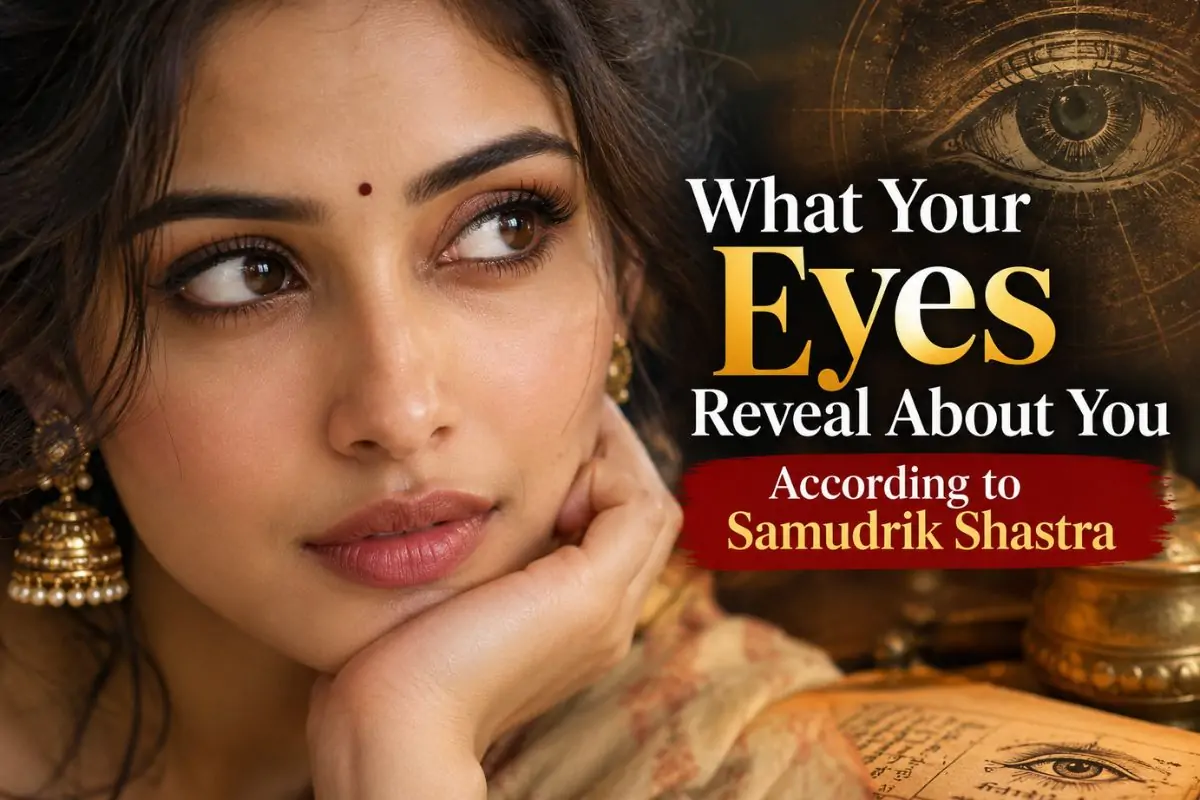
There is an old Indian belief that the face carries clues about a person’s nature, temperament and life. InSamudrik Shastra, different features of the body are traditionally interpreted as signs of personality and fortune.
Among all these features, the eyes have always held a special place.
Ancient face-reading traditions often describe the eyes as a reflection of the mind. Their shape, size, brightness and even the way a person looks at others are given symbolic meanings.
These interpretations are part of traditional knowledge, not scientifically established methods of predicting personality or destiny. But they remain fascinating because they reveal how earlier Indian traditions connected physical appearance with character.
 Astrology & Wisdom
 Samudrika Shastra: Mole Colors & The Nine Planets
Uncover the ancient secrets of body marks. Learn how mole colors, shapes, and positions connect directly to planetary influences and your destiny.
Read Full Article1. Large, Clear Eyes
Large and bright eyes are traditionally considered an attractive sign in Samudrik Shastra. For women, they are often associated with emotional sensitivity, openness and a warm temperament.
Traditional interpretations also connect clear, expressive eyes with someone who experiences emotions deeply and tends to form strong attachments to people.
In traditional Samudrik Shastra, expressive eyes are often associated with an expressive heart.
2. Deep-Set Eyes
Deep-set eyes are traditionally interpreted as a sign of a thoughtful and observant nature.
A woman with this type of eye is sometimes described as someone who does not reveal everything immediately. She may prefer watching, understanding and processing a situation before deciding how to respond.
The symbolism is particularly interesting because deep-set eyes naturally create a more intense facial expression.
The traditional reading: she observes more than she reveals.
3. Long, Almond-Shaped Eyes
Almond-shaped eyes have historically been regarded as aesthetically pleasing in Indian artistic traditions, including classical representations of women.
In Samudrik Shastra, this shape is traditionally associated with grace, intelligence and emotional balance. Such women may be described as diplomatic and capable of understanding different perspectives.
Of course, eye shape itself does not determine personality. The significance comes from the cultural symbolism attached to it.
Almond-shaped eyes have long been associated with grace and composure in Indian traditions.
 Vedic Science
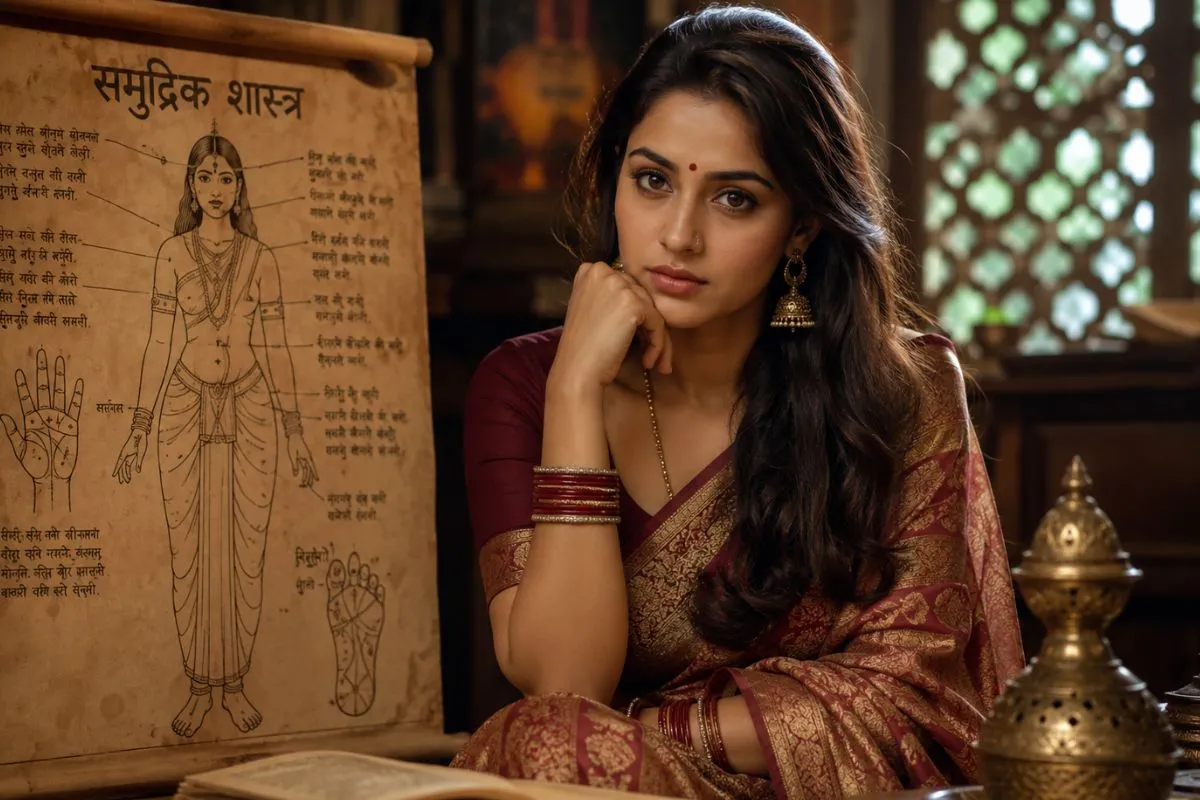
 Decoding Samudrika Shastra: The Ancient Art of Body Reading
Explore the traditional Indian study of face reading and body features to gain deep insights into human personality, traits, and life path.
Read Full Article4. Bright and Lively Eyes
Traditional face-reading places considerable importance on the apparent brightness of the eyes.
Lively, alert eyes are sometimes interpreted as signs of enthusiasm, confidence and an energetic personality. A woman whose eyes appear naturally animated may traditionally be described as someone who approaches life with curiosity.
This is one of the more intuitive elements of the tradition because people have long used expressions such as “her eyes lit up” to describe visible excitement.
According to the tradition, brightness in the eyes reflects vitality of spirit.
5. Slightly Upturned Eyes
Eyes that appear slightly lifted toward the outer corners have sometimes been given favourable interpretations in traditional physiognomy.
In Samudrik Shastra-inspired readings, they may be associated with confidence, determination and an independent temperament.
The woman may be portrayed as someone who prefers making her own decisions rather than simply following what others expect.
Upturned eyes are traditionally linked with confidence and a strong sense of self.
6. Soft, Calm Eyes
Not every traditional interpretation focuses on shape.
The overall expression of the eyes also matters. Soft and calm-looking eyes are traditionally associated with kindness, patience and emotional steadiness.
Such women are often described as approachable and reassuring, the kind of person around whom others may feel comfortable sharing their thoughts.
Sometimes, according to traditional face reading, the expression matters more than the shape.
7. Very Restless Eyes
Traditional Samudrik Shastra interpretations also pay attention to movement.
Eyes that constantly shift or appear unusually restless have sometimes been associated with an unsettled mind, nervous energy or difficulty remaining emotionally still.
This should not be interpreted literally. Eye movement can naturally change because of concentration, surroundings, anxiety, tiredness or countless other factors.
The interpretation belongs to the symbolic language of traditional physiognomy.
In traditional readings, restless eyes symbolize a restless mind, not a diagnosis.
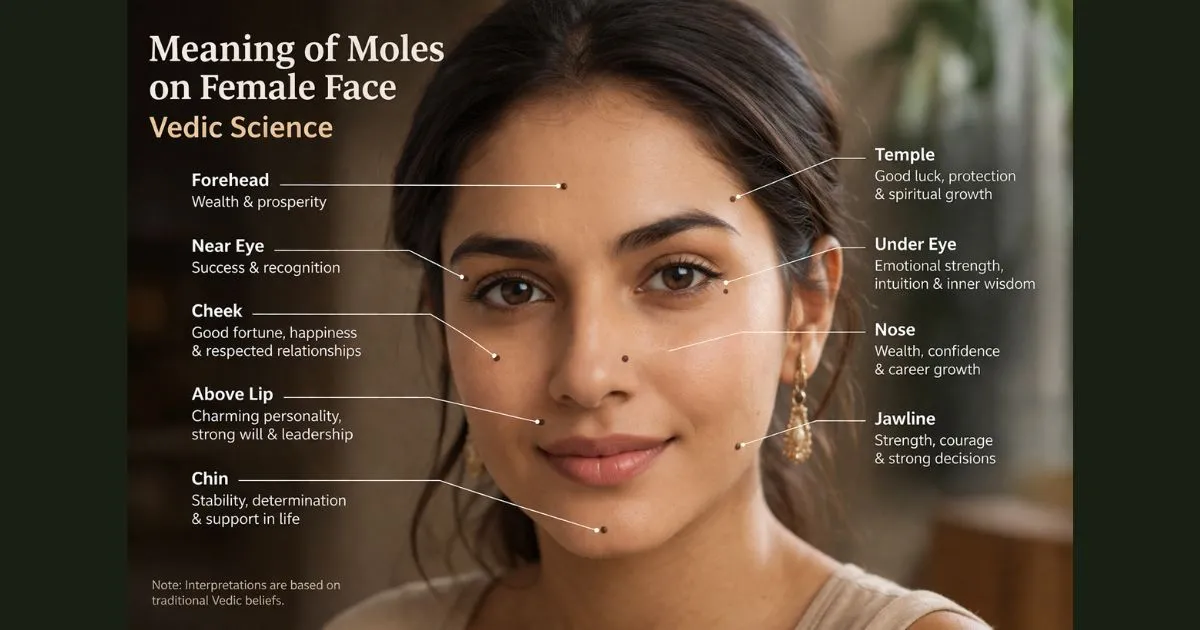 Vedic Wisdom
 Samudrika Shastra: Female Facial Mole Meanings
Discover what facial moles reveal about a woman’s personality, career, relationships, and fortune according to Vedic body reading traditions.
Read Full Article8. Dark, Well-Defined Eyes
Dark eyes have been admired throughout Indian poetry, painting and classical literature for centuries.
Samudrik Shastra traditions may associate deep, well-defined eyes with intensity, determination and strong emotional attachment. Such a woman is sometimes portrayed as passionate about the people and pursuits that matter to her.
The fascination here is cultural as much as astrological. Indian artistic traditions have repeatedly treated expressive dark eyes as one of the defining features of feminine beauty.
For centuries, Indian aesthetics have connected dark expressive eyes with emotional depth.
9. Eyes That Seem to Change With Emotion
Some people naturally have highly expressive eyes. Their expression seems to change dramatically when they become happy, angry, surprised or emotional.
Traditional interpretations may associate this quality with sensitivity and an emotionally responsive nature.
Modern psychology would not use eye appearance to determine someone’s character, but human beings have always been remarkably attentive to facial expressions when reading social situations.
The eyes may not reveal destiny, but they can certainly reveal expression.
10. The Way a Woman Looks at Others
Perhaps the most fascinating part of traditional face reading is that it does not focus exclusively on physical features.
The manner of looking is also given meaning.
A steady gaze may traditionally be interpreted as confidence. A gentle gaze may suggest warmth. A lowered gaze may be associated with modesty in older cultural interpretations, although modern social norms make such readings far more complicated.
This is an important reminder that Samudrik Shastra belongs to a particular cultural world. Its interpretations reflect the values and assumptions of the society in which these traditions developed.
In traditional face reading, it is not only what the eyes look like, but how they look at the world.
What Samudrik Shastra Really Says About the Eyes
The enduring fascination with Samudrik Shastra is not necessarily that it can tell us exactly what will happen in someone’s life.
It is the idea that something as ordinary as a face can be read as a story.
For centuries, Indian traditions have attached symbolic meaning to eyes, hands, feet, facial structure and other physical characteristics. Some people approach these interpretations as spiritual knowledge, while others enjoy them as cultural folklore and a form of traditional personality reading.
Either way, the eyes remain one of the most fascinating features to explore.
According to Samudrik Shastra, the face may carry signs. But the person behind the face is always more complicated than any sign.