The Legacy of the Parsi Kitchen: A Tapestry of Persian Roots and Indian Spice
Few culinary traditions in India tell a story of cultural fusion quite as vividly as Parsi cuisine. When the Zoroastrians migrated from Persia to the western coast of India—specifically Gujarat and Maharashtra—between the 8th and 10th centuries, they brought with them a distinct culinary heritage centered on dried fruits, nuts, vinegar, and slow-cooked meats.
Over centuries, as Parsis integrated into Indian society, their kitchens absorbed local Gujarati sweet-and-sour flavor profiles, coastal Konkani coconut milk, and fragrant Indian whole spices. The result is a unique gastronomy defined by its signature balance ofkhattu-meethu(sour and sweet) and a deep-seated love for meat, eggs, and seafood.
Key Pillars of Parsi Cooking
- The Khattu-Meethu Spectrum:Almost every savory Parsi dish balances acidity (from cane vinegar or tamarind) with sweetness (from jaggery or caramelized onions).
- An Obsession with Eggs (Eedu):In a Parsi home, eggs are placed on top of virtually everything—from okra (Bhinda ni Eeda) to leftover potato chips (Wafer per Eedu).
- Slow-Simmered Bases:Onions are not merely browned; they are deeply caramelized until almost sweet, forming the rich foundation for traditional gravies.
Authentic Recipe: Sali Boti (Parsi Sweet & Sour Mutton Curry)
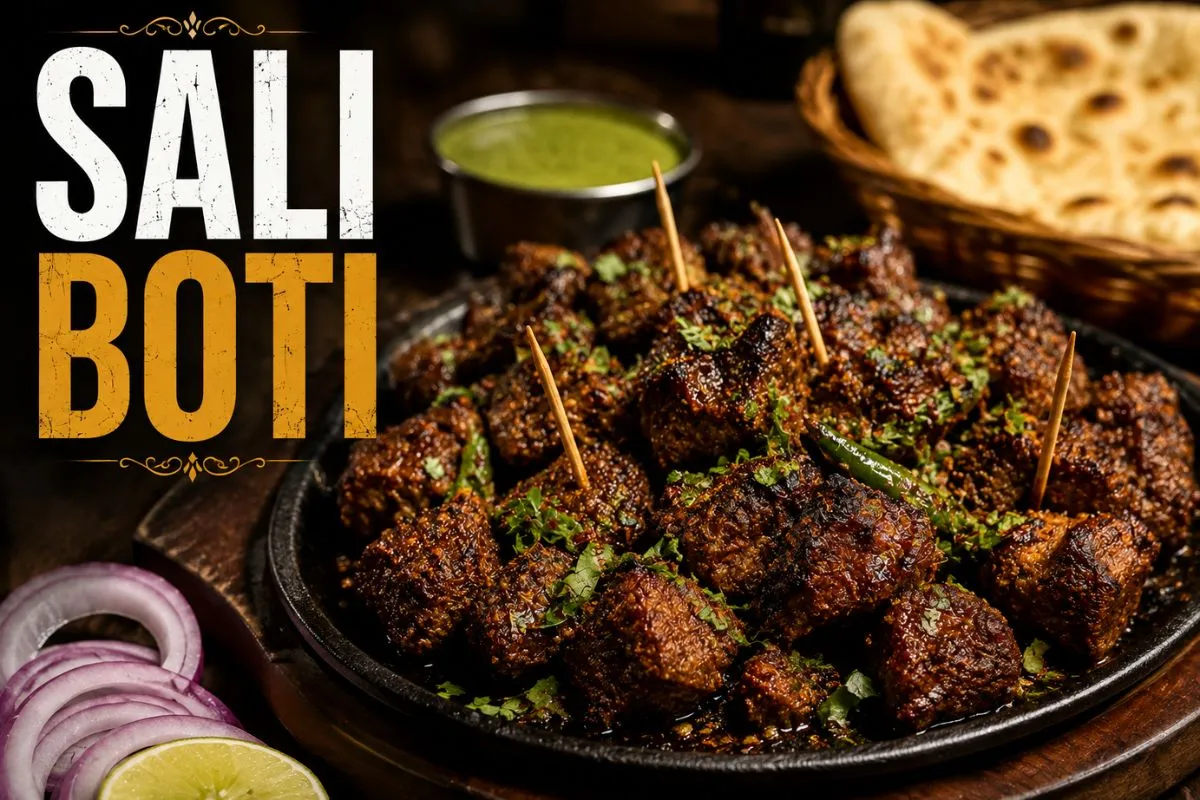
Sali Botiis a staple served at Parsi weddings (NavjotesandLagans). Succulent morsels of boneless mutton are slow-cooked in a spiced, caramelized tomato-onion gravy, finished with cane vinegar and jaggery, and crowned with crisp, matchstick potato fried shreds (sali).
| Prep Time | Cook Time | Servings | Primary Flavor Profile |
| 20 Mins | 60 Mins | 4 | Tangy, Sweet, Warmly Spiced |
Ingredients
- The Meat:500g boneless mutton (lamb or goat), cut into bite-sized cubes
- The Crunch:1 cupsali(store-bought fried potato matchsticks)
- The Base:3 large onions (finely chopped), 2 large tomatoes (pureed), 1 tbsp ginger-garlic paste
- Whole Spices:1 bay leaf, 1-inch cinnamon stick, 3 green cardamom pods, 4 cloves
- Powdered Spices:1 tsp red chili powder, 1/2 tsp turmeric, 1 tsp cumin powder, 1.5 tsp Parsi dhana-jeera (coriander-cumin) powder
- The Souring & Sweetening:2 tbsp sugarcane vinegar (or cider vinegar), 1.5 tbsp dark jaggery (grated)
- Cooking Fat & Seasoning:3 tbsp ghee or oil, salt to taste
Cooking Protocol
1.Caramelize the Onions:Builds the aromatic foundation.
Heat ghee in a heavy-bottomed pot or Dutch oven over medium heat. Add whole spices (cinnamon, bay leaf, cardamom, cloves) and let them sizzle. Add chopped onions and cook patiently, stirring regularly for 12–15 minutes until deep golden brown.
2.Sauté Pastes & Spices:Develops deep umami notes.
Add ginger-garlic paste and sauté for 1 minute until raw aroma dissipates. Stir in the tomato puree along with turmeric, red chili powder, cumin powder, and dhana-jeera powder. Cook until oil separates from the masala.
3.Sear the Mutton:Locks in juices.
Add the mutton pieces to the pan and sear on high heat for 5 minutes, tossing continuously to coat each piece thoroughly in the spiced base.
4.Slow Cook:Simmer until melt-in-the-mouth tender.
Pour in 1.5 cups of warm water and season with salt. Cover with a tight lid, reduce heat to low, and simmer for 45–50 minutes (or pressure cook for 4–5 whistles) until the meat is completely tender.
5.Balance the Flavors:The signature Khattu-Meethu touch.
Uncover the pot, add the sugarcane vinegar and grated jaggery. Simmer uncovered for 5–7 minutes until the gravy thickens into a rich, glossy coating over the mutton.
6.Plate & Garnish:Preserves maximum texture.
Transfer the hot mutton curry to a serving bowl. Immediately before serving, top generously with a heap of crispysali(potato matchsticks). Garnish with fresh cilantro.
Serving Suggestions
Serve piping hot alongside warmParsi Rotli(paper-thin whole wheat flatbreads) orParsi Brown Rice(rice cooked with caramelized sugar and whole spices). The contrast between the tender, tangy meat and the salty, crunchy potato matchsticks on top defines the heart of Parsi comfort food.