
What Parisians Actually Eat In A Day, Plus 5 Authentic Dishes And 5 Vegetarian Ones Worth Seeking Out
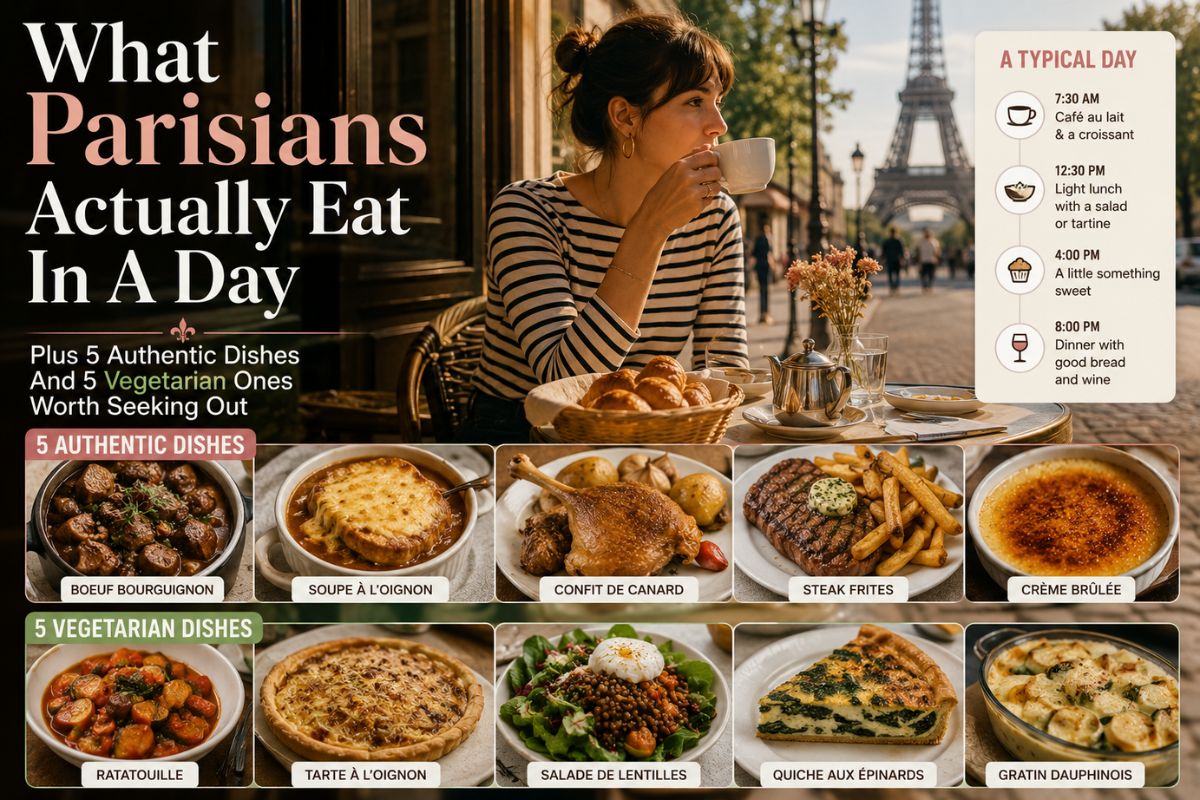
Most first time visitors arrive in Paris expecting a croissant at every meal and a three course feast every night. The real rhythm is quieter, more disciplined, and considerably more useful to understand before you plan your own eating around it, especially if you are trying to fit in a genuinely great meal or two among all that walking through the Louvre and along the Seine.
A Day Of Eating, The Way Parisians Actually Do It
Breakfast in France is treated as the least important meal of the day, and it shows. A typical morning is nothing more than a tartine, bread with butter or jam, alongside a coffee or hot chocolate, often drunk from a wide bowl rather than a mug. Croissants and pains au chocolat exist, but they are largely a weekend indulgence rather than a daily habit, something grabbed on the way to a Sunday market rather than eaten every morning before work. Many Parisians skip breakfast almost entirely, pushing their first real meal to somewhere around one in the afternoon.
Lunch is where the day’s real structure lives. It is treated as close to sacred, a genuine sit down break rather than a sandwich eaten at a desk, and traditionally follows a three course rhythm, a starter, often a soup or a simple salad, a main built around meat or fish, and a smaller dessert or a coffee to close it out. Restaurants generally serve lunch from around 11:30am until 2pm and largely stop taking orders after that window closes, a detail worth knowing if your sightseeing runs long and you assume you can just wander into a bistro at 3pm expecting a full menu.
Dinner is, in theory, the lighter meal of the day, soup, a salad, something simple. In practice, dinner is also where Parisians socialise, celebrate, and linger, so the “light” description holds far more often on an ordinary Tuesday than it does on a Friday night out with friends. What stays consistent across all three meals is the pace, meals happen at a table, with company, without a phone or a television competing for attention, and the portions served are noticeably smaller than what most visitors are used to, one of the quieter reasons French food culture has such a strong reputation for balance despite running on butter, cheese, and bread.
5 Authentic Parisian Dishes You Genuinely Need To Try
Steak Frites. The most quintessentially Parisian bistro order there is, a well seared steak, usually entrecôte or sirloin, served rare unless you specifically ask otherwise, alongside a generous pile of thin, crisp fries and a sauce, peppercorn, béarnaise, or a simple pan jus depending on the kitchen. Le Relais de l’Entrecôte, with several locations across the city, has built its entire reputation on this single dish, serving unlimited fries and a secret sauce recipe nobody outside the kitchen actually knows.
French Onion Soup. Deeply caramelised onions simmered slowly in a rich beef broth, topped with toasted baguette and a thick, bubbling layer of melted Gruyère, this is the dish that defines a cold Paris evening better than almost anything else on a menu. The real version, made properly, bears little resemblance to the thin, overly sweet imitation served under the same name in many countries outside France.
Croque Monsieur. Grilled ham and cheese elevated into something considerably more serious than the name suggests, layered with béchamel sauce and melted cheese, then finished under a grill until the top turns golden. Order it as a Croque Madame for the same sandwich topped with a fried egg. It is the closest thing Paris has to a genuinely universal, all day café order.
Coq Au Vin. Chicken slowly braised in red wine, traditionally Burgundy, with mushrooms, pearl onions, and lardons, until the meat falls cleanly off the bone. Originally a peasant dish designed to make tough old roosters edible, it has become one of the defining slow cooked dishes of French bistro cooking, rich, warming, and best eaten with crusty bread built specifically for mopping up the sauce.
Steak Tartare. Finely minced raw beef mixed with capers, onions, and a raw egg yolk, seasoned tableside or in the kitchen depending on the restaurant, and served with a side of fries or toasted bread. It is not a dish for the cautious, but it remains a genuine staple on Parisian bistro menus, and ordering it properly, telling the server how you want it seasoned, is itself a small piece of local dining etiquette worth learning.
5 Vegetarian Dishes That Actually Deliver On French Flavour
French cuisine has a reputation, not entirely undeserved, for running on meat stock and butter, but Provence in particular has quietly produced a genuine, well developed vegetarian tradition worth seeking out specifically rather than treating as an afterthought.
Ratatouille. A Provençal vegetable stew of eggplant, zucchini, bell peppers, tomatoes, and onions, slow cooked together with thyme, basil, and other herbes de Provence until the vegetables soften into something considerably greater than the sum of their parts. It works as a starter, a side, or a full main course, and it is naturally vegan as well as vegetarian, making it one of the easiest genuinely French dishes to order without a single caveat.
Soupe Au Pistou. Provence’s answer to minestrone, a hearty vegetable and bean soup finished with a generous swirl of pistou, a basil, garlic, and olive oil paste closely related to Italian pesto. It is worth double checking the stock base with your server, since some versions default to chicken broth, but a properly vegetarian bowl is widely available and genuinely satisfying rather than a thin, apologetic substitute.
Tarte Aux Légumes. A savoury vegetable tart built on a buttery, flaky crust and filled with a rotating cast of seasonal vegetables, mushrooms, leeks, spinach, tomatoes, often finished with a light layer of cheese or fresh herbs. It shows up constantly in Parisian bakery windows and café counters, making it one of the easiest genuinely vegetarian lunches to grab on the move.
Quiche Aux Légumes. The vegetarian sibling of the more famous, bacon heavy quiche lorraine, built on the same rich egg custard and buttery crust, but filled instead with seasonal vegetables rather than lardons. It appears on nearly every café menu across the city, making it a reliably available option even in restaurants that otherwise lean heavily on meat.
Gratin Dauphinois. Thinly sliced potatoes baked slowly in cream and garlic until the top turns deeply golden and the inside turns meltingly soft, a dish simple enough to sound unremarkable on paper and genuinely comforting the moment it actually arrives at the table. It is traditionally served as a side, but a generous portion alongside a green salad makes a genuinely satisfying vegetarian meal on its own.
Putting It All Together
Knowing this rhythm changes how you should actually plan a day of eating in Paris. Save the bigger, sit down meal for lunch rather than assuming dinner will be the main event, and book ahead if a specific bistro or restaurant is on your list, since kitchens genuinely do stop serving between the lunch and dinner windows rather than running continuously through the afternoon the way many cities do. If your trip includes one of the city’s genuinely serious tables, Real Shee Power’s own guide to Paris’s top restaurants, from three Michelin stars to the best steak frites in the city, pairs naturally with everything above, several of the dishes covered here, steak frites especially, show up in far more elevated form once you know exactly what you are looking for on the menu.
And if Paris is only one stop on a longer European itinerary, it is worth building the rest of the trip around the same instinct that makes the city’s food scene so rewarding, seeking out what is genuinely regional rather than what simply photographs well. Real Shee Power’s guide to the secret European towns tourists still haven’t discovered and the broader roundup of Europe’s most romantic getaways are both worth reading before you finalise an itinerary, since the best meal of your trip may end up happening somewhere considerably quieter than the Champs-Élysées.
Suggested Reading
- Top 10 Restaurants In Paris, From Three Michelin Stars To The Best Steak Frites In The City
- 5 Best Romantic Places In Europe For A Couples’ Getaway
- The Secret European Towns Tourists Still Haven’t Discovered
- Top 10 Must-Try High-End Eateries In Delhi
- Istanbul Street Food Guide: Travel The World On A Plate