Between Rebellion and Respectability: The Truth About ‘Misunderstood Freedom’
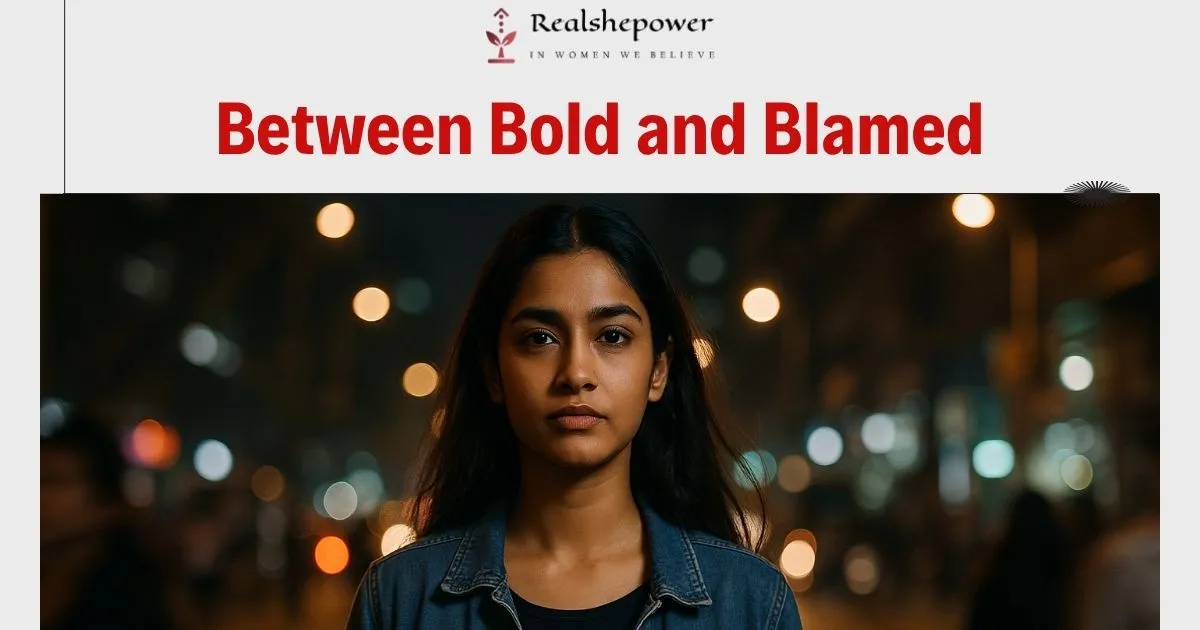
The RealShePower Survey: What Women’s Choices Really Mean in 2025
For decades, Indian women have been told what “freedom” should look like soft enough to be acceptable, bold enough to be symbolic, but never so real that it threatens comfort.
In 2025, that paradox still holds.
According to the RealShePower survey, 36% of young Indian women believe that smoking, drinking, or wearing bold clothes are misunderstood expressions of freedom. In other words, what society labels as rebellion is often simply women trying to exist freely in their own skin.
This is not about habits. It’s about how women’s choices are moralized, how their actions are constantly decoded for character, and how freedom is still measured against respectability.
The Morality Meter
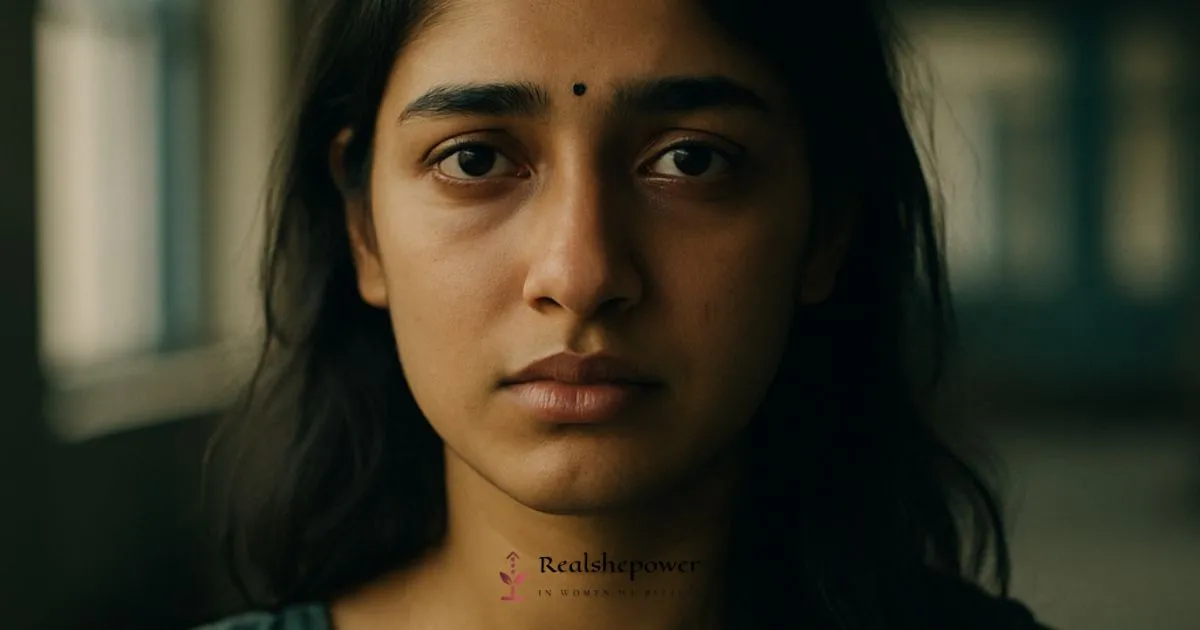
Freedom for women in India doesn’t come with a manual it comes with a microscope.
Every choice, from outfit to lifestyle, is subjected to the morality meter, an invisible scale society uses to judge how “good” or “decent” a woman is.
| Choice | Common Label |
|---|---|
| Drinking socially | “Out of control” |
| Smoking | “Characterless” |
| Staying out late | “Irresponsible” |
| Dressing boldly | “Attention seeking” |
| Living alone | “Unsafe, and probably hiding something” |
| Speaking openly about sex | “Shameless” |
For men, these are habits.
For women, they’re headlines.
This isn’t rebellion it’s double standards disguised as morality.
The Weight of Decency
Respectability is the invisible cage many women are still forced to live inside. It doesn’t always come from strangers. It often comes from those closest family, colleagues, partners, teachers, and friends.
Even as the modern Indian woman earns, travels, and chooses, she must constantly signal that she is still “decent.” She must drink “just enough,” laugh “not too loudly,” wear makeup “tastefully,” and be independent “but not intimidating.”
Respectability has become the new patriarchy refined, subtle, but just as controlling.
As one 22-year-old participant in our survey said:
“If I wear a short dress, I’m not making a political statement. I’m just hot. Why is that so hard to understand?”
Freedom is not rebellion. But in a society that fears women’s agency, even comfort can look like confrontation.
The ‘Good Girl’ Paradox
Indian women are raised with two conflicting scripts:
Be ambitious, but humble.
Be expressive, but polite.
Be free, but respectable.
And while the world claps for “empowered women,” it secretly prefers the ones who still color within the lines.
The result is a generation of women constantly negotiating between what they want and what will be accepted.
Our survey shows that even women who identify as independent often censor themselves in subtle ways checking their clothes before leaving home, moderating social media posts, or avoiding open affection in public.
Not because they’re ashamed. Because they know freedom without protection still invites punishment.
Freedom as Appearance
For many women, visible acts of freedom like wearing bold clothes, drinking, or living independently are interpreted as rebellion. But often, they are simply shorthand for autonomy.
A woman who smokes might not be “trying to prove something.”
A woman who wears shorts might not be “rejecting culture.”
A woman who drinks might not be “losing values.”
She’s simply existing without performance.
Yet, her choices are read as statements, her lifestyle becomes a public debate, and her body turns into a moral battlefield.
That is why 36% of women in our study called such expressions “misunderstood.” Because every time a woman breaks from the script, she’s accused of rewriting morality.
The Male Gaze in Freedom
One of the most striking observations in the RealShePower data is the gendered lens through which freedom is viewed.
For men, freedom is physical go where they want, do what they want, without needing to explain.
For women, freedom is psychological the right not to be judged for doing the same things.
It’s not what she does that invites control it’s the fact that she does it unapologetically.
Because a woman who acts without explanation scares patriarchy more than a woman who rebels loudly. She doesn’t fight the system she quietly opts out of it.
That quiet is dangerous to those who rely on her obedience.
Cultural Policing in Modern Form
The tools of control have changed, but the intent hasn’t.
Where once there were elders warning about “shame,” now there are social media trolls moralizing in the name of “culture.”
Where once there were gossiping neighbors, now there are viral comment sections.
Public policing has moved online, making judgment both instantaneous and permanent.
But what most don’t realize is that this scrutiny has made women more strategic, not submissive. They curate what to post, where to go, how to phrase opinions not out of fear, but fatigue.
They’re not asking for validation anymore. They’re asking to be left alone.
Between Rebellion and Respectability
There’s a silent rebellion happening in India.
It’s not about loud protests or slogans.
It’s about women quietly choosing themselves over performance and refusing to explain why.
Freedom, they are proving, does not need to look respectable to be valid.
It can look like:
- Coming home late without apology
- Wearing what feels comfortable
- Choosing partners without approval
- Saying “no” to unsolicited advice
- Laughing too loudly, too freely, too often
In these small acts lies the most radical form of feminism the right to exist without justification.
Freedom Misunderstood Is Freedom Denied
When society interprets women’s choices as rebellion, it continues to control the narrative. It turns ordinary life into spectacle.
That’s why so many women feel trapped between defiance and decorum between wanting to live freely and wanting to stay safe.
But what if we changed the lens?
Instead of asking, “Why is she doing this?”
We asked, “Why do we think she needs permission?”
Because the truth is simple if women’s freedom still needs to look “respectable” to be accepted, then it’s not freedom. It’s filtered liberty.
Conclusion: The Right to Be Misunderstood
The RealShePower survey reveals not just statistics, but a transformation in how women perceive freedom. They are no longer seeking approval. They are seeking authenticity.
Freedom will never look the same for everyone.
For some, it’s choosing silence. For others, it’s shouting in the streets.
For one, it’s a saree. For another, a crop top.
For many, it’s finally learning to stop explaining.
The most powerful kind of freedom is not the one society understands it’s the one women define for themselves.
Acknowledgment & Copyright Notice
This article is based on theRealShePower on-field survey, 2025. All findings, data points, and narratives are original research conducted by RealShePower.No part of this survey or analysis may be reproduced, quoted, or published without clear attribution to RealShePower.