Revisiting the Shah Bano Begum Saga in Light of Haq
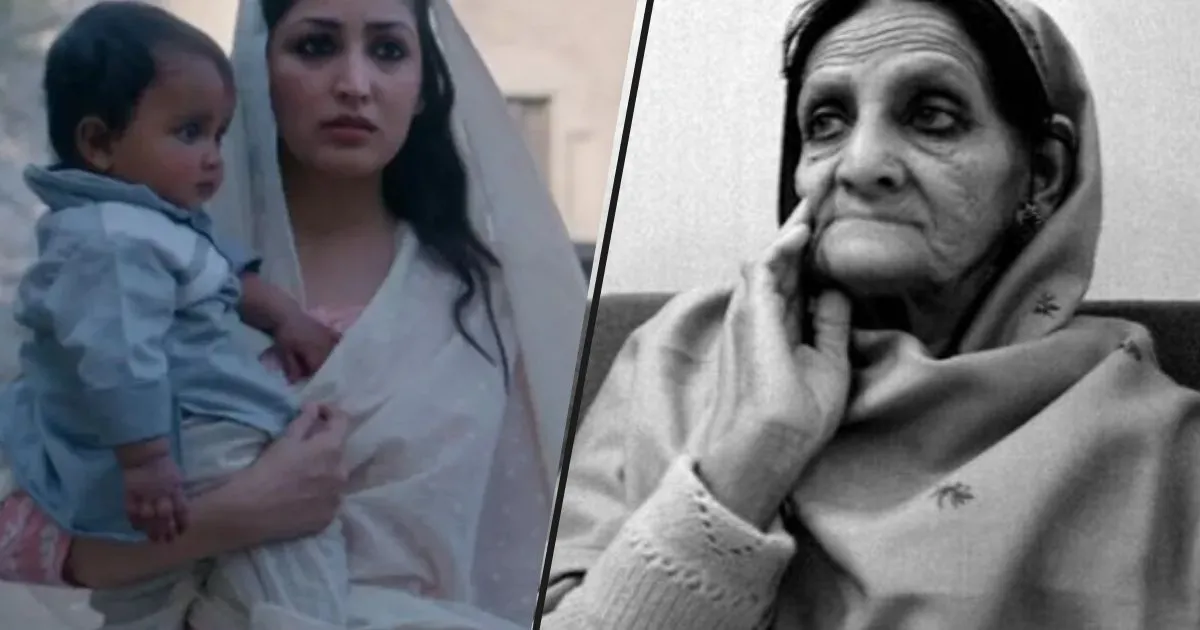
The name Shah Bano evokes for many an inflection point in the legal history of India. In 1985 the Supreme Court of India delivered a landmark judgement in Mohd. Ahmed Khan v. Shah Bano Begum recognising that a Muslim divorced woman could claim maintenance under Section 125 of the Code of Criminal Procedure, 1973 (CrPC) beyond the traditional iddat period. (Indian Kanoon) That verdict became a fulcrum for debates on gender justice, minority rights, personal law and the secular state in India.
Now with the release of the film Haq, which draws inspiration from this case, the relevance of Shah Bano’s struggle and its aftermath demands renewed attention. The film not only revisits the facts of her litigation but also prompts us to ask whether the larger issues raised by her fight have been truly resolved or whether returning to her story remains necessary.
What exactly was the Shah Bano case?
In brief: Shah Bano, married to Mohammad Ahmed Khan for 43 years, was divorced in 1978 and subsequently sought maintenance under Section 125 CrPC. The husband argued that under Muslim Personal Law the obligation lasted only for the iddat period (three lunar months). The Supreme Court held that Section 125 CrPC being a secular provision applied to all women including divorced Muslim women unless they remarry. The Court therefore ordered the husband to pay maintenance beyond the iddat period.
In response, Parliament enacted the Muslim Women (Protection of Rights on Divorce) Act, 1986 which significantly reduced the husband’s liability to only the iddat period in many cases and shifted burden to relatives or Waqf boards thereafter.
Thus the case became far more than about a single woman: it awakened questions of whether religion-based personal laws should yield to constitutional ideals of equality, whether minority autonomy can be absolute, and how the state should balance community rights with individual rights.
Why we need to go back to this case now
- Gender justice remains incomplete
While the judgement was progressive, critics note that many divorced Muslim women still find enforcement of maintenance rights elusive. Scholars point out that even decades later structural hurdles lack of access to legal recourse, social stigma, economic dependency persist. Revisiting Shah Bano reminds us that the promise of equality must be converted into lived reality. - Personal law versus civil law tensions persist
The conflict between religious personal laws and secular statutes remains highly live. The Shah Bano judgement flagged the possibility of a Uniform Civil Code (UCC) under Article 44 of the Constitution, though implementation remains pending. The film’s narrative gives the public a visual and emotional anchor for these still-unresolved tensions. - Symbolic power of the story
The personal courage of Shah Bano and the legal implications of her verdict continue to carry moral weight. With a film like Haq bringing the story to a wider audience, there is a cultural-political moment to emphasise the foundational principle: rights belong to individuals regardless of religion especially when vulnerable. Putting the case in the spotlight again helps refresh public consciousness, particularly among youth and women. - Contemporary resonance in media and mobilization
The fact that Shah Bano’s daughter has legally challenged aspects of the film Haq (alleging mis-representation) underscores how the narrative still interacts with current media, rights and public discourse. Going back enables a more nuanced vital discussion about representation, consent, historical memory and how legal struggles are depicted in popular culture. - Learning for future reform
If India is to revisit family law reform, women’s legal empowerment, or minority-rights frameworks, the Shah Bano precedent offers rich lessons. It shows what happens when the judiciary upholds equality, how society reacts, how legislation responds and how reform may get partially rolled back. That cycle matters for policymakers, activists and citizens alike.
What the Haq film adds to the conversation
- The film, directed by Suparn S Varma and starring Emraan Hashmi and Yami Gautam Dhar, draws inspiration from the Shah Bano case and the book Bano : Bharat Ki Beti.
- Media coverage shows that Shah Bano’s daughter filed legal notices and petitioned the court alleging her mother’s story was used without consent.
- The case’s re-emergence through popular culture makes the legal debate accessible to new generations, particularly in a country where courtroom dramas often shape public debate.
By bringing the case alive on screen the film invites viewers to confront hard questions: What happens when religious norms collide with individual rights? In how far should the state intervene in personal law? What rights does a woman have after divorce and how are they protected?
A balanced conclusion
Revisiting the Shah Bano case is neither simply nostalgia nor retreading old ground for its own sake. It is about acknowledging that despite legal strides the architecture of equality still stands on shaky ground. It is about recognising that a landmark judgement does not end an issue it begins a process.
The legacy of Shah Bano is dual-pronged: the judiciary declared that secular maintenance law applied to all women, and Parliament responded with a statute limiting that reach. The tug-of-war between equality and autonomy continues. As the film Haq brings the conversation back into the public sphere it becomes timely for citizens, legal practitioners and policymakers to ask: Are we living up to the promise of Shah Bano, for all women? Or are we still merely scripting her fight?
In a democracy that prides itself on pluralism the challenge remains: ensuring that minority rights do not become shelters for discrimination, and that individual rights are not sacrificed at the altar of majoritarian or communal claims. The Shah Bano case remains a landmark because it asked the question: when laws and religion diverge, which do we follow—and who speaks for the woman left behind?
If the film Haq causes a new wave of discourse, activism and introspection around these issues then returning to Shah Bano’s story will have been more than justified.