Symbolism of the Midnight Birth: The spiritual meaning behind Krishna’s birth
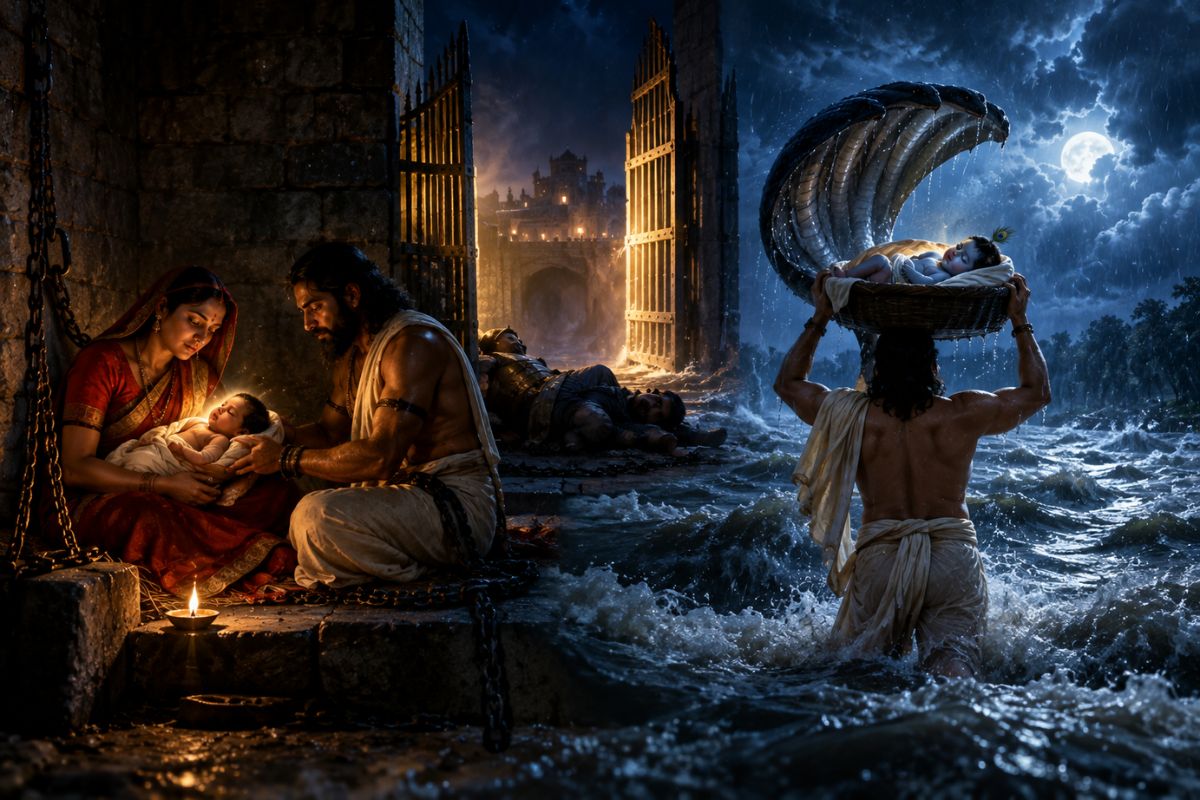
The narrative of Krishna’s midnight birth in Mathura is a dense allegory of human consciousness, bondage, and liberation. Beyond the historical and devotional storytelling, every detail from the pitch-black prison cell to the raging river holds a specific spiritual metaphor.
1. The Dark Prison Cell: Human Ignorance (Avidya)
The prison (Karakagruha) built by King Kamsa represents the human ego and material confinement.
- Devaki and Vasudeva: Devaki symbolizes the body or physical mind (Shorira), while Vasudeva represents pure intelligence or soul (Prana/Jiva). When bound together by ego (Kamsa), they are trapped in darkness.
- The Midnight Hour (Nishita Kaal): Krishna is born at midnight on a dark storm-filled night (Ashtami of Krishna Paksha). The deepest darkness symbolizes the peak of spiritual ignorance and inner turmoil. The divine truth (Dharma) does not wait for ideal conditions to emerge; it manifests at the exact moment darkness reaches its peak to dispel it.
2. The Falling Shackles and Opening Gates: Liberation through Divine Grace
As soon as Krishna takes birth, the heavy iron shackles binding Vasudeva fall off, the prison guards fall into a deep trance, and the locked iron gates swing open on their own.
- The Guards: Represent the physical senses. In the presence of the Supreme Truth, the senses become quiet, entering a state of stillness or deep meditation (Samadhi).
- The Shackles: Symbolize karmic bondage, worldly attachments, and fear. The moment the divine manifests in a person’s life, the self-imposed chains of fear and ego dissolve effortlessly without physical force.
3. Crossing the Raging Yamuna: Surmounting the Ocean of Samsara
Vasudeva places newborn Krishna in a wicker basket and steps into the raging, flooded Yamuna River during a torrential storm.
| Symbol | Spiritual Allegory |
| The Torrential River | The turbulent ocean of worldly existence (Bhavasagara) driven by desires and emotions. |
| The Wicker Basket | The vessel of faith (Shraddha) holding the divine truth above life’s turbulent waters. |
| Sheshnag (The Serpent) | The multi-headed serpent sheltering Krishna from the rain represents masterfulness over fear and mental distractions. |
| Yamuna Receding | When the river waters rise to touch Krishna’s feet and immediately subside, it shows that nature and worldly obstacles bow down once divine touch occurs. |
The journey from the dark prison of Mathura to the joyful freedom of Gokul represents the soul’s transition from spiritual bondage to pure devotion (Bhakti).