
10 Skincare Products You Don’t Actually Need
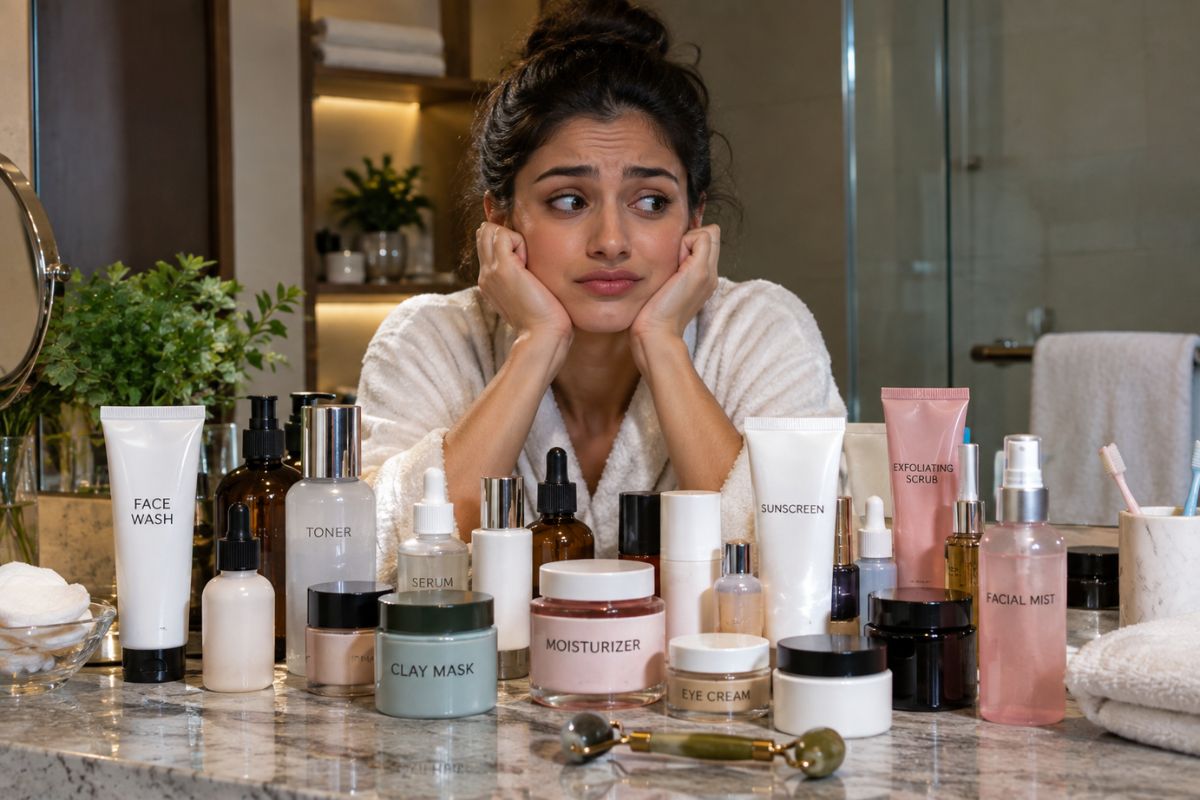
Walk into any beauty store and it’s easy to believe that healthy skin requires a shelf full of products.
Cleansing balm. Toner. Essence. Serum. Eye cream. Face mist. Sleeping mask. Exfoliating pads. Facial oil. Overnight treatment.
Before you know it, your “simple” skincare routine has 12 steps.
But here’s the thing: more skincare doesn’t necessarily mean better skin.
In fact, constantly layering products can increase irritation, clog your routine with unnecessary ingredients and make it harder to figure out what’s actually working.
So before you spend another $50 on a product promising “glass skin,” here are 10 Skincare Products You Don’t Actually Need.
1. Separate Eye Cream
Eye creams can be lovely, but they’re not automatically magical.
The skin around your eyes is thinner and more delicate, which means you should be careful about what you apply there. But many moisturizers and facial products can already provide adequate hydration for the area.
Some specialized eye products contain useful ingredients for specific concerns, but you don’t necessarily need a separate jar simply because the label says “eye.”
Save your money if: Your regular moisturizer is comfortable around your eyes.
Verdict: Optional, not essential.
2. Facial Mists
A beautifully packaged facial mist can feel incredibly refreshing.
But refreshment isn’t the same as skincare.
Spraying water or a lightly formulated mist onto your face isn’t going to replace a moisturizer, sunscreen or evidence-based treatment.
If you love the experience, there’s nothing wrong with using one.
Just don’t mistake it for a skincare essential.
Verdict: Nice to have, unnecessary to have.
3. Toner for the Sake of Having a Toner
Toner used to be considered a mandatory step.
Today, that’s largely outdated.
Modern cleansers don’t generally require a toner to “restore” your skin after washing.
Some toners contain useful ingredients such as hydrating agents or exfoliating acids, but then you’re buying them for those ingredients, not because your skin inherently needs toner.
Verdict: Skip it unless you have a specific reason to use one.
4. Pore-Minimizing Products
Here’s an uncomfortable truth:
You cannot permanently shrink your pores.
Pore size is influenced largely by genetics, skin type and other biological factors.
Certain ingredients can make pores appear less noticeable by controlling oil, removing buildup or improving skin texture.
But a cream isn’t going to physically close your pores forever.
Be suspicious of products promising permanent pore erasure.
Verdict: Marketing often outruns reality.
5. Separate Day and Night Moisturizers
You don’t necessarily need two different moisturizers.
A simple moisturizer can often work both morning and night.
The major difference in your daytime routine is usually sun protection.
If your moisturizer contains sunscreen, that’s a separate consideration because adequate SPF application matters.
But you don’t need to buy a $70 “luxury night cream” simply because it’s nighttime.
Verdict: One good moisturizer can be enough.
6. Scrubs With Large Abrasive Particles
The satisfying feeling of scrubbing your face can be deceptive.
Harsh physical scrubs can irritate the skin, particularly if you’re already using retinoids, acids or acne treatments.
Smooth skin isn’t necessarily healthy skin.
And aggressively removing the outermost layer of your skin isn’t a shortcut to better skin.
If you need exfoliation, choose an appropriate product and use it according to your skin’s tolerance.
Verdict: Particularly worth skipping if your skin is sensitive.
7. “Detox” Masks
Charcoal.
Clay.
Mud.
Peel-off masks.
The word detox sells extremely well in beauty.
But your skin isn’t a clogged drain that needs to be detoxified every Sunday.
Some clay masks can temporarily absorb excess oil. Some masks can make your skin feel smoother or cleaner.
But claims about “pulling toxins” out of your skin should be treated skeptically.
Verdict: Fun occasionally, not a skincare necessity.
8. Dedicated Lip Scrubs
Your lips don’t need a tiny jar of expensive sugar just because beauty brands say they do.
If your lips are dry or flaky, aggressive scrubbing can actually make irritation worse.
A basic lip balm or petrolatum-based product may be considerably more useful.
And if your lips are persistently cracked, painful or inflamed, the answer isn’t necessarily more exfoliation.
Verdict: Skip the scrub. Keep the balm.
9. Skin “Essences” You Don’t Need
Essences occupy an interesting space in modern skincare.
Some can provide hydration and contain useful ingredients.
But they’re not fundamentally mandatory.
If you already have a cleanser, moisturizer and targeted treatment that work for you, adding another watery layer isn’t automatically going to transform your skin.
Verdict: Optional, especially if your routine already works.
10. A Serum for Every Single Problem
This might be the biggest skincare trap.
One serum for pigmentation.
One for pores.
One for hydration.
One for redness.
One for fine lines.
One for “glass skin.”
Suddenly you’re layering six active products on your face every night.
That’s where skincare can become counterproductive.
A well-formulated product containing an appropriate active ingredient may address multiple concerns simultaneously.
You don’t need a separate bottle for every sentence on your skin.
Verdict: Simplify before you add another serum.
So What Do You Actually Need?
For many people, a basic skincare routine can be remarkably simple.
Morning
Gentle cleanser, if needed
Moisturizer
Broad-spectrum sunscreen
Evening
Gentle cleanser
Moisturizer
One targeted active, if needed
That’s it.
You can add products based on specific concerns, but you don’t need to build a 12-step routine simply because social media makes it look normal.
Where Your Money Is Better Spent
If you have a limited skincare budget, prioritize products that have a clear purpose.
A good sunscreen is generally a better investment than a luxury face mist.
A moisturizer suited to your skin is more useful than a collection of decorative serums.
A proven active ingredient is preferable to a product built entirely around a trendy marketing claim.
And if you’re dealing with persistent acne, significant pigmentation, unusual rashes or ongoing irritation, spending money on a dermatologist may be far more valuable than buying another viral product.
The Beauty Industry’s Best Trick
The skincare industry doesn’t necessarily need to convince you that one product will change your life.
It only needs to convince you that one more product might.
That’s how a three-step routine becomes ten steps.
And that’s how a $30 skincare habit becomes a $200 monthly habit.
Your skin doesn’t know how expensive the bottle was.
It responds to the formulation, the ingredients, how consistently you use them and whether they’re appropriate for your skin.
Final verdict
Good skincare isn’t about having more products. It’s about having the right products.
If your routine is working, don’t fix it simply because TikTok discovered a new serum.
Sometimes the smartest beauty upgrade is putting one more product back on the shelf.
Suggested Reading
-
Product Guide
We Tested the Internet’s Favorite Skincare Products. Only These Were Worth Buying -
Product Guide
We Put 10 Viral Skincare Products Under the Microscope -
Ingredients
7 Skincare Ingredients Dermatologists Want You to Know About in 2026 -
Myth-Busting
10 “Healthy” Beauty Habits That Might Actually Be Ruining Your Skin