The Bridal Beauty Tax: Why Indian Brides Are Expected to Look Like Completely Different Women on Their Wedding Day
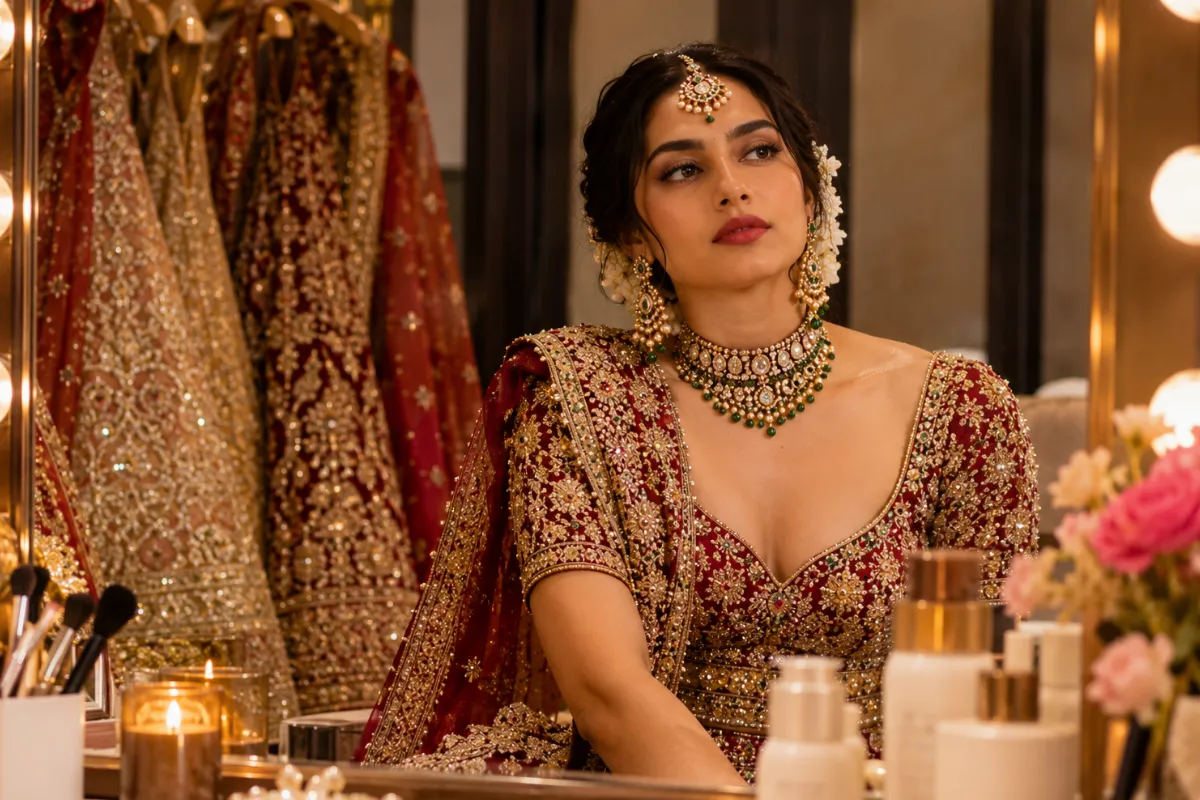
The lehenga is expensive. The jewellery is expensive. But the most exhausting part of modern Indian bridal culture may be the unspoken expectation that a woman must completely transform herself before she is considered wedding-ready.
There is something almost absurd about the modern Indian bridal beauty checklist.
Six months before the wedding, a woman who has lived perfectly happily with her natural face, natural hair and perfectly ordinary body is suddenly presented with an extensive list of things that apparently need fixing.
Her skin needs brightening. Her arms need toning. Her hair needs thickening. Her teeth need whitening. Her eyebrows need shaping. Her body needs sculpting. Her face needs lifting, defining, contouring and occasionally changing so dramatically that even her phone’s facial recognition might struggle.
And somewhere between the third facial appointment and the fourth bridal makeup trial, someone will inevitably tell her that she should look natural.
Natural.
After spending an extraordinary amount of money making sure nothing about her looks quite the way it naturally does.
Welcome to the bridal beauty tax, an unofficial but remarkably persistent cost of being a bride.
It is not simply the money women spend on looking beautiful. It is the social expectation that getting married requires a level of physical transformation rarely demanded of the person standing beside them at the mandap.
1. The Groom Gets a Haircut. The Bride Gets a Six-Month Transformation Plan.
Consider the difference between the typical conversations surrounding a bride and groom before their wedding.
A groom might be advised to get a haircut, choose a good sherwani, visit the gym or schedule a facial.
A bride may receive unsolicited recommendations about everything from her body weight to her skin texture.
The expectations are not universal, and plenty of grooms invest heavily in their appearance. But bridal culture places a particularly elaborate set of aesthetic demands on women.
A woman who has never worried about the appearance of her elbows may suddenly discover that there are bridal treatments marketed specifically for them.
Someone who has happily worn her natural hair for decades may be told that she needs extensions to achieve the correct bridal volume.
A perfectly normal skin texture becomes a problem to be corrected before high-definition wedding photography.
The message is rarely stated directly.
Nobody announces, “Your existing appearance is insufficient for marriage.”
Instead, the criticism arrives disguised as helpful advice.
“Just do a little something for your skin.”
“You should lose a few kilos before the wedding.”
“Try this treatment. Every bride does it.”
And perhaps the most irritating suggestion of all: “You only get married once.”
As though a single day justifies turning a woman’s body into a renovation project.
2. The ₹50,000 Makeup Package Is Not the Real Problem
There is nothing inherently wrong with spending ₹50,000 on bridal makeup.
Professional makeup artistry requires skill, experience, expensive products, hygiene standards, lighting knowledge and the ability to work under considerable time pressure.
A talented artist deserves to be paid fairly.
The problem is not the price of the service.
The problem is the emotional pressure surrounding the purchase.
When brides are repeatedly told that their wedding photographs will last forever, spending more can begin to feel like an obligation rather than a choice.
A bride may genuinely want elaborate makeup. Another may prefer a subtle look. A third may want to do her own makeup.
All three choices should be equally legitimate.
Yet bridal marketing can make the simplest option feel like a failure to take the occasion seriously.
The industry does not need to explicitly insult a woman’s appearance to influence her spending.
It only needs to convince her that the consequences of looking ordinary on her wedding day will be permanent.
3. When Did Normal Skin Become a Bridal Emergency?
Skin has pores.
It has texture, fine lines, pigmentation, occasional blemishes and variations in colour.
These are not extraordinary discoveries. They are characteristics of human skin.
But bridal beauty marketing frequently presents smooth, luminous, virtually textureless skin as the standard women should achieve before their wedding.
The photographs used to advertise this ideal may involve professional lighting, makeup, editing and carefully selected angles.
Real skin does not behave like a digitally retouched campaign image.
This creates an uncomfortable cycle.
A bride compares herself with an idealised image, identifies perceived imperfections, purchases treatments to correct them and then discovers another concern that supposedly requires attention.
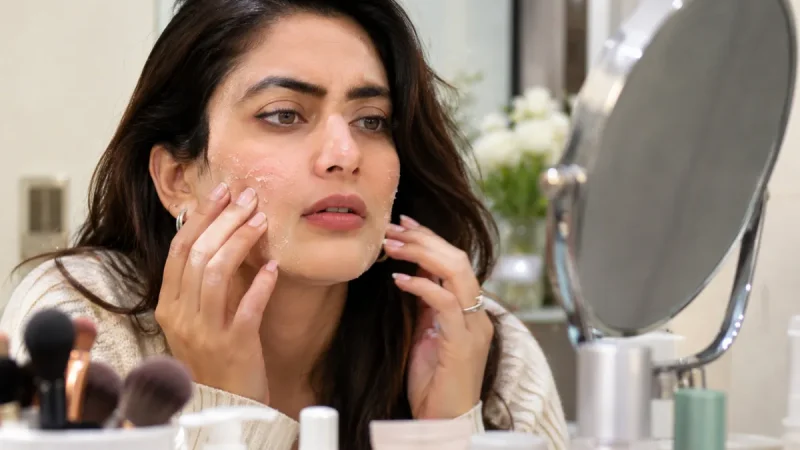
The process can become especially frustrating when people recommend aggressive skincare treatments shortly before the wedding.
Introducing unfamiliar active ingredients, strong exfoliation or procedures without appropriate professional guidance can cause irritation or other unwanted reactions.
A sensible bridal skincare routine should prioritise healthy skin, consistency and individual needs.
It should not become an experiment in how many products a woman can apply before the ceremony.
4. The Bridal Weight-Loss Conversation Needs to Die
Few forms of unsolicited advice are as casually delivered as comments about a bride’s weight.
Someone will suggest that she should lose weight to look better in her lehenga.
Someone else will recommend cutting carbohydrates.
A relative may offer an unsolicited opinion about her arms, stomach or face.
The remarkable thing is how frequently these comments are presented as expressions of affection.
People who would never openly criticise a woman’s body at an ordinary family dinner suddenly feel entitled to discuss it because a wedding is approaching.
But a wedding date is not a medical diagnosis.
A bride does not owe anyone a smaller waist, a sharper jawline or a particular number on a weighing scale.
If she wants to improve her fitness, strength or general well-being, that is her decision.
What deserves criticism is the assumption that her body must change to deserve beautiful wedding photographs.
A lehenga should be tailored to fit the bride.
The bride should not be expected to reshape herself to satisfy the lehenga.
5. The Natural Bride Is Often the Most Artificially Constructed Look of All
One of the great contradictions of contemporary beauty culture is the popularity of the supposedly effortless bridal look.
The brief sounds simple.
Fresh skin. Soft eyes. Natural lips. Barely visible contour. A healthy glow.
But achieving that appearance for photography can involve multiple layers of carefully selected products, precise colour correction, professional hairstyling and considerable technical skill.
There is nothing wrong with this artistry.
The contradiction lies in presenting the finished result as effortless.
When a heavily prepared appearance is described as natural, women may begin to question why they do not look that way without assistance.
The answer is straightforward.
Professional bridal makeup is designed to create a particular visual effect.
It is not a realistic baseline for how a person should look every morning.
Perhaps the beauty industry would be more useful if it celebrated the craftsmanship involved rather than pretending that expensive perfection simply happens.
6. The Wedding Photographer Has Become an Invisible Beauty Authority
Wedding photography has transformed dramatically.
Modern couples have access to cinematic films, elaborate pre-wedding shoots, carefully directed portraits and sophisticated editing techniques.
These services can preserve wonderful memories.
But the growing importance of photographs also influences how brides think about their appearance.
A hairstyle may be chosen because it looks better from a particular angle.
A blouse neckline may be selected because it photographs beautifully.
A makeup artist may recommend stronger contouring because certain lighting conditions can flatten facial definition.
These are legitimate technical considerations.
The problem begins when the entire wedding experience becomes subordinate to the photograph.
A bride should be able to laugh without worrying about her facial expression.
She should be able to eat without fearing that her lipstick will disappear.
She should be able to dance without calculating whether her hairstyle will survive.
And she should be able to look like herself.
Wedding photographs are supposed to document a meaningful day.
The day should not exist solely to produce beautiful photographs.
7. The Bridal Beauty Tax Is Also a Tax on Time
Money is only one part of the equation.
Consider the hours involved in researching treatments, attending appointments, comparing makeup artists, scheduling trials, managing alterations and coordinating hair and beauty services.
These activities can become an additional project layered on top of an already demanding wedding schedule.
For women balancing employment, family responsibilities and wedding planning, the cumulative burden can be substantial.
The pressure is not always imposed by other people.
Social media can make elaborate preparation appear normal, even when the content represents highly curated lifestyles, sponsored services or unusually expensive weddings.
A bride scrolling through countless transformation videos may begin to feel that she is falling behind.
Behind what, exactly?
There is no official bridal beauty examination.
No minimum number of facials required to qualify for marriage.
No rule stating that a woman must emerge from her wedding preparations looking significantly different from the person her partner already loves.
8. The Most Rebellious Bridal Beauty Decision Might Be Doing Less
Imagine a bride who decides that she does not need a dramatic transformation.
She chooses a makeup artist whose work she genuinely likes.
She follows a simple skincare routine.
She refuses unsolicited weight-loss advice.
She keeps her natural hair texture.
She selects a hairstyle that feels comfortable rather than one requiring constant adjustment.
She spends money on the services that matter to her and declines the rest.
Nothing about this approach is anti-beauty.
It is simply an assertion of control.
Beauty treatments can be enjoyable. Makeup can be creative. Fashion can be expressive. A wedding can be a wonderful excuse to experiment with personal style.
But experimentation should be driven by curiosity and pleasure, not fear of looking inadequate.
The distinction matters.
A woman choosing an elaborate bridal transformation because she enjoys glamour is exercising her preference.
A woman feeling compelled to transform because everyone around her insists she needs improvement is navigating social pressure.
The final photographs might look similar.
The experiences are not.
9. Why Are Brides Expected to Be Beautiful and Emotionally Effortless?
There is another contradiction hidden inside the bridal beauty ideal.
A bride is expected to look extraordinary while appearing completely relaxed.
Her makeup must remain flawless.
Her jewellery must stay perfectly arranged.
Her lehenga must fall beautifully.
Her smile must appear genuine.
And through all of this, she is expected to remain patient, gracious, cheerful and emotionally composed.
If she becomes frustrated, she risks being labelled difficult.
If she complains about discomfort, she may be told that beauty requires sacrifice.
If she rejects a traditional styling suggestion, someone may accuse her of being unnecessarily stubborn.
The ideal bride is not merely beautiful.
She is beautiful without inconvenience.
She is glamorous without demanding attention.
She is meticulously prepared without appearing vain.
It is a remarkably complicated performance for someone who is supposedly celebrating one of the happiest days of her life.
10. The Wedding Industry Can Sell Beauty Without Selling Insecurity
The bridal beauty industry is not inherently exploitative.
It supports talented makeup artists, hairstylists, skincare professionals, photographers, designers and countless independent entrepreneurs.
Many of these professionals are women who have built successful businesses through years of work and expertise.
Their contribution deserves recognition.
But an industry can celebrate beauty without manufacturing insecurity.
Makeup artists can explain the benefits of their techniques without suggesting that natural features are flaws.
Skincare professionals can recommend appropriate treatments without creating unrealistic expectations.
Bridal boutiques can help women find flattering clothing without making comments about their weight.
Photographers can produce beautiful images without treating every natural expression as something to correct.
And families can offer support without turning a bride’s appearance into a collective project.
None of these changes requires abandoning glamour.
They simply require recognising that a woman’s value does not increase with the number of beauty treatments she purchases.
The Real Question: Who Is the Bride Trying to Impress?
There is a point during wedding preparations when it becomes useful to ask a deceptively simple question.
Would I still want this if nobody else had an opinion?
Would I choose this hairstyle?
Would I spend this much on makeup?
Would I change my body?
Would I book this treatment?
Would I wear this outfit?
The answers will differ for every woman.
Some brides will choose maximalist glamour, elaborate jewellery, dramatic makeup and couture outfits.
Others will prefer understated styling and minimal preparation.
Neither approach is more authentic.
What matters is whether the choice belongs to the bride.
Because the most troubling part of the bridal beauty tax is not the money.
It is the possibility that a woman might spend months preparing for her wedding while slowly becoming convinced that the person she already is needs correcting.
Final Word from Real SHEE Power
Indian weddings have always celebrated beauty, craftsmanship, colour and personal expression. There is no reason to abandon any of that.
But the modern bridal beauty conversation needs a fundamental change.
A bride should be allowed to enjoy makeup without being told she needs it. She should be allowed to pursue fitness without being pressured to lose weight. She should be allowed to spend lavishly on her appearance without being judged, and equally allowed to spend very little.
The purpose of bridal beauty should be to celebrate the woman, not to replace her.
And perhaps the most radical thing a bride can say in a room full of people offering improvements is this:
“I already like the way I look.”
That should be enough.