A Complete Guide to the Das Mahavidyas: The Ten Great Wisdom Goddesses
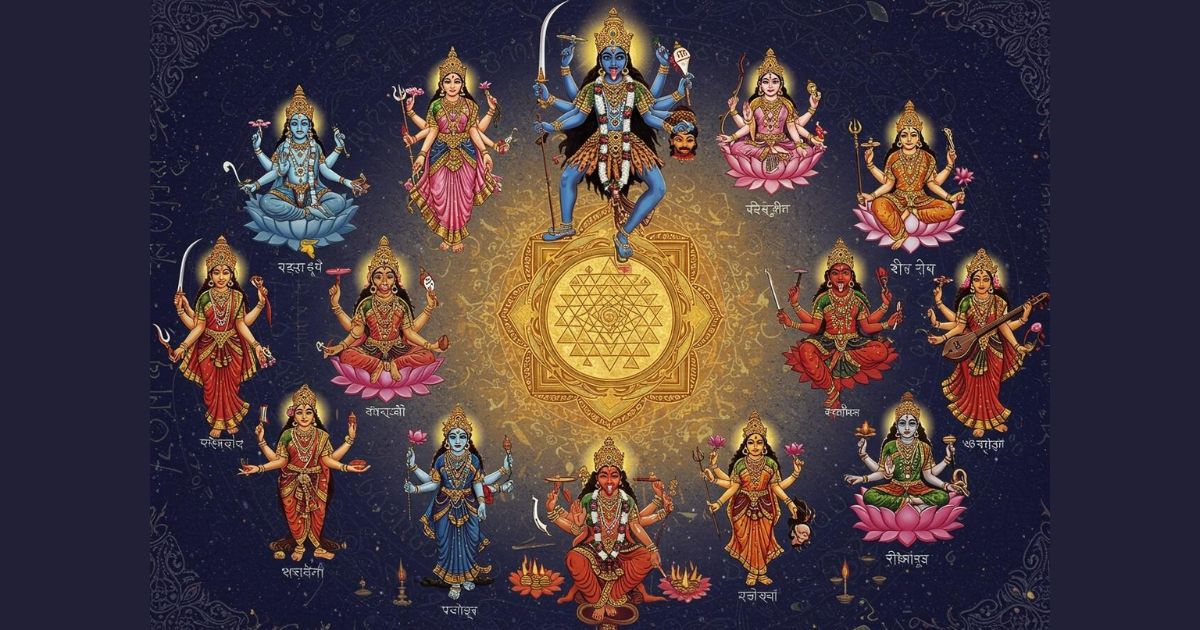
The Das Mahavidyas represent one of the most profound and esoteric concepts in Hindu Tantra. They are the “Ten Great Wisdom Goddesses” ten unique manifestations of the Divine Mother (Shakti) that encompass the entire spectrum of existence, from the horrific and destructive to the sublime and beautiful.
The word Mahavidya stems from the Sanskrit roots Maha (Great) and Vidya (Knowledge/Wisdom). These are not merely deities to be worshiped; they are “ways of knowing” the ultimate reality.
The Origin: The Wrath of Sati
The most popular legend regarding their origin comes from the Devi Bhagavata Purana. When Sati (the first incarnation of Parvati) wished to attend her father Daksha’s grand sacrifice against the wishes of her husband, Lord Shiva, a divine argument ensued.
As Shiva attempted to leave to avoid the confrontation, Sati multiplied herself into ten different forms, blocking every direction (the four cardinal points, the four intermediate points, the zenith, and the nadir). Shiva realized that these ten forms represented the complete power of the universe, and he eventually yielded to her will.
The Ten Forms of Wisdom
1. Kali: The Goddess of Time
Kali is the first of the Mahavidyas. She represents the power of time (Kala) that devours everything.
- Symbolism: Her dark complexion symbolizes the void that swallows all form. Her disheveled hair represents freedom from social conventions.
- Wisdom: She teaches that change is inevitable and that attachment to the physical body is the ultimate illusion.
2. Tara: The Goddess of Guidance
Often depicted as blue, Tara is very similar in appearance to Kali but carries a different energy. She is the “Saviour.”
- Symbolism: She is often shown standing upon a supine Shiva in a cremation ground. She holds a scissors to cut the cords of attachment.
- Wisdom: Tara represents the power of sound (Logos) and the ability to cross the “ocean of existence” (Samsara).
Related Read
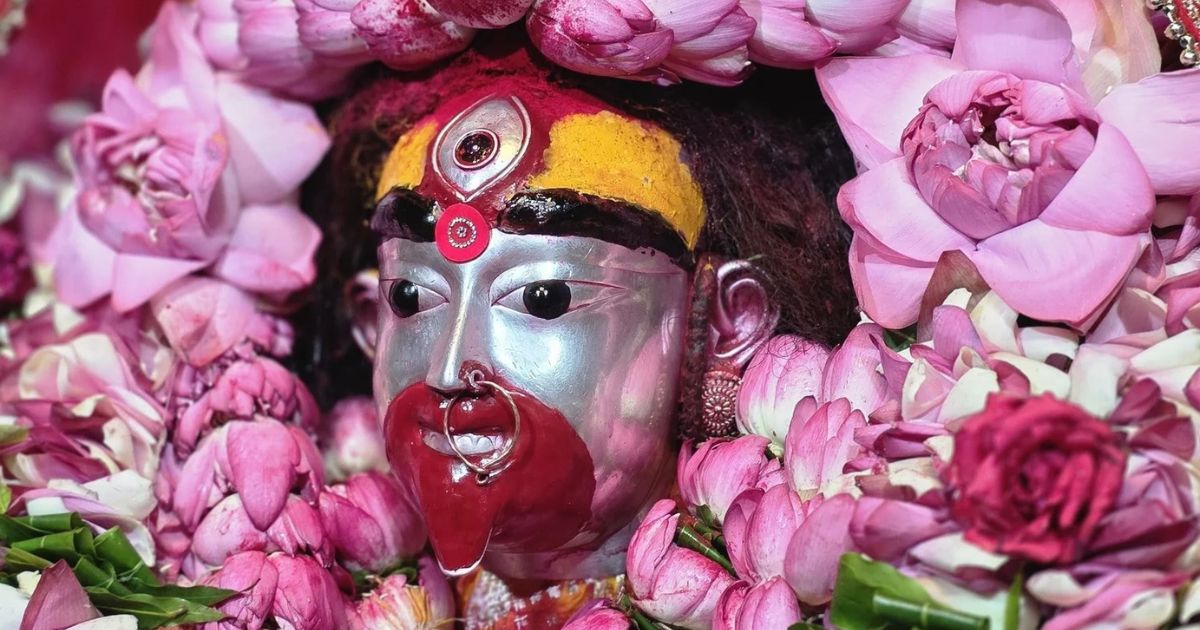
A powerful journey into the fierce yet compassionate goddess who guides devotees through fear, pain, and transformation.
Click to Read More →3. Tripura Sundari: The Beauty of the Three Worlds
Also known as Lalita or Sodashi, she represents the pinnacle of consciousness and the play of the universe.
- Symbolism: She is depicted as a sixteen-year-old girl, radiant like the rising sun, sitting on a throne supported by Brahma, Vishnu, Rudra, and Ishwara.
- Wisdom: She teaches that purity and desire are not opposites; the entire universe is a manifestation of divine bliss (Ananda).
4. Bhuvaneshwari: The Goddess of Space
She is the Queen of the Universe whose body is the cosmos itself.
- Symbolism: She carries a noose and a goad, symbolizing her control over the created world.
- Wisdom: She represents the infinite space in which all things happen. She teaches us that our limited perspective is part of a much vaster, infinite reality.
Related Read
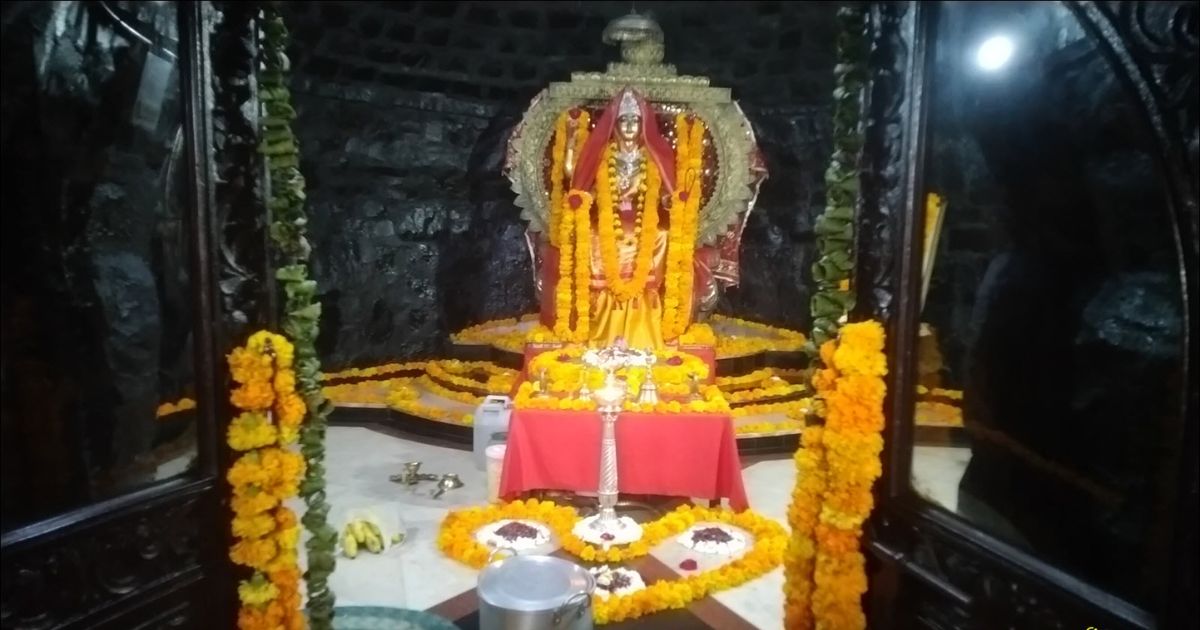
A शांत, hidden temple nestled in the Aravalli hills—perfect for a peaceful escape from city chaos.
Click to Read More →5. Bhairavi: The Terrible Goddess
Bhairavi represents the “effulgent fire” of Tapas (penance) and the destruction of the ego.
- Symbolism: She is associated with the Muladhara Chakra. Her name means “the terrible one,” but she is terrible only to the impurities of the soul.
- Wisdom: She represents the power of transformation through heat and pressure.
6. Chhinnamasta: The Self-Decapitated Goddess
Perhaps the most shocking of the Mahavidyas, she is depicted holding her own severed head, with three streams of blood spurting from her neck.
- Symbolism: One stream enters her own mouth, while the other two enter the mouths of her attendants. She stands upon a coupling couple.
- Wisdom: She symbolizes the dissolution of the ego and the realization that the “eater” and the “eaten” are one. She represents radical self-sacrifice.
Related Read
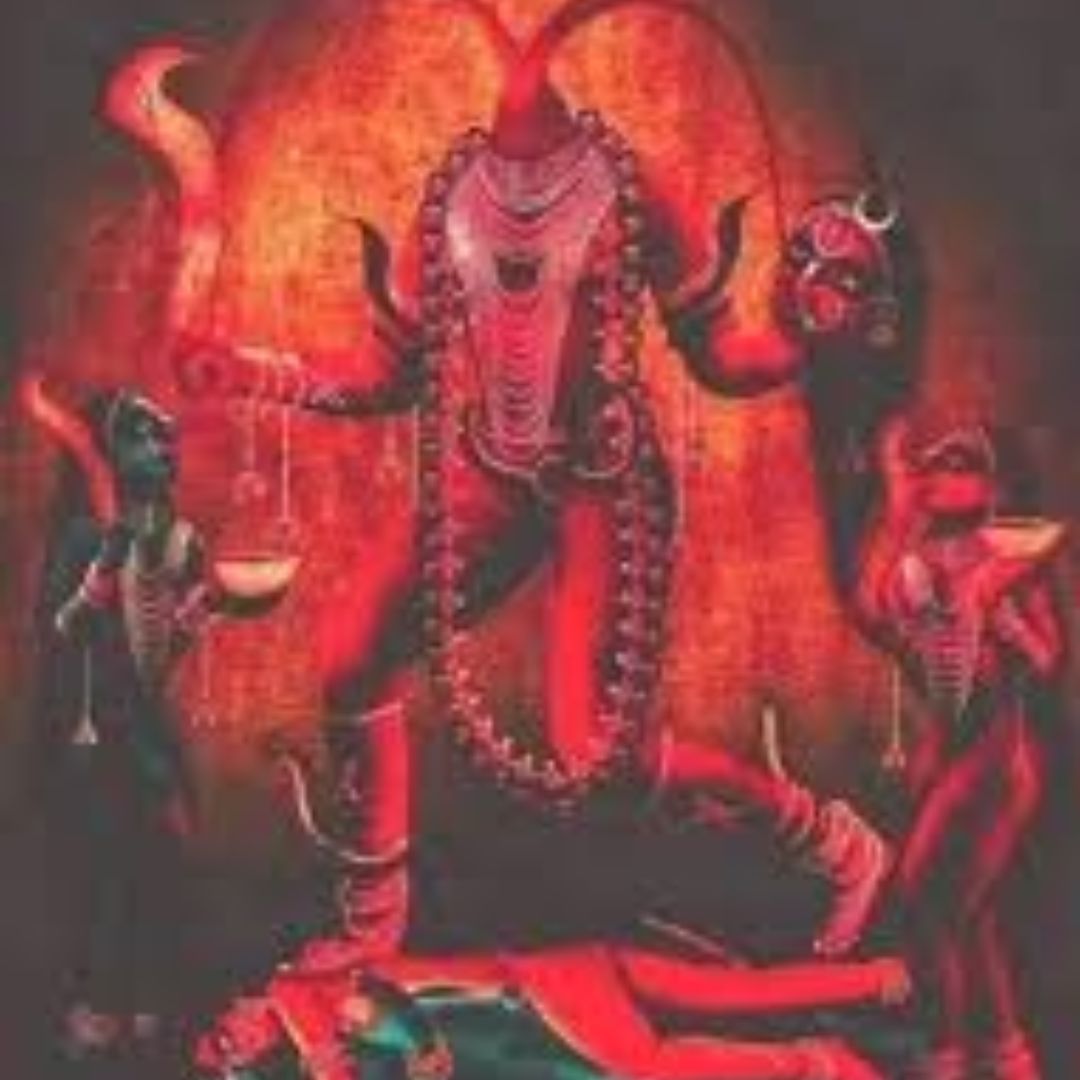
A fierce yet profound symbol of transformation, ego-detachment, and spiritual awakening through self-sacrifice.
Click to Read More →7. Dhumavati: The Widow Goddess
Dhumavati is unique because she represents the “negative” aspects of life: poverty, frustration, loneliness, and decay.
- Symbolism: She is depicted as an old, ugly widow riding a crow or a chariot without horses.
- Wisdom: She is the “Smoke” that obscures, but also the one who remains after the world is destroyed. She teaches the wisdom of let-go and the beauty found in what the world rejects.
8. Baglamukhi: The Goddess of Paralysis
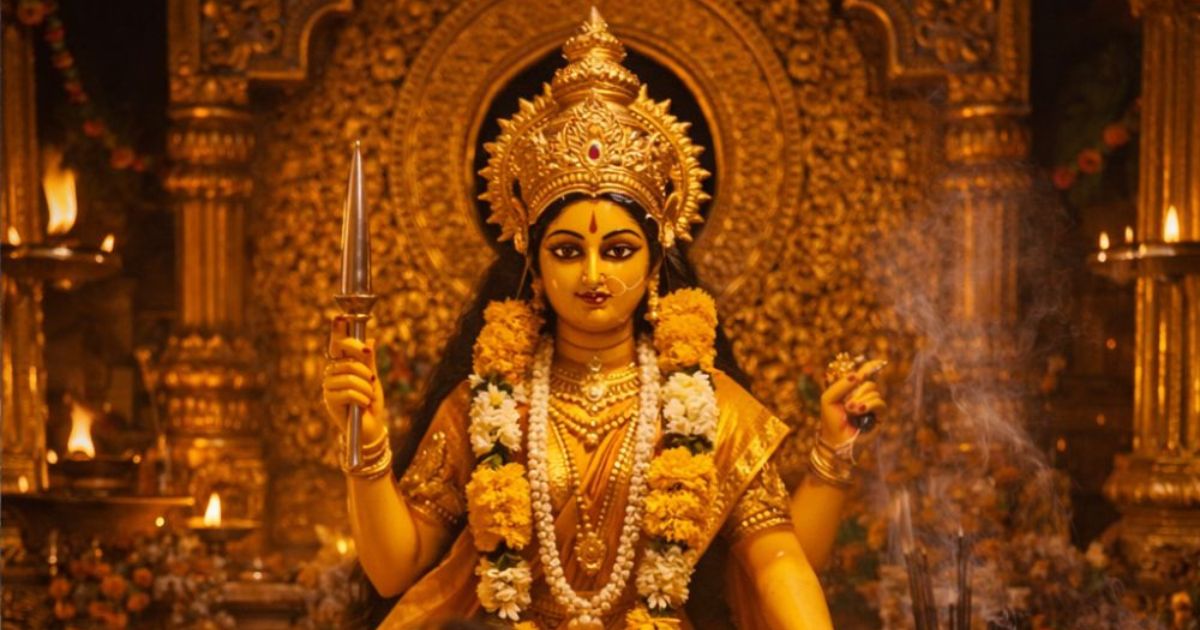
As discussed previously, she is the “Yellow Goddess” who silences enemies and stills the mind.
- Symbolism: She pulls the tongue of a demon, symbolizing the halting of the internal chatter of the mind.
- Wisdom: She represents the power of Stambhana—the ability to stop any movement or thought to find the stillness within.
Related Read
Discover the fierce Mahavidya who silences negativity, protects devotees, and grants victory over life’s toughest battles.
Click to Read More →9. Matangi: The Outcaste Goddess
Known as the “Tantric Saraswati,” Matangi is the goddess of the arts, music, and spoken word, but she dwells on the margins of society.
- Symbolism: She is often offered “leftover” or “polluted” food, breaking the orthodox laws of purity.
- Wisdom: She teaches that divinity exists in the “unclean” and the “forbidden.” She is the power of the inner thought becoming spoken word.
10. Kamala: The Lotus Goddess
The final Mahavidya is the Tantric form of Lakshmi. She represents prosperity, beauty, and fertility.
- Symbolism: She is bathed by elephants and sits on a lotus. Unlike the others, she is entirely auspicious in the traditional sense.
- Wisdom: She represents the realization of the Divine in the material world. She is the “Earthly Paradise.”
Summary of the Ten Wisdoms
| Goddess | Representation | Primary Power |
| Kali | Time | Destruction of Ego |
| Tara | Sound/Protection | Salvation |
| Tripura Sundari | Pure Consciousness | Cosmic Bliss |
| Bhuvaneshwari | Infinite Space | Manifestation |
| Bhairavi | Divine Fire | Purification |
| Chhinnamasta | Life Force | Transcendence |
| Dhumavati | Void/Non-being | Detachment |
| Baglamukhi | Stillness | Immobilization |
| Matangi | Thought/Speech | Creative Expression |
| Kamala | Grace/Abundance | Material Wealth |
The Spiritual Journey
The progression of the Das Mahavidyas can be seen as a spiritual journey. It begins with Kali (the realization of death and time) and ends with Kamala (the realization of the divine in the physical world). Together, they remind the seeker that the Goddess is not just found in the beautiful or the peaceful, but in the dark, the decaying, the silent, and the chaotic.
By worshiping the Mahavidyas, a devotee seeks to transcend the dualities of “good” and “bad” to reach a state of non-dual awareness.