Khatu Shyam to Salasar Balaji: A Divine Journey Through Rajasthan’s Spiritual Heart
The Divine Connection: Khatu Shyam to Salasar Balaji
The desert sands of Rajasthan hold more than just history; they breathe with deep spiritual energy. Among the most revered pilgrimage circuits in Northern India is the journey from the Khatu Shyam Temple in Sikar to the Salasar Balaji Temple in Churu. This route is not merely a physical distance of approximately 100 kilometers; it is a transition from the “God of the Kalyug” to the “Protector from All Evils.” For millions of devotees, a visit to one feels incomplete without the blessings of the other.
Table of Contents
The Legend of Khatu Shyam Ji
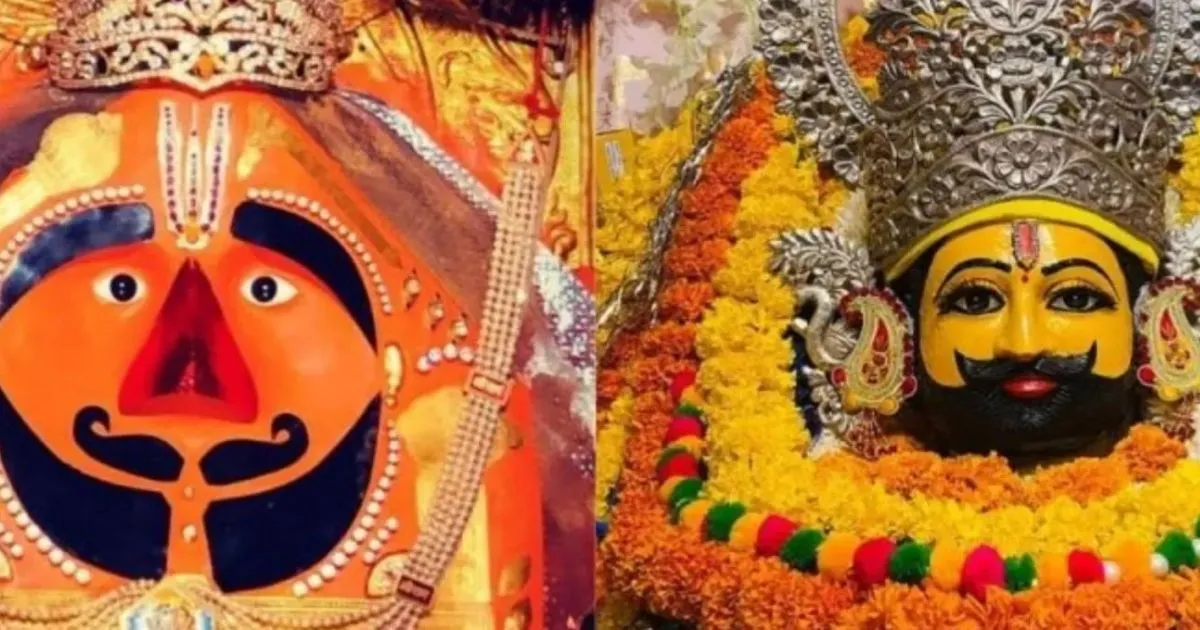
The journey begins at Khatu, a small village that houses the magnificent temple of Shyam Baba. He is worshipped as the reincarnation of Barbarika, the grandson of Bhima. Legend tells us that Barbarika offered his head to Lord Krishna during the Mahabharata war. Impressed by his sacrifice, Krishna granted him a boon: that he would be worshipped in the Kalyug (modern age) by Krishna’s own name, “Shyam.”
Devotees throng here to witness the “Sheesh” (head) of the deity. The atmosphere is electric with the chants of “Haare Ka Sahara, Baba Shyam Hamara” (The supporter of the defeated is our Baba Shyam). The temple architecture, featuring white Makrana marble, provides a serene backdrop to the intense devotion found within its courtyards.
Transitioning to Salasar Balaji
After soaking in the grace of Khatu Shyam, the path leads northwest toward Salasar. The drive typically takes about 2 to 2.5 hours via the Sikar-Salasar road. As you leave the crowds of Khatu, the landscape opens up into the classic rustic beauty of the Shekhawati region.
Salasar Balaji is unique among Hanuman temples. Unlike other idols of Lord Hanuman, the deity here possesses a beard and mustache, representing a more mature, protective form. It is a “Swayambhu” (self-manifested) idol, discovered by a farmer while plowing his field in 1754. The temple is a symbol of immense faith, where devotees tie coconuts with red threads (moli) to make wishes, believing that Balaji never lets a sincere prayer go unanswered.
Planning Your Pilgrimage
To experience this journey seamlessly, timing is essential. While the temples are open year-round, the most vibrant times are during the Shukla Paksha Ekadashi at Khatu and the Chaitra Purnima at Salasar.
Travel Logistics:
- Best Mode: Hiring a private taxi from Jaipur or Sikar is the most comfortable way to cover the circuit.
- The Route: Follow the Khatu – Reengus – Sikar – Salasar path. The roads are well-maintained, offering plenty of local eateries serving authentic Rajasthani Dal Baati Churma.
- Stay: Both towns offer various Dharamshalas and budget hotels. However, staying in Sikar provides a central point if you wish to explore nearby sites like Jeen Mata.
Why This Circuit Matters
The Khatu Shyam to Salasar Balaji route represents the two pillars of Hindu faith: Sacrifice and Strength. Khatu Shyam teaches us the beauty of giving and the grace of the divine in times of failure. Salasar Balaji offers the strength and courage to overcome life’s obstacles.
Walking through these temple doors, one feels a sense of profound peace. Whether you are seeking a miracle or simply looking for a quiet moment of reflection, this spiritual corridor in the heart of Rajasthan offers a sanctuary for every soul. As the sun sets over the dunes, the sound of the evening Aarti echoing from the temples reminds us that faith, indeed, moves mountains—or in this case, guides us safely across the desert.