10 Secrets of Chhath Puja: The Deeper Meaning Behind India’s Most Austere Festival
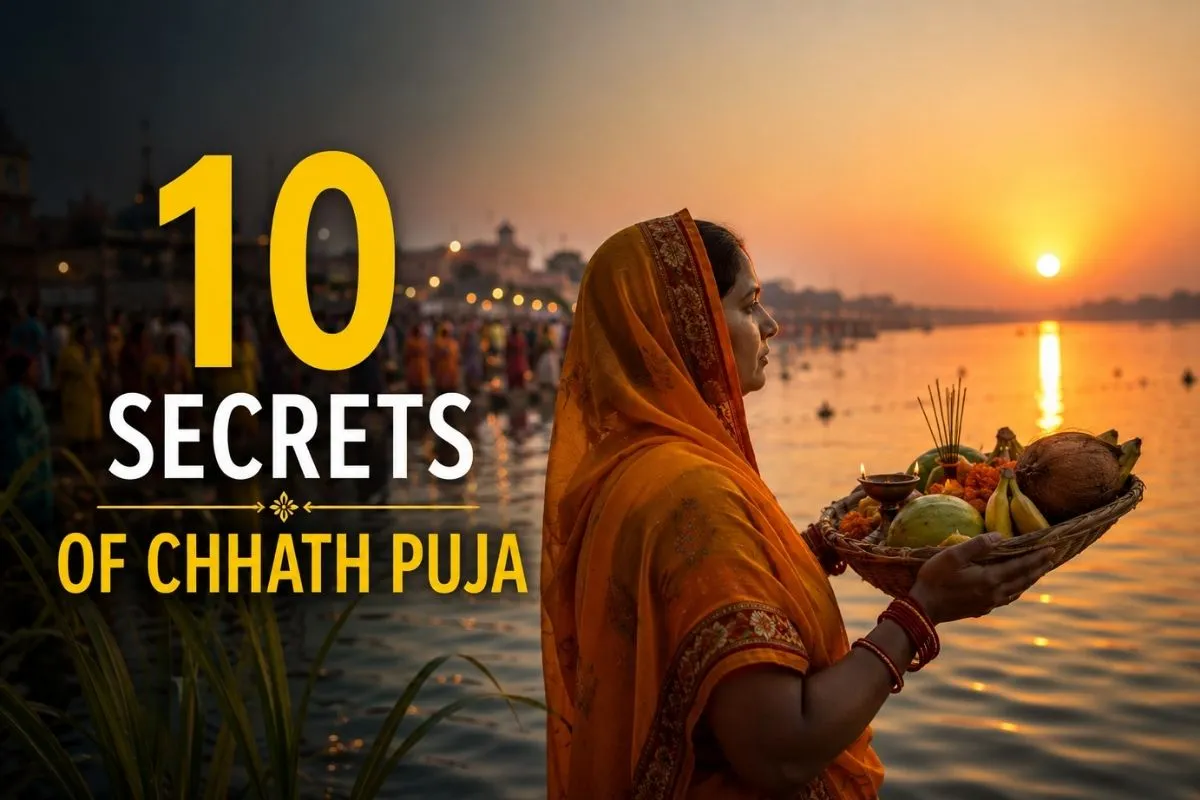
Few festivals in the Hindu calendar demand as much from the body and give back as much in spirit as Chhath Puja. To an outsider, it can look almost impossibly rigorous, a fast held without a drop of water for nearly two full days, devotees standing waist deep in cold river water at dawn and dusk, offerings arranged with a precision that borders on ceremony within ceremony. But look closer, and every one of these demands carries a quiet logic, a reason rooted in gratitude, discipline and a relationship with nature that predates most of what we now call organized religion.
Here are ten things about Chhath Puja that even those who grew up around it may not have paused to consider, offered with the reverence this festival has always asked of its devotees.
1. It Worships the Sun Directly, With No Idol at All
Unlike most Hindu festivals, Chhath Puja involves no idol, no murti, no image placed on an altar to represent the divine. Devotees offer their prayers directly to Surya, the Sun God himself, standing in open water at the exact moments of sunrise and sunset. There is something profoundly humbling in this choice, a reminder that some forms of devotion need no intermediary at all, only open sky, water, and a willing heart.
2. It Is One of the Only Festivals That Honours the Setting Sun
Most solar worship across cultures centres on sunrise, the moment of renewal and beginning. Chhath Puja is unusual in that it gives equal, arguably greater, reverence to the setting sun during Sandhya Arghya on the third evening. Devotees say this reflects a deeper philosophy: that decline and ending deserve as much gratitude as beginning and rise, since the sun that sets today is the same sun that will return tomorrow, carrying hope even in its descent.
3. The Fast Lasts Roughly 36 Hours, Entirely Without Water
The heart of Chhath Puja is the Kharna fast, observed on the second day, which stretches into a complete nirjala vrat lasting approximately 36 hours, from the fast’s beginning until the Usha Arghya offering at sunrise on the final day. No food, no water, not even a sip, is taken throughout this period. It stands among the most physically demanding observances in Hindu tradition, undertaken with careful preparation and a depth of discipline that commands quiet respect even from those unfamiliar with the festival.
4. Chhathi Maiya Is Believed to Protect Children Specifically
While Surya is honoured throughout, the festival’s presiding deity is Chhathi Maiya, revered as the sister of the Sun God and closely associated with the wellbeing of children and the protection of family. Devotees pray to her particularly for the health and long life of their children, and the festival’s origin story, tied to King Priyavrat and the restoration of his stillborn child through her blessing, sits at the emotional centre of why so many parents observe this vrat with such devotion.
5. Thekua Is More Than Just a Sweet, It Is a Sacred Offering
Thekua, a dense, slightly crisp sweet made from wheat flour, jaggery and ghee, is the most recognisable offering of Chhath Puja, but it is far more than a festive treat. Prepared by hand in the days before the main rituals, often shaped with wooden moulds passed down through families, thekua is offered directly to the Sun alongside seasonal fruits, sugarcane, and rice, and its preparation itself is treated as an act of devotion, undertaken in a state of physical and spiritual purity.
6. The Festival Is Remarkably Environmentally Conscious
Long before sustainability became a global talking point, Chhath Puja was quietly practicing it. Offerings are entirely natural, fruits, sugarcane, rice, homemade sweets, presented in bamboo baskets known as soop and daura rather than plastic containers. Devotees clean riverbanks and ghats before the festival begins, and the entire observance leans on biodegradable, locally sourced materials, a tradition rooted not in modern environmental awareness but in the festival’s ancient, land connected origins.
7. It Is Genuinely Egalitarian in Its Practice
Chhath Puja has long been noted for the way it draws people together across social lines that other rituals sometimes reinforce. Devotees from different backgrounds and communities gather at the same ghats, perform the same rituals, and stand in the same water, side by side, with no distinction in ceremony based on status. This shared, communal character has made it as much a social event as a religious one, strengthening bonds within families and across entire neighbourhoods each year.
8. It May Soon Be Recognised by UNESCO
Given its unique rituals, deep ecological consciousness and centuries of unbroken practice, Chhath Puja is being considered for inclusion on UNESCO’s Intangible Cultural Heritage list, a recognition that would formally acknowledge what devotees in Bihar, Jharkhand and eastern Uttar Pradesh have always known: that this festival represents something culturally singular, worth preserving with the same care it has always demanded of its practitioners.
9. The Festival Follows a Precise Four Day Sequence
Chhath Puja unfolds over exactly four days, each with its own distinct ritual. It begins with Nahay Khay, a day of purification bath and a single pure meal, followed by Kharna, when the waterless fast begins after a evening meal of kheer and roti. The third day, Sandhya Arghya, brings the community to riverbanks for sunset offerings, and the festival concludes the following dawn with Usha Arghya, sunrise prayers that mark the breaking of the fast. In 2026, this sequence falls across 13 to 16 November, with Sandhya Arghya observed on 15 November.
10. Preparation Begins Long Before the Festival Itself
The reverence of Chhath Puja doesn’t begin on day one, it begins days, sometimes weeks, earlier. Homes are cleaned thoroughly, ingredients for prasad are sourced with particular care, and many devotees observe a period of increased simplicity and purity in their daily habits well before the fast begins. This extended period of preparation reflects a broader truth about the festival: that its power lies not in a single dramatic ritual, but in the sustained, patient discipline that surrounds it.
A Closing Thought
Chhath Puja asks a great deal of those who observe it, hunger, thirst, cold water at dawn, hours spent standing in devotion, and yet it remains one of the most joyously anticipated festivals in the communities that celebrate it. Perhaps that is the final secret worth sitting with: that discipline and joy were never really opposites to begin with, and that gratitude, offered with this much sincerity, has a way of returning far more than it asks for.
Suggested Reading
- Spiritual
The Sun, the River, and the Unbroken Vow: 10 Fascinating Wonders of Chhath Puja - Culture
The Songs, Colors, and Clay: Unpacking the Breathtaking Artistry of Chhath Puja - Food
The Culinary Magic of Chhath Puja: How Thekua, Rasiya, and the Earthen Stove Won Over Global Foodies - Quiz
The 29-Question Varanasi Quiz