Halloween Decoded: The Myths, the History, What to Do and Where the Deals Are
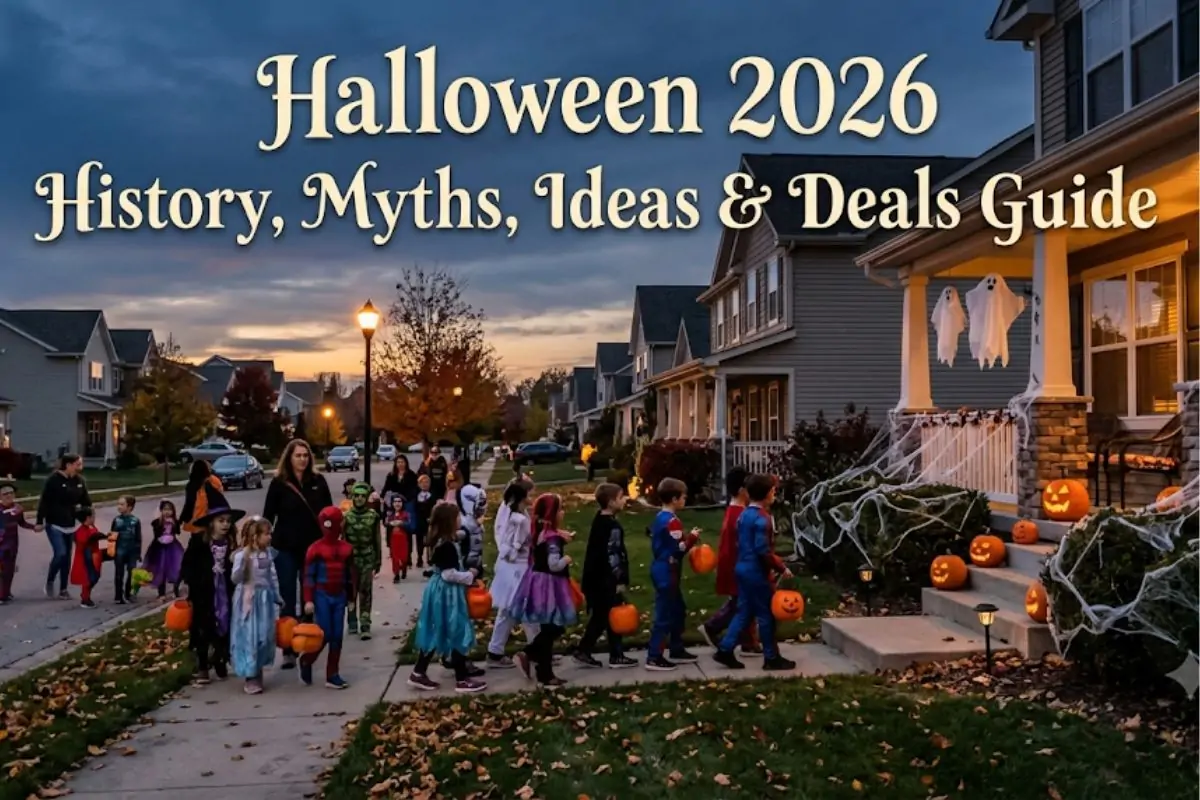
Every year, around the end of October, a strange thing happens. Adults who haven’t played dress-up since school suddenly spend ₹1,200 on a witch hat. Supermarkets turn orange. Somebody carves a pumpkin with the focus of a brain surgeon. And someone else, usually a relative, announces that Halloween is “not our culture” while eating the last of the candy.
So whatisHalloween? An ancient festival? A modern marketing machine? A harmless excuse to dress up? A little of each, which is what makes it interesting.
This is the full guide: where Halloween came from, the myths worth retiring, how it’s celebrated around the world and in India, what to actually do this weekend, how to stay safe, and where to find the deals. For more lifestyle reading, browse the Lifestyle hub, the Events section and the History page.
Halloween at a Glance
| Question | Quick answer |
|---|---|
| When is it? | Saturday, 31 October 2026 |
| Where did it start? | Celtic lands (Ireland, Scotland and surrounding regions), through the festival of Samhain, later blended with Christian observances |
| What does the name mean? | A shortened form of “All Hallows’ Eve,” the evening before All Saints’ Day (1 November) |
| Main symbols | Pumpkins and jack-o’-lanterns, ghosts, witches, bats, skeletons, black cats, candy |
| Main activities | Dressing up, trick-or-treating, parties, carving pumpkins, scary stories and films |
| Big in India? | Not a traditional festival, but increasingly popular in cities through parties, cafés, malls, schools and apartment communities |
Part 1: Where Halloween Actually Came From
The Celtic roots: Samhain
The earliest ancestor of Halloween is generally traced toSamhain(pronounced roughly “SOW-in”), a Gaelic festival marking the end of the harvest and the start of the darker half of the year. It was observed around the turn of October into November.
The popular belief, drawn from medieval Irish texts and later folklore, is that Samhain was a time when the boundary between the human world and the “otherworld” grew thin. Bonfires were lit, communities gathered, food was shared and, according to many accounts, people left offerings for spirits or the dead. Take the details with some caution: much of what we know comes from written sources recorded centuries later, and scholars still debate how widely and in what form these practices were observed.
The Christian overlay: All Hallows’ Eve
As Christianity spread across Europe, the Church established days honouring saints and the dead.All Saints’ Day(1 November) is traditionally linked to the 8th century, andAll Souls’ Day(2 November) was formalised around the 10th century. The evening before All Saints’ Day becameAll Hallows’ Eve, which over time contracted into “Halloween.”
Many historians see Halloween as a blend: old harvest and seasonal customs, folded into Christian calendars, then reshaped by regional folklore.
Soul cakes, guising and the roots of trick-or-treating
Two older customs are often cited as ancestors of trick-or-treating:
- Souling:in parts of medieval Britain and Ireland, poorer people went door to door around All Souls’ Day, offering prayers for the dead in exchange for “soul cakes.”
- Guising or mumming:in Scotland and Ireland, people disguised themselves and performed songs, tricks or recitations at doors in return for food or coins. A popular explanation is that costumes were meant to confuse or blend in with wandering spirits, though historians treat that explanation cautiously.
The jack-o’-lantern: from turnips to pumpkins
Before pumpkins, there were turnips. Irish and Scottish folklore tells of “Stingy Jack,” a trickster who couldn’t enter heaven or hell and wandered with a glowing coal in a hollowed turnip. People carved faces into turnips and other root vegetables as lanterns. When immigrants brought the custom to North America, they found pumpkins, which were bigger, easier to carve and abundant. The rest is Instagram history.
How it became a global party
Large-scale Irish and Scottish migration to North America in the 19th century carried Halloween customs across the Atlantic. Over the 20th century, trick-or-treating, costumes and community parties became mainstream in the United States, and the holiday grew into a major commercial event, spreading further through films, TV and social media.
Today it’s a hybrid: partly ancient folklore, partly Christian calendar, partly modern retail and entertainment. If you enjoy untangling how old stories shape modern habits, you’ll like reading aboutToday in History and, for another odd chapter in history, The Year Without a Summer (1816): How a Volcano Chilled the World . That gloomy summer is often cited as the backdrop to Mary Shelley writingFrankenstein, which makes it a very on-theme read.
Part 2: 10 Halloween Myths, Busted
Myth 1: “Halloween is a purely American holiday.”
Reality:Its roots lie in Celtic and European traditions. The United States popularised and commercialised it, but it didn’t originate there.
Myth 2: “Samhain was the Celtic god of the dead.”
Reality:This claim spread widely, but Samhain refers to a festival and a time of year, not a deity. The “lord of the dead” idea is generally attributed to later misreadings.
Myth 3: “Halloween is a Satanic festival.”
Reality:Halloween’s history involves pre-Christian seasonal customs, Christian observances for saints and the dead, and folk traditions. Some religious groups avoid it for their own reasons, and that’s a personal choice. But the claim that it’s an organised “devil-worship” holiday isn’t supported by the historical record. For most people who celebrate, it’s costumes, candy and community.
Myth 4: “Strangers poison or put razor blades in trick-or-treat candy.”
Reality:This is one of the most persistent urban legends. Research by sociologist Joel Best found no confirmed cases of strangers killing children with randomly handed-out Halloween treats. The most famous poisoning case from the 1970s involved a father who poisoned his own child. That said, checking sealed, unwrapped or homemade treats is still sensible, especially for young children and for allergies.
Myth 5: “Witches were burned at the stake in Salem on Halloween.”
Reality:The 1692 Salem witch trials in Massachusetts led to hangings (and one man pressed to death), not burnings, and the events weren’t tied to Halloween. Witch hunts across Europe were a separate, wider history, and in many places executions varied by region and era.
Myth 6: “Black cats are bad luck everywhere.”
Reality:In some cultures, including parts of the UK, black cats are considered lucky. The association with witchcraft and ill omen grew in particular times and places. Some animal shelters have been cautious about adopting black cats out around Halloween because of rumours of harm, though how widespread such incidents are is disputed. If you’re thinking of adopting, do it responsibly and not as a seasonal accessory.
Myth 7: “Halloween has always been about candy.”
Reality:Earlier customs involved soul cakes, nuts, apples and coins. Candy-centred trick-or-treating became widespread in North America in the 20th century, and today candy is the biggest purchase category. In a 2026 US consumer survey cited by a deals site, 96% of consumers planned to buy sweets, ahead of decorations at 78% and costumes at 71%.
Myth 8: “Halloween is ancient, so everything about it is thousands of years old.”
Reality:Some roots are old, but much of what we call “traditional” Halloween, like store-bought costumes, suburban trick-or-treating and the pumpkin-everything economy, is modern.
Myth 9: “Costumes were invented to scare ghosts away.”
Reality:This explanation is popular and plausible, and it appears in many popular histories, but historians treat it as a theory rather than settled fact. Disguise also had social and festive functions.
Myth 10: “Halloween is only for kids.”
Reality:Adult participation has grown enormously: costume parties, themed bars, horror conventions, immersive theatre, haunted attractions and fancy dress nights. In India especially, much of the celebration is aimed at young adults.
Part 3: Cousins of Halloween Around the World (and in India)
Halloween isn’t the only festival that deals with ghosts, ancestors and the thin line between worlds. Humans have been telling stories about death and memory for as long as we’ve had stories.
- Día de Muertos (Mexico):observed on 1 and 2 November, it honours deceased loved ones with altars, marigolds, food and music. It’s joyful, family-centred and not a “Mexican Halloween,” despite the similar timing.
- Samhain (Ireland, Scotland and neo-pagan communities):observed in different ways today, from heritage events to modern pagan rituals.
- All Saints’ and All Souls’ Days (Christian communities worldwide):visiting graves, lighting candles and remembering the dead.
- Hungry Ghost Festival (parts of East and Southeast Asia):a lunar-calendar observance involving offerings to wandering spirits.
- Pitru Paksha (India):a fortnight in the Hindu calendar devoted to honouring ancestors with rituals and offerings. It falls earlier in the autumn than Halloween.
- Bhoot Chaturdashi (Bengal):observed on the night before Kali Puja, traditionally involving lighting lamps and eating a set of greens to keep spirits at bay. Dates follow the lunar calendar, so check this year’s.
India has no shortage of festivals dealing with spirits and ancestors, which is partly why Halloween feels both familiar and foreign here. For more spiritual and cultural reading, browse Spirituality , Top 10 Bhakti Stories From Hinduism That Still Give Goosebumps and Shani Shingnapur, the Indian village where no house has a door , a very Indian kind of eerie.
Halloween in India: A Growing City Celebration
Halloween isn’t a traditional Indian festival, and it’s not a public holiday here, but while the traditions aren’t commonplace, you’ll find parties and Halloween-themed events in big cities like Delhi, Mumbai and Bangalore. Cafés, restaurants, malls, schools, residential societies and event organisers have embraced it, mostly as a costume-and-party occasion.
Some people see this as fun and cultural exchange, others as unnecessary imitation of Western trends. Both views are fair, and you can celebrate lightly, ignore it entirely or treat it as a themed night out. Nobody is obliged to hold an opinion, and a pumpkin is a pumpkin.
Part 4: What to Do on Halloween 2026
Halloween falls on a Saturday this year, which is convenient. Here’s a menu for every mood and budget.
If you want a party or a night out
India’s big cities have plenty on this weekend. Listings I found for 2026 include:
- Delhi:HorrorCon India 2026, a Halloween event in New Delhi on 31 October to 1 November. A listing site also mentions a Halloween Carnival in Delhi with tickets from ₹299.
- Gurgaon:a Halloween night at the Pool Lawns, Nirvana Patio Club, on 31 October from 7 pm, with a listed price of ₹500.
- Noida:Halloween Fest at Dearie on 31 October to 1 November, with tickets from ₹99.
- Mumbai:events are spread across Friday 30 October to Sunday 1 November, including a Halloween event at Dusk in The Park, Navi Mumbai, from ₹700. Another listing mentions House of Sin at Dragonfly Experience on 30 October from 8 pm.
- Bengaluru and Hyderabad:listings mention a Bengaluru Halloween event with AERREO at ₹499 and a Hyderabad night featuring REBLE, plus a roundup of parties in Bengaluru from Deccan Herald.
Prices, line-ups and entry rules change, so confirm on the organiser’s page before buying tickets, and check age limits, dress codes and refund policies.
If you want a cosy night in
- Movie marathon:pick a theme (classic horror, spooky-but-funny, animated gothic, mystery thrillers) and set a rule: lights off, snacks on.
- Carve or paint pumpkins:if you can’t find a pumpkin, a large squash, watermelon or even a paper lantern works. Painting is mess-free and safer for kids.
- Spooky story night:read aloud. Classics likeFrankensteinandDraculaare free to read in many places, being long out of copyright, and short stories by Edgar Allan Poe work beautifully by candlelight. For something more real, browse our Confessions section for true stories.
- Themed dinner:see the food section below.
- Game night:murder-mystery games, escape-room kits or classic party games.
If you’ve got kids
- Trick-or-treat in a society or neighbourhood:in India, many apartment communities organise their own, with pre-agreed doors or a central candy table.
- Costume parade at school or home.
- Craft day:paper bats, ghost garlands, mini-lanterns.
- Keep it age-appropriate:skip graphic horror for young children, and talk about what’s pretend and what’s real.
If parenting is on your mind generally, browse Parenting.
If you want something quiet
Not everyone enjoys parties, and that’s perfectly fine. Light a candle, make a warm drink, switch off notifications and call it a “cosy-spooky” night. If you’ve been running on fumes lately, read11 signs you are mentally exhausted, even when you look fineand the35 signs of burnout before it becomes a breakdown. A night of nothing is a perfectly valid plan. Add a littlesilent walkingif you want fresh air. More ideas live inSelf-CareandStress Management.
If you want to turn it into a trip
Pair Halloween weekend with a getaway to a hill town for crisp air and real darkness for stargazing. Our guides toHimachal,UttarakhandandChikmagalurare good starting points, and theTravelhub has more.
If you’d like a fun fact night
Challenge your friends to a trivia round:10 bizarre laws that are completely real,the con man who sold the Eiffel Tower, twiceandBaarle, the town so tangled between two countries that houses have two addressesall make great conversation starters.
Part 5: Costumes Without the Chaos
Easy and budget-friendly ideas
You don’t need to spend a fortune. Some of the best costumes come from what’s already in your wardrobe:
- Witch:black dress or kurta, a dupatta as a cape, a hat from card or felt
- Ghost:a white cotton sheet or old dupatta with cut-out eyes (make the holes big enough to see and breathe)
- Vampire:dark clothes, a cape from a shawl, dramatic eyeliner or kajal, a little red lipstick
- Skeleton:black clothes with white paint or tape for bones
- Cat:black outfit, ears and whiskers drawn with eyeliner
- A famous character or historical figure:a saree, a vintage blazer or a themed accessory goes a long way
- A pun or concept costume:a “walking meme,” a “browser with 47 tabs open,” a “Monday morning.” Creativity beats cost.
BrowseFashionandStylefor inspiration, and if you care about waste, thrift, swap or rent rather than buying a one-time outfit. Read aboutsustainable fashionand pick pieces you’ll wear again. Accessories likejewelleryand a goodbagcan elevate a simple costume, and heritage fabrics likeLucknowi chikankarimake a stunning “ghostly white” look.
Costume etiquette: A Few Rules
- Avoid costumes that mock a culture, religion, disability or community.Blackface, caricatured “ethnic” outfits and costumes making light of tragedy aren’t edgy, they’re hurtful.
- Be careful with religious symbols and sacred attire.What looks like a “costume” to you may be someone’s faith.
- Check your venue’s rules.Some venues ban masks, props that look like weapons or full face coverings, especially in crowded places.
- Prioritise comfort and visibility.Long hems, blocked vision and restrictive masks cause falls.
- Women’s costumes and the “pink tax”:gendered versions of the same costume can cost more. If you’re curious how this works, readthe pink tax explainedand compare men’s and women’s versions before you buy.
Face paint and makeup: Look After Your Skin
Halloween makeup is fun, but your skin deserves care.
- Patch-testany new face paint or glitter on your inner arm 24 hours before.
- Use products labelled for skin.Craft paint and glue aren’t face paint.
- Avoid the eye areaunless a product is specifically eye-safe, and be careful with coloured lenses (only wear properly fitted, prescribed or regulated lenses, never novelty ones from unverified sellers).
- Remove it thoroughlyat night with a gentle cleanser or oil-based remover, and moisturise.
- Don’t sleep in heavy makeup.
Brush up withMakeup,Skin CareandHair Care, skip the10 skincare products you don’t actually needand avoidthe beauty mistakes making you look more tired.
Part 6: Spooky Food and Treats
Food is the easiest way to join in, and it doesn’t need pumpkins.
Easy ideas:
- “Mummy” sausages or paneer rolls:wrap in thin dough strips with two dot eyes
- “Witch finger” snacks:breadsticks or fries with an almond “nail”
- Pumpkin soup or pumpkin halwa:a seasonal win (usekadduor any squash)
- Spooky cheese corn or chilli potatoes:serve with a themed twist. Try thissuper-easy Korean cheese corn recipeorcrispy chilli potatoes at home, and for a fun, textured snack, thespicy enoki and crispy chilli potato mukbangandenoki mushrooms guidefit nicely, since enoki look suitably ghostly.
- Mapo-style tofu with “blood-red” sauce:readAuthentic Mapo Tofu: The Traditional Sichuan Recipefor an on-theme dish that’s actually delicious.
- Dark chocolate bark, brownies or “dirt” cups:seeDessertfor ideas.
- Mocktails with dry-ice effect:if you try dry ice, follow safety guidance strictly, never serve it where it can be swallowed and never seal it in a container.
Browse theFood,RecipesandVegansections for more. Feasts are a fun theme too: take inspiration from theGeorgian SupraorKashmir’s Wazwanand build a “feast of the dead” dinner table.
Candy and health.If you’re handing out or eating candy, balance the sugar with a real meal first, keep allergen information in mind and offer non-food treats (stickers, small toys, stationery) for kids with allergies or families who’d rather avoid sweets. For food that helps your body recover from the sugar crash, see55 foods that fight inflammation, ranked by how easy they are to actually cook.
Part 7: Halloween Safety, Including the Parts People Skip
For everyone
- Plan your route and your ride homebefore you go out.
- Stay with your groupand agree on a meeting point if you get separated.
- Keep your phone chargedand share your live location with someone you trust.
- Watch your drinkand never accept drinks from strangers. Drink spiking is a real risk at crowded parties.
- Know the exitsat any venue.
- Mind fire hazards.Candles, tealights and loose costume fabric don’t mix. Use battery-operated lights where you can.
- Don’t drink and drive, and don’t get in a car with someone who has been drinking.
For women (the conversation we shouldn’t skip)
A costume is not consent. Not a short one, not a revealing one, not a “sexy” one and not a “scary” one. What you wear never explains, excuses or invites harassment or assault, and if anyone behaves badly, that’s entirely on them. If this idea feels like an obvious thing that still needs saying, read our opinion pieces onwhat safety really means for womenandwhy we keep blaming women.
Practical steps that help:
- Arrive and leave with a friendyou trust, and check on each other.
- Tell someone your planand share your live location.
- Use licensed taxis or ride appsand check the plate and driver details.
- Trust your gut.If a person or situation feels off, leave. History has a good example of why instinct matters:Stanislav Petrov trusted his gut over the machine.
- Don’t feel obliged to be politeto someone who’s making you uncomfortable. See10 things emotionally mature women no longer explain to anyone.
- Know who to call.In India, commonly listed numbers include112(national emergency) and1091(women in distress). Confirm the latest numbers locally.
If you want to read more, browseCrime Against Women,AbuseandDomestic Violence. And if you’re organising a party, make it safe by having a clear “no tolerance for harassment” rule, a trusted person to approach and sober hosts.
For trick-or-treating
- Accompany younger children and keep to known, well-lit areas.
- Use reflective tape or glow sticks.
- Check treats before eating, and discard anything unwrapped or suspicious.
- Remind kids to stay out of strangers’ homes and cars.
- Be considerate of homes that don’t participate. A dark porch usually means “not tonight.”
For pets
Many pets hate costumes, noise and doorbells. Keep chocolate, sugar-free sweets and decorations out of reach, and consider keeping animals in a quiet room during busy hours.
Part 8: Halloween Discounts and Deals (What I Found)
First, the honest bit: most of the big, well-documented Halloween deals I found areUS-based, and some won’t help you in India. I’ve split things up so you can see what’s useful, and I’ve added tactics that work anywhere.
US deals (relevant if you’re travelling, shopping internationally or in the US)
- Krispy Kreme:on 30 and 31 October, a free Original Glazed or Classic Ring donut for anyone who shows up in costume.
- Chipotle:its annual costume tradition returns, with rewards members in costume getting an entree for $6 after 3 pm on 31 October.
- Pizza Hut:a “My Haunt Box” (a personal pan pizza, wings and fries) for $6.99, plus an offer on a medium pizza after ordering a large three-topping pizza from 26 to 31 October.
- Einstein Bagels:six bagels for $7 via its rewards programme, from 26 October to 3 November.
- Retail sales:deal roundups list up to 70% off Halloween and fall decor at Grandin Road, up to 30% off costumes and accessories at the Disney Store, and up to 60% off family costumes at Joyin. One also lists a “HALLOWEEN” code for up to 80% off select deals at Groupon and 15% off select party supplies at Restaurantware. Codes expire quickly and may not apply outside the US.
India: What to Look For
I didn’t find a single reliable roundup of nationwide Indian Halloween discounts, so rather than invent one, here’s how people typically find them:
- Event tickets:check the listing sites and the organiser’s page for early-bird pricing, group tickets and “entry with cover charge adjusted against food and drinks” offers. Some Halloween events listed this year start from as little as ₹99 in Noida and ₹299 in Delhi.
- Café and restaurant specials:many outlets run themed menus or “come in costume” offers. Follow your favourite places on social media for last-minute deals.
- Online marketplaces:large e-commerce sites often list costumes, props and décor, but check seller ratings, return policies and delivery dates. With Halloween only two days away, many deliveries won’t arrive in time.
- Local markets:wholesale and street markets in many cities sell décor, masks, wigs and party supplies far more cheaply than branded shops. Compare prices and quality before you buy.
- DIY and thrift:your wardrobe, a relative’s old clothes and a craft shop trip cost far less than a pre-packaged costume.
- Post-Halloween clearance:one candy-deal roundup lists early November as the best time for after-Halloween clearance. Buy decorations, props and wigs then for next year.
- Festival overlap:early November also brings Diwali shopping in India, so you may find general festive sales and discount codes. Check the date for this year.
How to Save Without Getting Scammed
Sales seasons bring scams. One coupon site warns that seasonal shopping surges attract scams, including counterfeit products. A few habits help:
- Check the seller.Look at ratings, reviews, return policies and contact details.
- Be wary of “too good to be true” prices,especially on social media ads and unfamiliar websites. If you want a masterclass in why, read aboutVictor Lustig, who sold the Eiffel Tower, twice.
- Use secure payment methodsand avoid paying by direct bank transfer to unknown sellers.
- Check safety for costumes and cosmetics.Cheap face paint, glitter, contact lenses and flammable fabrics can be hazardous.
- Set a budgetand stick to it. Skim9 things you should stop buying if you want to build wealthand browseMoneyandFinancebefore you click “buy now.”
- Compare before you buy.The same item can have very different prices across sellers.
Part 9: A Sample Halloween Weekend Plan (Steal It)
Friday 30 October
- Pick your costume (or build it from your wardrobe) and test your makeup on your arm.
- Decide your plan for the night, and confirm your ride home.
Saturday 31 October (Halloween)
- Day:carve or paint a pumpkin, bake something themed, set out lights and decorations.
- Evening:trick-or-treating with kids, a themed dinner or a party. Arrive with friends and leave with them.
- Night:a scary-movie wind-down, or a quiet sleep. Your call.
Sunday 1 November
- Remove makeup gently, rehydrate, rest and watch out for post-party sluggishness.
- Reflect on All Saints’ Day or Día de Muertos if you’d like a gentler, more meaningful close to the weekend.
- Check clearance sales early in the week for next year’s props.
The Last Word
Halloween is a beautifully odd holiday: part harvest festival, part ghost story, part dress-up party, part candy economy and part excuse to remember that life has a darker, quieter side that humans have always liked to poke at with a flashlight.
You don’t have to love it. You don’t have to celebrate it. But understanding where it came from, knowing which myths to retire and staying safe while you enjoy it makes it a lot more interesting, and a lot less spooky than the stories we tell.
So carve the pumpkin or skip it, wear the costume or wear pyjamas, go out or stay in. Whatever you choose, do it for the fun of it, keep an eye on your friends and drink, and leave the real frights to the horror films.
Want to share your own Halloween story, costume or recipe?Get featuredorwrite a guest postfor Real Shee Power. Got a question that needs straight talk?Ask Shakti.
FAQ Block (for Featured Snippets / Schema)
When is Halloween in 2026?
Halloween falls on Saturday, 31 October 2026.
What does Halloween mean?
The name comes from “All Hallows’ Eve,” the evening before All Saints’ Day on 1 November.
Where did Halloween originate?
Its roots are usually traced to the Celtic festival of Samhain in Ireland and Scotland, later blended with Christian observances and folk customs, and then spread and popularised through migration, especially to North America.
Why do people carve pumpkins on Halloween?
The jack-o’-lantern tradition began with carved turnips and other root vegetables in Ireland and Scotland. In North America, pumpkins proved bigger and easier to carve, so they became the symbol.
Is Halloween celebrated in India?
It’s not a traditional Indian festival, but it’s increasingly celebrated in cities through parties, café events, school activities and community gatherings.
Is trick-or-treating candy really dangerous?
Widely repeated stories about strangers poisoning candy are largely an urban legend, according to research on the topic. It’s still sensible to check sealed packaging, avoid unwrapped treats and be mindful of allergies.
Is Halloween a Satanic festival?
No. Its history involves seasonal folk customs and Christian observances. Individuals and faith communities may choose whether to participate for their own reasons.
When are Halloween sales cheapest?
Early-season discounts often start in September, and one deals roundup points to early November for after-Halloween clearance.
How can I stay safe at a Halloween party?
Go with trusted friends, watch your drink, share your location, plan your ride home, know the exits and leave if something feels wrong. A costume is never consent.